Why Residential Environmental Testing is Essential for Your Home’s Health
Residential environmental testing is the process of analyzing your home for invisible hazards that could impact your family’s health. This specialized assessment goes beyond standard home inspections to identify dangerous contaminants like mold, asbestos, lead, radon, and other harmful substances.
What is residential environmental testing?
– A comprehensive assessment that examines air, water, soil, and building materials
– Tests for harmful contaminants including mold, asbestos, lead, radon, VOCs, and allergens
– Provides scientific data through laboratory analysis
– Helps prevent health issues and property damage
– Essential for homes built before 1978 (potential lead paint) or 1980s (potential asbestos)
The median age of an American home is 40 years old, with 40 million homes built in the 1960s and 1970s, 21 million in the 1940s and 1950s, and 20 million constructed before 1939. This aging housing stock means millions of families may be living with dangerous environmental hazards without knowing it.
“You invest in environmental test services up front to prevent a bigger problem later.” – Fiona Dogan, Real Estate Professional
Hidden threats in your home can cause serious health issues—from respiratory problems and allergies to more severe conditions like cancer. Radon alone causes about 21,000 lung cancer deaths each year, and it’s found at liftd levels in one out of every 15 homes in the U.S. Meanwhile, mold-related hospitalizations have skyrocketed, with over 75,000 people hospitalized annually for fungal infections.
Unlike a standard home inspection that focuses on visible issues and structural elements, environmental testing uses specialized equipment and laboratory analysis to detect invisible hazards that could be silently affecting your family’s health.
I’m Craig Luckey, and as the owner of BuildSafe Environmental Consulting with nearly a decade of experience performing residential environmental testing throughout Colorado, I’ve seen how proper testing can transform toxic houses into healthy homes. My team and I are committed to helping homeowners identify and address these hidden dangers before they lead to health problems or costly remediation.
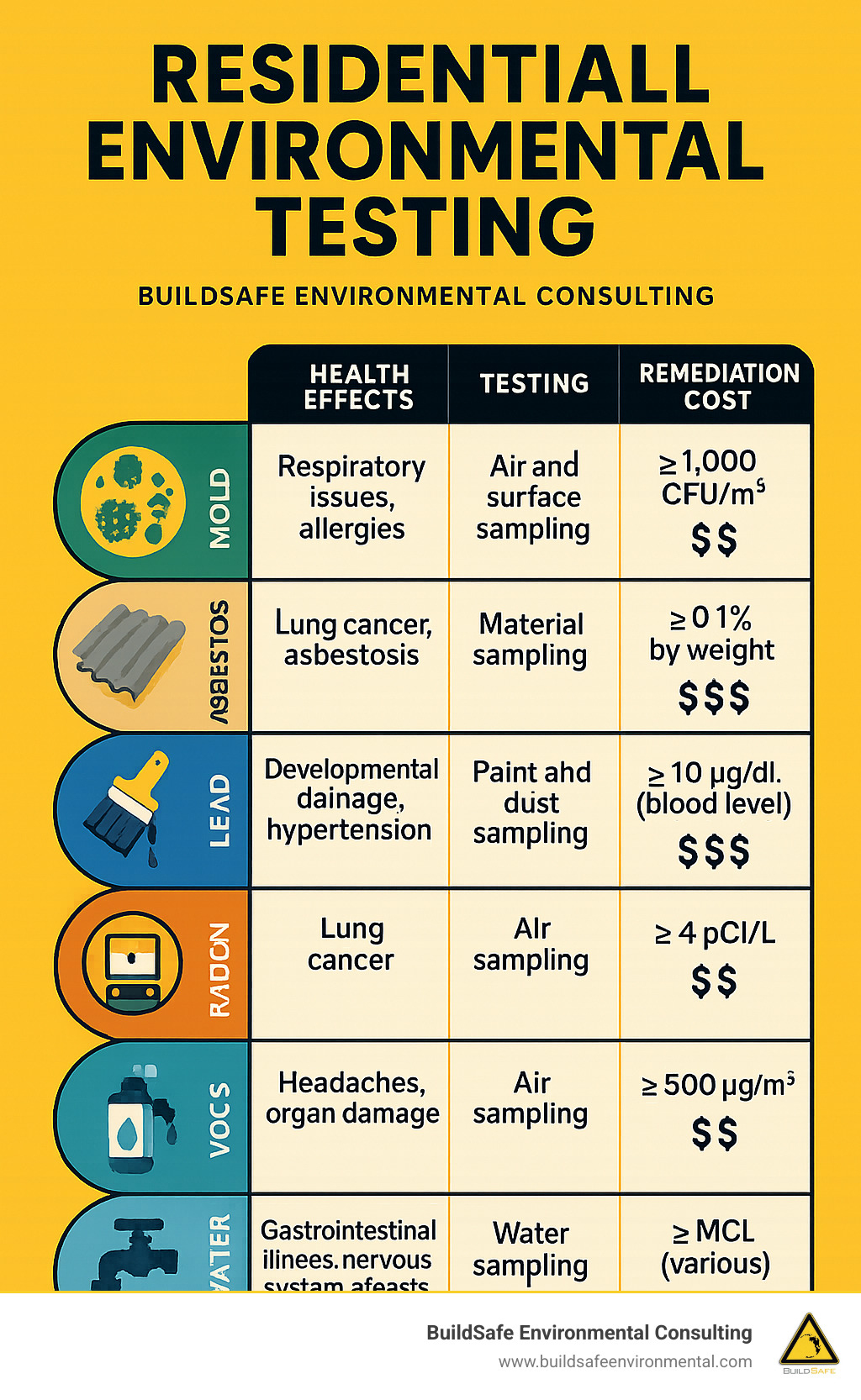
Basic residential environmental testing vocab:
– asbestos air quality testing
– lead paint testing Denver
What Is Residential Environmental Testing?
Have you ever wondered what’s hiding in the air you breathe at home? Residential environmental testing goes far beyond what meets the eye, diving deep into the invisible world of potential health hazards lurking in your living space.
Think of it as a health check-up for your home. Just as your doctor collects blood samples to analyze your health, our certified technicians at BuildSafe collect samples from your home’s air, water, soil, and building materials. These samples then travel to accredited laboratories where scientists analyze them, providing clear data about what’s really in your home environment.
When we conduct residential environmental testing, we’re looking at several key areas:
Your home’s air might contain mold spores, volatile organic compounds (VOCs), or particulate matter that can trigger allergies or respiratory issues. Your water could harbor bacteria, lead, or pesticides that might be affecting your family’s health without any obvious signs. Even the soil around your foundation and the materials your home is built from might conceal hazards like lead, asbestos, or chemical residues.
According to the EPA’s research on radon risks, this invisible, odorless gas causes more lung cancer among non-smokers than anything else. Shockingly, two-thirds of American homes exceed the target radon level set by Congress. Without proper testing, this silent killer could be affecting your family right now.
What makes our approach at BuildSafe different is our commitment to third-party verification. We don’t perform remediation work—this means you can trust that our only goal is accurate detection, not selling you additional services. We’re in the business of information, not repairs.
Residential Environmental Testing vs Standard Home Inspection
“But I already had a home inspection,” you might be thinking. Here’s why that’s not enough to ensure your family’s safety:
| Standard Home Inspection | Residential Environmental Testing |
|---|---|
| Visual assessment only | Scientific sampling and laboratory analysis |
| Focuses on structural integrity | Focuses on health and safety hazards |
| Identifies visible defects | Detects invisible contaminants |
| Uses basic tools (moisture meter, etc.) | Uses specialized equipment (XRF analyzers, air samplers, etc.) |
| Usually completed in 2-3 hours | May take several days for sampling and lab results |
| Typically costs $300-$500 | Typically costs $400-$2,000 depending on scope |
| General inspector certification | Specialized certifications for specific hazards |
| No laboratory involvement | Accredited laboratory analysis |
As real estate professional Nelson Salazar puts it: “It’s best for everyone to know up front what the issues are.” Standard home inspectors simply aren’t trained or certified to detect toxic substances. They might notice water damage but can’t tell you if dangerous mold has taken root. They can see chipping paint but can’t confirm if it contains lead.
Key Benefits of Residential Environmental Testing
When clients ask me if testing is really necessary, I share what happened to a family in Littleton. They’d been experiencing mysterious headaches and fatigue for months. Their doctor suggested environmental testing, which revealed liftd mold spores in their basement from a small leak they hadn’t noticed. Once remediated, their symptoms vanished within weeks.
This illustrates just one of the many benefits of residential environmental testing:
Early Detection saves you from extensive health problems and property damage. Finding issues early typically means simpler, less expensive fixes.
Health Protection is especially important for families with children, elderly members, or those with respiratory conditions. Many environmental hazards cause health issues that develop gradually, making them difficult to connect to your home without proper testing.
Property Value Preservation matters to every homeowner. Environmental hazards can drastically decrease your home’s value—sometimes by tens of thousands of dollars.
Real Estate Leverage works both ways. If you’re buying, testing results can help you negotiate a better price or necessary remediation. If you’re selling, pre-listing testing demonstrates transparency and can lead to smoother, faster transactions.
Perhaps most valuable of all is the peace of mind that comes from knowing your home is truly safe for your family. That certainty is something our clients consistently tell us is priceless.
Just last month, a client in Fort Collins finded through our testing that their 1960s home contained asbestos in the popcorn ceiling—a common finding in homes of that era. By identifying this hazard before their planned renovation, they avoided potentially dangerous exposure and were able to budget properly for safe abatement, saving thousands in emergency remediation costs.
Your home should be your sanctuary, not a source of health concerns. Residential environmental testing helps ensure it stays that way.
Common Hidden Hazards Lurking in Homes
Your home should be your sanctuary, but for many Colorado residents, it may harbor invisible threats that silently affect your family’s health. As I’ve finded during countless inspections across the state, these hazards don’t discriminate between new construction and historic homes.
Mold
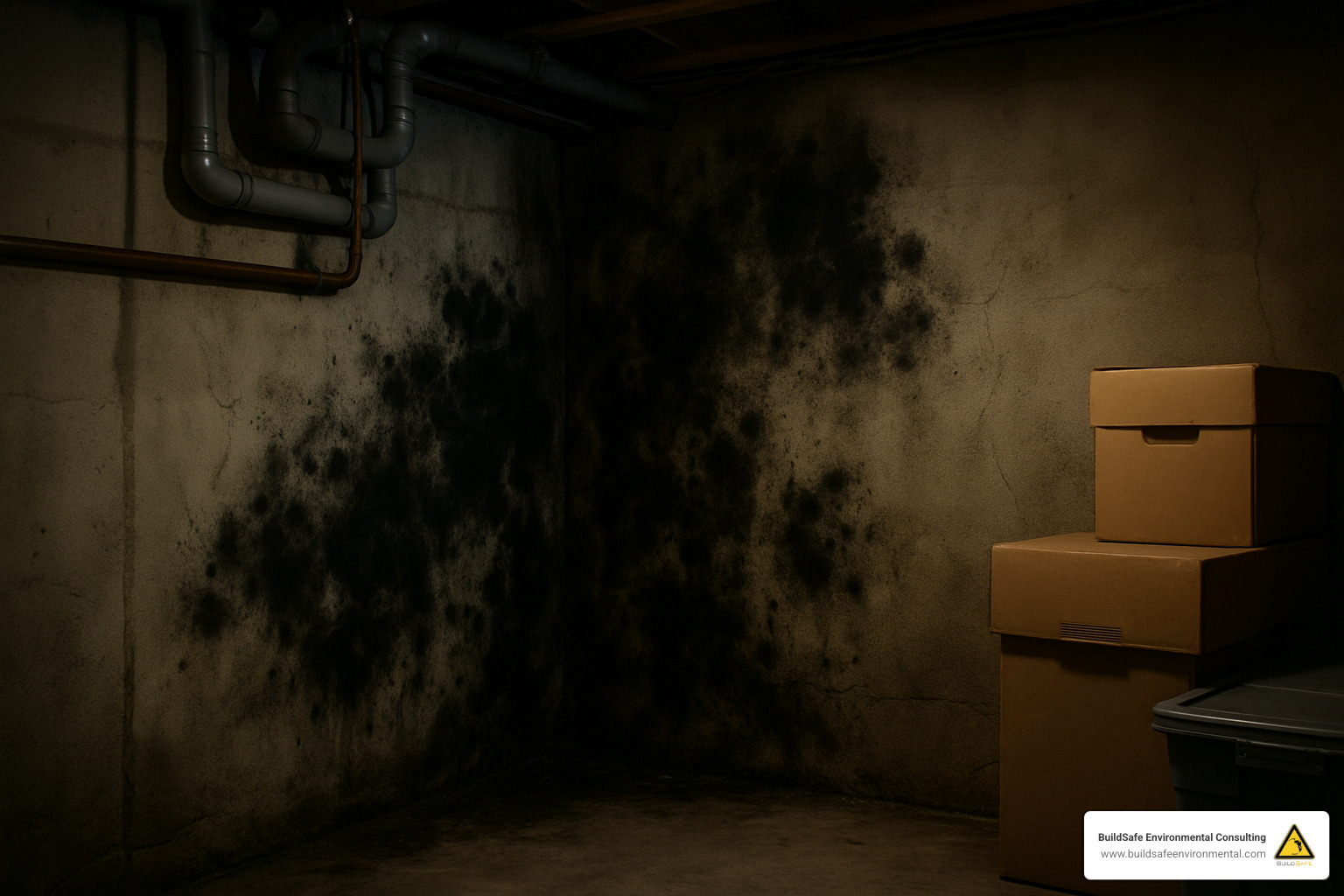
That musty smell in your basement isn’t just unpleasant—it could be a warning sign. Mold thrives in dark, damp environments like basements, bathrooms, and behind walls where water leaks have occurred. While some growth appears as visible black or green patches, dangerous colonies often develop in hidden areas you never see.
According to the CDC’s research on symptoms of mold exposure, breathing in these spores can trigger nasal stuffiness, throat irritation, coughing, wheezing, eye irritation, and skin problems. For folks with mold allergies or compromised immune systems, these reactions can be severe and long-lasting.
Asbestos
That popcorn ceiling in your 1970s home might contain more than just outdated style. Asbestos was commonly used in homes built before the 1980s—in insulation, floor tiles, ceiling materials, and pipe wrappings. This mineral fiber remains harmless when intact but becomes dangerous when materials deteriorate or are disturbed during renovations, releasing microscopic fibers that, when inhaled, can cause mesothelioma and other serious lung diseases decades after exposure.
Lead
If your home was built before 1978, you might be sharing space with lead-based paint. This toxic substance was banned that year, but it remains in millions of older homes, hiding under layers of newer paint. Lead is particularly devious when it comes to children—even small amounts can cause developmental delays, learning difficulties, and behavioral problems that follow them for life. Beyond paint, lead lurks in soil around older homes and sometimes in aging plumbing systems.
Radon
You can’t see it, smell it, or taste it, but radon might be the most dangerous visitor in your home. This naturally occurring radioactive gas seeps through foundation cracks and becomes trapped inside. Colorado’s unique geology makes our state a particular hotspot for radon issues. As the second leading cause of lung cancer after smoking, this invisible threat claims about 21,000 lives annually in the U.S.
Volatile Organic Compounds (VOCs)
That “new home smell” might not be as pleasant as you think. VOCs off-gas from many common household products including fresh paints, cleaning supplies, new furniture, and carpeting. These chemicals can cause both immediate issues like headaches and dizziness, as well as long-term health problems with prolonged exposure. Many homeowners are shocked to learn their beautiful new renovation might be making them sick.
Water Contaminants
What flows from your tap isn’t always as clean as it looks. Water contaminants range from lead and copper to bacteria and pesticides, varying widely depending on your location and water source. Private well owners face particular challenges since their water isn’t regulated like municipal supplies. One family I worked with finded their well water contained arsenic levels three times the EPA limit—completely invisible without proper testing.
Electromagnetic Fields (EMF)
The modern home is filled with electronics that generate electromagnetic fields. While research continues to evolve on EMF exposure, some people report sensitivity to these fields from household wiring, appliances, and wireless devices. I’ve seen clients experience relief from chronic headaches after identifying and reducing high EMF areas in their homes.
Allergens
Those mysterious sniffles might be traced to microscopic roommates. Dust mites, pet dander, pollen, and other allergens accumulate in homes, triggering chronic respiratory issues and allergic reactions. These tiny particles become embedded in carpets, bedding, and upholstery, creating a persistent allergy source that regular cleaning might not eliminate.
Health Risks & Statistics You Should Know
The human cost of these hidden hazards is staggering. Residential environmental testing often reveals problems before they become health statistics:
Radon causes approximately 21,000 lung cancer deaths each year in the United States—that’s about 58 people every day. More troubling, many victims never smoked a day in their lives.
Mold-related illnesses have skyrocketed, with more than 75,000 people hospitalized annually with fungal infections. At least 7,000 deaths occurred in 2021 alone—up from just 450 in 1969. This dramatic increase points to changing building practices and climate conditions.
Asbestos exposure leads to mesothelioma and other lung diseases with treatment costs between $10,000 and $50,000 per month. The financial burden comes decades after exposure, when families are least prepared.
Lead exposure in children can cause permanent IQ loss and developmental issues that affect their entire lives. The economic impact of lead exposure in American children is estimated at $50 billion annually.
Colorado’s unique environment creates particular concerns. Our high elevation and geology make our state one of the highest-risk regions for radon exposure. Our dry climate followed by sudden precipitation creates ideal conditions for mold growth when water intrusion occurs. And our abundance of mountain and historic homes built before modern regulations means many families live with legacy hazards like lead paint and asbestos.
How Hazards Are Measured & Identified
Identifying these invisible threats requires specialized equipment and techniques:
For mold testing, we use spore traps to collect air samples that capture floating spores, plus swab or tape lift methods for surface samples. Laboratory analysis then identifies the types and concentrations present, determining whether that black spot is harmless dirt or toxic black mold.
Asbestos testing involves collecting small bulk material samples that are analyzed under a polarized light microscope to identify the distinctive fibers. This microscopic analysis is the only definitive way to confirm asbestos presence.
For lead detection, our X-ray fluorescence (XRF) analyzers provide non-destructive testing, giving immediate results without damaging your walls. Soil and water samples undergo separate laboratory analysis to check for contamination beyond paint.
Radon testing uses either charcoal canisters or electronic monitors placed in the lowest livable area of your home for 48-96 hours (short-term) or several months (long-term) to measure this invisible gas. Colorado homes regularly test at twice the EPA action level.
VOC testing employs specialized sorbent tubes or canisters to collect air samples that are analyzed using gas chromatography/mass spectrometry—techniques that can detect chemicals at parts per billion concentrations.
Water testing involves collecting samples in sterile containers for laboratory analysis of bacteria, heavy metals, pesticides, and other contaminants that might be flowing from your tap.
As one of our clients beautifully put it after receiving their comprehensive test results: “Every home tells a story.” Sometimes that story includes chapters you can’t see with the naked eye—but with proper residential environmental testing, you can uncover the full narrative of your home’s environmental health and write a happier ending for your family.
When & Why to Schedule Residential Environmental Testing
Timing is everything when it comes to protecting your family’s health and your home investment. As a Colorado homeowner, you might be wondering when exactly you should pick up the phone and schedule residential environmental testing. Let me walk you through the key moments when testing isn’t just helpful—it’s essential.
During Real Estate Transactions
Buying a home is likely the biggest investment you’ll ever make. Before you sign those closing papers, especially for homes built before 1980, consider residential environmental testing as your insurance policy against hidden hazards.
“I’ve seen too many buyers skip testing to save a few hundred dollars, only to find thousands in remediation costs after moving in,” shares one of our Denver clients who learned this lesson the hard way.
If you’re selling, pre-listing testing can actually be a smart strategy. By identifying and addressing any issues beforehand, you’ll avoid the dreaded last-minute negotiations when a buyer’s inspection uncovers problems. Plus, a clean environmental report can be a powerful selling point in today’s health-conscious market.
After Water Events
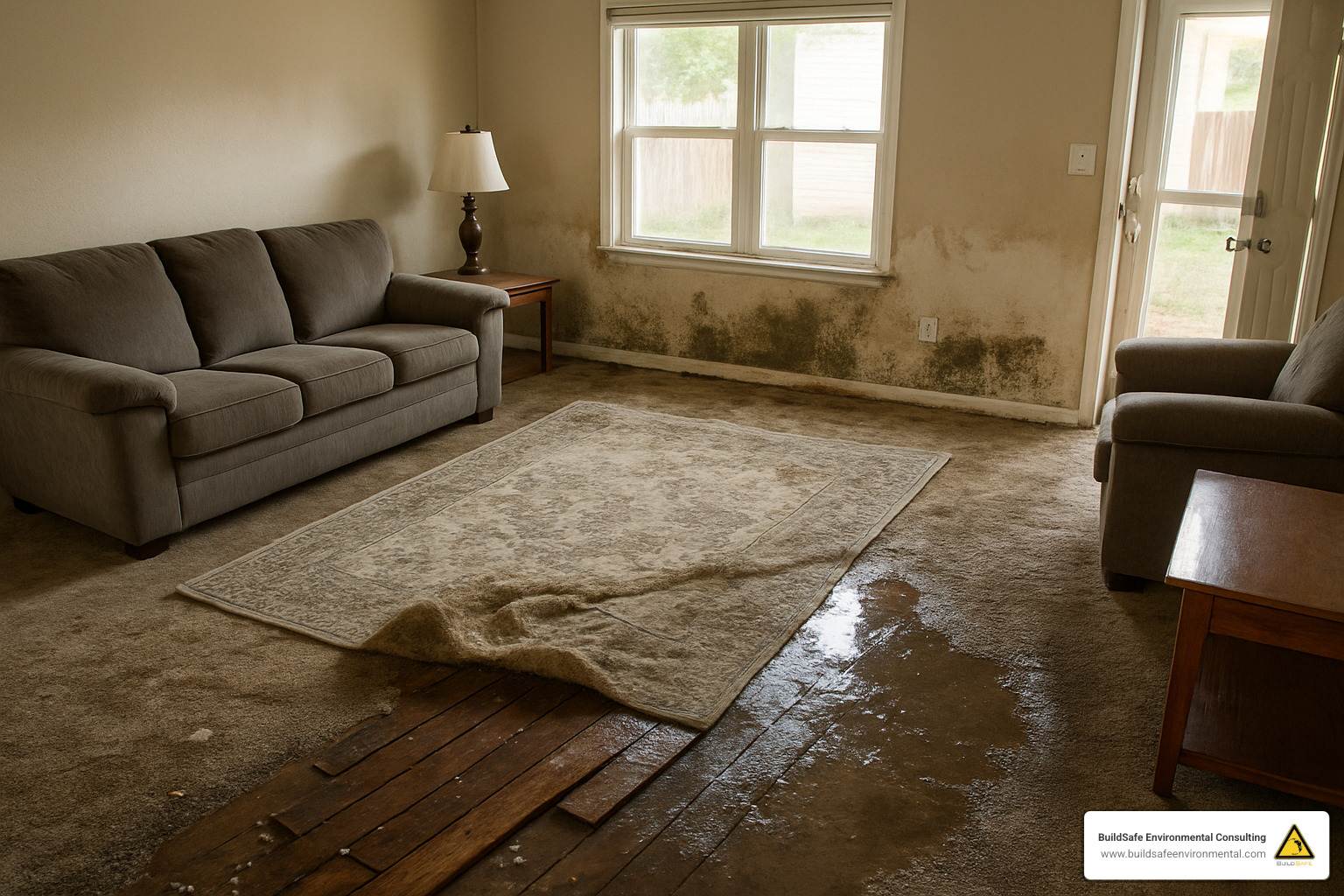
Water and homes don’t mix well. After any flooding event, whether from a Colorado spring snowmelt, a burst pipe during our winter freezes, or that washing machine that decided to flood your laundry room, residential environmental testing becomes critical.
Even when surfaces appear dry, moisture can linger in walls, under floors, and in insulation—creating the perfect breeding ground for mold. Small, ongoing leaks are particularly sneaky culprits. That tiny drip under your kitchen sink? It could be feeding a hidden mold colony that’s affecting your indoor air quality.
Roof leaks deserve special attention too. Water entering from above can saturate insulation and ceiling materials, often going unnoticed until staining appears—by which time, the damage may be extensive.
During Renovations
That kitchen remodel or basement finishing project might expose more than outdated design choices. Homes built before the 1980s often contain materials we now know are hazardous. Residential environmental testing before swinging that sledgehammer can prevent accidentally releasing asbestos fibers or lead dust into your home.
“We were just about to sand down the original woodwork in our 1940s bungalow when testing revealed lead paint,” explains a Boulder homeowner. “That simple test potentially saved our children from lead exposure.”
After renovations, it’s also wise to verify your air quality once the construction dust has settled. Even modern building materials can release VOCs (volatile organic compounds) that might affect sensitive family members.
Health Concerns
Sometimes your body is the first detection system for environmental hazards. If family members experience persistent headaches, unusual fatigue, respiratory issues, or allergies that mysteriously improve when they’re away from home, your house might be trying to tell you something.
This becomes even more important when you’re welcoming a new baby or when immunocompromised family members move in. Children, elderly relatives, and those with chronic health conditions are particularly vulnerable to environmental contaminants that might not noticeably affect healthy adults.
Home Age Milestones
Your home’s age is a reliable indicator of potential hazards. Homes built before 1978 likely contain lead paint, while those constructed before the mid-1980s often feature asbestos in insulation, flooring, or ceiling materials.
Even if your home is newer, reaching the 20-year mark with original systems means it’s time for a checkup. Aging plumbing can leach contaminants, older HVAC systems might harbor mold, and deteriorating building materials can release particles into your indoor air.
Regular Maintenance
Here in Colorado, our unique climate creates specific testing needs. After our long winters, when homes have been tightly sealed for months with heating systems running constantly, indoor air quality often suffers. A springtime residential environmental testing session can identify accumulated contaminants and guide your spring cleaning efforts.
If you’ve recently completed remediation work, follow-up testing provides peace of mind that the problem was truly resolved. As one Fort Collins client put it, “The confirmation testing was worth every penny—knowing my kids are breathing clean air again is priceless.”
For a comprehensive look at our testing options, visit our environmental testing services page.
Signs Your Home Needs Residential Environmental Testing
Your home often gives warning signs long before environmental hazards reach crisis levels. Learning to read these signals can save you significant health troubles and remediation costs.
Visible mold growth, even small patches, suggests a moisture problem that likely extends beyond what you can see. Those persistent musty odors—particularly in basements, bathrooms, or laundry areas—often indicate hidden mold colonies thriving behind walls or under floors.
Water stains on ceilings or walls tell a story of past moisture intrusion that may have created ideal conditions for mold growth. In older homes, peeling or bubbling paint might signal moisture issues or deteriorating lead paint that could be releasing dangerous dust.
Pay attention to your body’s signals too. Chronic headaches or respiratory issues that improve when you leave home could be your body’s response to indoor air contaminants. Unexplained allergic reactions that worsen at night often point to bedroom contaminants like dust mites or mold in bedding or carpeting.
After any flooding or water damage, testing becomes crucial—even if surfaces appear completely dry. And in older homes, watch for crumbling pipe insulation or deteriorating tile and vinyl flooring, which might contain asbestos that becomes dangerous when disturbed.
If these warning signs sound familiar, you might want to read our blog post: Is Your Home Making You Sick? Signs You Need a Mold Test ASAP.
How Often Should Residential Environmental Testing Be Performed?
For most Colorado homeowners, we recommend a simple testing schedule to stay ahead of potential problems:
Indoor air quality testing makes sense annually, especially if family members have asthma, allergies, or other respiratory conditions. Radon should be checked every two years (more often in high-risk Colorado counties) or after any significant foundation work that might create new entry pathways.
If you have a private well, annual water quality testing is essential, while homes on municipal water can typically test every two years. Mold testing becomes important after any water event or annually if your home has historical moisture issues.
For lead and asbestos, one-time testing in older homes is usually sufficient unless materials containing these substances are disturbed during renovations or repairs.
Colorado’s unique environmental conditions create special testing considerations. Our state’s geology produces naturally high radon levels that vary significantly even between neighboring homes. Our dramatic climate shifts—from bone-dry winters to sudden summer downpours—create ideal conditions for mold growth when moisture finds its way inside.
After nearby wildfires, which have unfortunately become more common across our state, testing for particulate matter and combustion byproducts helps ensure your family isn’t breathing harmful residue.
Environmental conditions change over time. A home that tested clear five years ago may develop issues due to aging systems, weather events, or changes in the surrounding environment. At BuildSafe Environmental Consulting, we believe that regular testing isn’t just about finding problems—it’s about ensuring your home remains the safe haven it’s meant to be.
Step-By-Step: The Residential Environmental Testing & Remediation Process
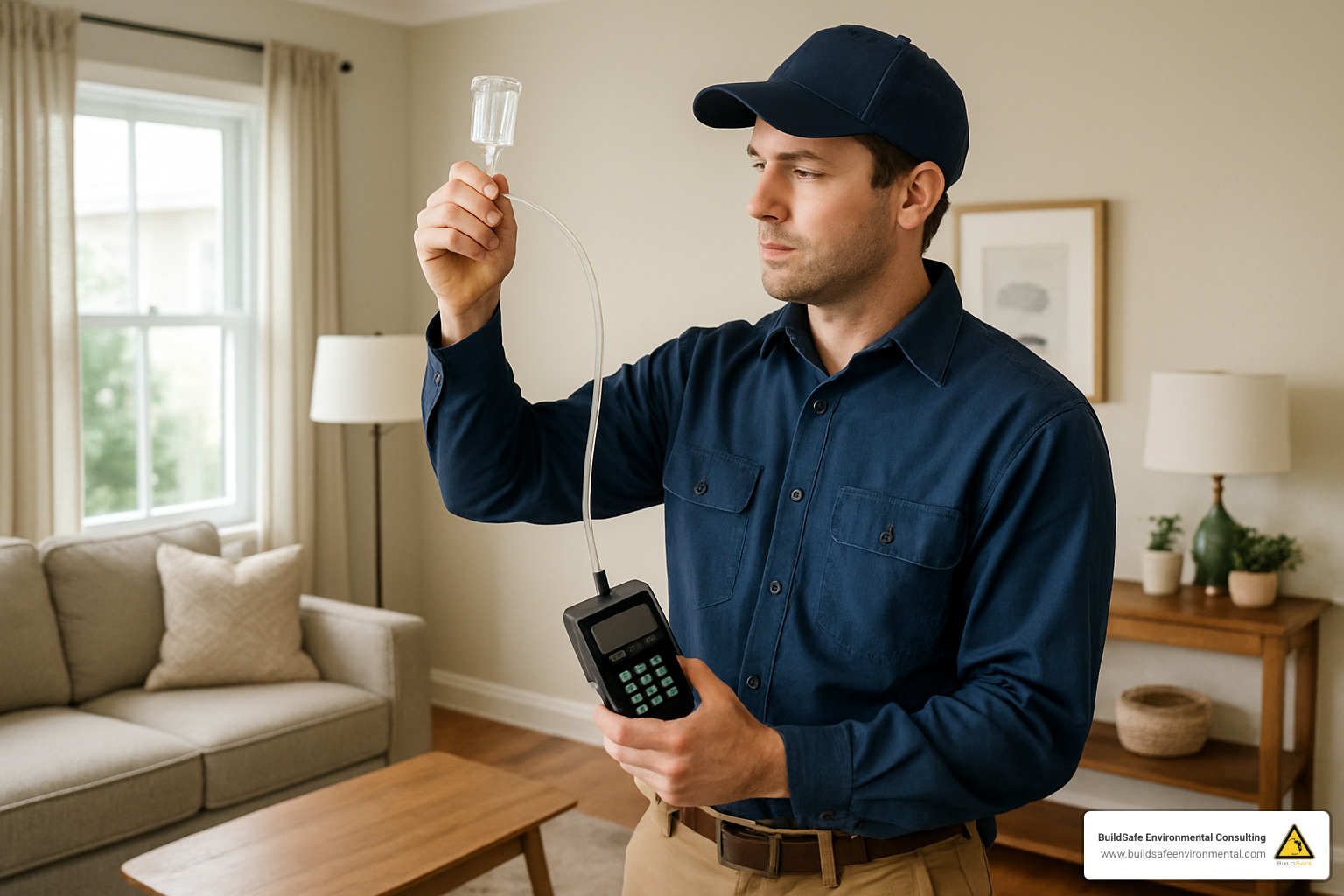
Wondering what happens during residential environmental testing? Let me walk you through our thoughtful process at BuildSafe Environmental Consulting. Think of it as a health check-up for your home—systematic, thorough, and designed to give you peace of mind.
1. Initial Consultation
We start with a conversation—not just about your home, but about your concerns and observations. Are you noticing unusual odors? Has anyone experienced unexplained headaches? Did your basement flood last spring? These details help us focus our investigation where it matters most. This personalized approach ensures we’re addressing your specific situation rather than following a one-size-fits-all checklist.
2. Development of a Sampling Plan
Based on our chat and your home’s history, we craft a custom testing strategy. For a 1960s home with a damp basement, we might focus on mold and radon. For a 1950s home undergoing renovation, asbestos and lead might be our priority. This targeted approach saves you money while ensuring we don’t miss critical hazards.
3. Sample Collection
This is where science meets detective work. Our certified technicians arrive with specialized equipment to gather evidence about your home’s health. We might capture air samples using spore traps, collect dust with specialized wipes, or carefully extract small material samples for asbestos testing. Throughout this process, we’re happy to explain what we’re doing and why—no mystery or jargon, just clear communication.
4. Laboratory Analysis
Your samples then journey to accredited laboratories where scientists analyze them using sophisticated equipment. This typically takes 3-5 business days, though we can expedite results in urgent situations. The labs provide detailed reports showing exactly what’s in your home environment and at what levels.
5. Comprehensive Report
When the results come in, we translate the scientific data into plain English. Your report clearly explains what we found, whether those levels exceed safety thresholds, and what it all means for your family’s health. No confusing terminology or vague conclusions—just straightforward information you can act on.
6. Consultation and Recommendations
Numbers on paper can be overwhelming, so we schedule a follow-up conversation to walk through your results together. We’ll answer questions like “Is this level of mold dangerous?” or “Do we need to address this immediately?” If we’ve found concerning issues, we’ll outline practical next steps based on our years of experience.
7. Remediation (If Necessary)
If your home needs remediation, we’ll help you understand what that entails. While BuildSafe doesn’t perform remediation work (this keeps our testing unbiased), we can connect you with qualified professionals who do. We’ve built relationships with trusted remediation companies throughout Colorado who meet our high standards.
8. Post-Remediation Verification
After remediation, how do you know the problem is truly solved? That’s where verification testing comes in. We return to collect new samples, ensuring the hazard has been properly addressed. This step is crucial—it provides documented proof that your home is now safe.
9. Ongoing Maintenance Plan
Your journey to a healthier home doesn’t end with remediation. We’ll help you develop simple strategies to maintain good indoor air quality and prevent future issues. This might include seasonal maintenance tips or recommendations for humidity control—practical advice custom to Colorado’s unique climate.
As one Denver client shared: “The inspector was very professional and did a great job of explaining everything that he was doing and what the results would mean. He also gave me helpful tips on how to keep my air quality as high as possible.”
Residential Environmental Testing Kit Options (DIY)
Not ready for professional testing? DIY kits offer a starting point for curious homeowners. These range from simple mold petri dishes to more sophisticated radon canisters. Some collect samples that you’ll mail to a lab, while others provide immediate (though less precise) results.
The most common DIY options include mold test kits with growth media, radon test kits with charcoal canisters, water test vials, lead test swabs with chemical reagents, and VOC collection badges. For a more comprehensive approach, consider a remote testing package like the myHome Remote Test Kit, which includes professional lab analysis.
While these kits are accessible and affordable, they come with limitations. DIY kits typically lack the sensitivity of professional equipment, may be difficult to interpret without training, and often don’t meet legal requirements for real estate transactions. They’re a bit like using a home blood pressure cuff versus getting a full physical with your doctor—helpful, but not comprehensive.
Why Professional Testing Often Pays Off
Professional testing might seem more expensive initially, but it often delivers better value in the long run. Here’s why many Colorado homeowners ultimately choose professional services:
Expertise matters. Our technicians know exactly where problems tend to hide in Colorado homes—like that specific corner where condensation forms in our dry climate, or the typical trouble spots in homes of certain ages and construction styles.
Our equipment detects what DIY kits miss. We use commercial-grade instruments calibrated to detect even trace amounts of contaminants. This precision can be crucial, especially for hazards like radon where small measurement errors can lead to big misunderstandings.
We see the big picture. Rather than testing for a single contaminant, we evaluate your entire home environment, often identifying interrelated issues that a single test would miss.
Our reports stand up to scrutiny. Our documentation meets requirements for real estate transactions, insurance claims, and legal proceedings—something particularly valuable when buying, selling, or renovating a home.
For certain situations, professional testing isn’t just better—it’s essential. If you’re planning a renovation in an older home, for example, proper asbestos testing could literally be lifesaving. Learn more in our blog post: Asbestos Testing: Why It’s Crucial Before a Renovation Project.
Residential environmental testing isn’t about finding problems—it’s about finding solutions. Whether you’re buying a new home, addressing unexplained health issues, or simply wanting confirmation that your living space is healthy, proper testing provides the clarity you need to move forward with confidence.
Professional vs DIY: Making the Smart Choice
When it comes to residential environmental testing, you’ve got options – professional services or DIY kits. It’s a bit like deciding whether to diagnose that strange noise in your car yourself or take it to a mechanic. Let’s break down what you need to know to make the smart choice for your family’s health and your wallet.
Cost Considerations
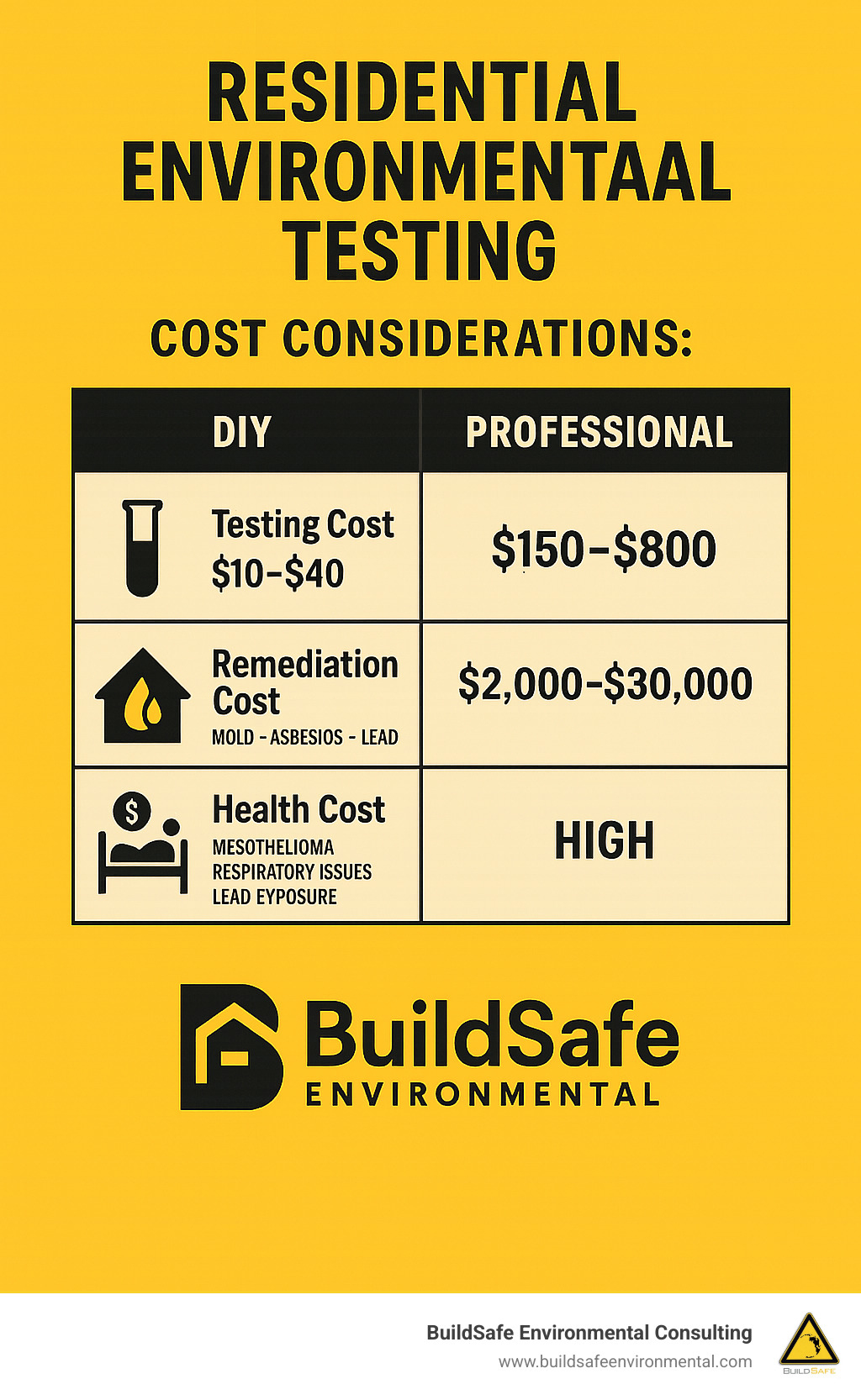
I’ve found that many homeowners initially balk at professional testing costs, but it helps to see the complete picture. Professional residential environmental testing typically ranges:
- Basic air quality testing: $300-$600
- Comprehensive mold inspection: $400-$800
- Asbestos testing: $200-$800 depending on samples needed
- Lead testing: $300-$600
- Radon testing: $150-$300
- Water quality testing: $200-$500
- Comprehensive environmental assessment: $1,000-$2,500
These numbers might make you wince at first glance. But here’s the reality check – compare them to what you might face if problems go undetected:
The average mold removal job costs $2,347, while asbestos remediation can run from $1,120 for a small area to a whopping $30,000 for whole-house treatment. Lead abatement? You’re looking at $10,000-$30,000 for a typical home.
And we haven’t even touched on the medical costs. Mesothelioma treatment can cost $10,000-$50,000 per month. Chronic respiratory conditions rack up thousands in annual medical bills. And the developmental issues from lead exposure? Those costs – in educational interventions and reduced lifetime earnings – are simply immeasurable.
I remember a couple who were about to buy their dream home in Longmont. They hesitated about spending $600 on comprehensive testing, but decided to play it safe. Good thing they did – we finded significant mold growth in the crawlspace that would have cost over $15,000 to remediate. That $600 investment saved them from a five-figure repair bill and potential health issues for their young children.
Want to learn more about the financial implications of ignoring environmental hazards? Check out our blog: The True Cost of Ignoring Mold in Your Home (And How to Avoid It).
Certifications & Standards to Look For
Not all residential environmental testing providers are created equal. When you’re trusting someone to evaluate your home’s safety, credentials matter. Here are the gold standards to look for:
ACAC Certification shows that your inspector has met the American Council for Accredited Certification standards – look for designations like Certified Microbial Investigator (CMI). NIOSH Training from the National Institute for Occupational Safety and Health indicates proper health and safety training.
Don’t overlook state licensing – many states require specific credentials for asbestos and lead testing. EPA Training is particularly crucial for lead and asbestos assessment. For the labs analyzing your samples, AIHA Accreditation ensures quality control. And if water damage is involved, look for IICRC Certification.
At BuildSafe, we’re proud that all our technicians hold these relevant certifications and follow established protocols from organizations like the EPA, OSHA, and ASHRAE. We believe your family’s health deserves nothing less than properly trained professionals.
Next Steps After Receiving Your Environmental Report
Getting your test results is just the beginning. Here’s how to turn that information into action:
First, review the data carefully. Your report will show which contaminants were found and at what levels. Don’t be intimidated by the technical language – call us to help interpret what the numbers mean for your specific situation.
Next, prioritize hazards based on severity. Some issues need immediate attention, while others might be monitored. For example, liftd radon levels require prompt mitigation, while minor liftd VOC levels might be addressed through improved ventilation.
When it’s time to develop a remediation plan, focus on comprehensive solutions. I’ve seen too many homeowners treat the symptoms without addressing root causes. That musty smell in your basement isn’t just about cleaning visible mold – it’s about fixing the water intrusion that caused it.
Hiring qualified professionals for remediation is crucial. Look for proper certifications specific to your hazard. And always verify remediation success with post-remediation testing – what we call “clearance testing.” This step ensures the problem was truly resolved, not just covered up.
Finally, implement preventive measures to keep your home healthy long-term. Something as simple as maintaining proper humidity levels can prevent future mold growth.
I remember working with a Fort Collins family who finded liftd mold spore counts in their finished basement. After receiving their report, they hired a qualified remediation company to remove affected materials, fixed the underlying moisture issue with better drainage, and then had us perform clearance testing. Now they maintain proper humidity levels with a dehumidifier and haven’t had any recurrence in three years. Their youngest daughter’s persistent “winter cough” disappeared too – a reminder of why this work matters so much.
Frequently Asked Questions about Residential Environmental Testing
What does residential environmental testing include?
When folks ask me what residential environmental testing covers, I explain that it’s really about getting a complete picture of your home’s health.
Think of it as a medical check-up for your house. We typically assess your indoor air quality, looking for mold spores, VOCs, and particulate matter that might be floating around unseen. We’ll check your water for bacteria, heavy metals, and pesticides that could be affecting your family’s health. We also examine building materials for dangers like asbestos and lead paint, especially in older homes.
Beyond that, we’ll test the soil around your property, measure radon levels (a big concern here in Colorado), and identify allergens and biological contaminants that might be triggering those mysterious sneezes or headaches.
What makes our approach at BuildSafe special is that we don’t use a one-size-fits-all approach. Your testing plan gets customized based on your home’s age, your specific concerns, and what we observe during our initial assessment. Your 1920s Denver bungalow will need different attention than a 2010 Fort Collins townhome.
How long does testing take & what does it cost?
Time is always a consideration when planning residential environmental testing. Here’s what you can expect:
Our team typically spends about 1-3 hours in your home collecting samples, depending on the scope of testing. Most laboratory analysis takes 3-5 business days to complete, though some specialized tests might take longer. For radon testing, monitoring devices need to stay in place for 48-96 hours to get accurate readings.
As for costs, they range widely based on what you need. Basic single-contaminant testing might start around $150, while comprehensive environmental assessments that cover multiple potential hazards typically run up to $2,500.
I always make sure our clients receive detailed quotes before we begin any work. There’s nothing worse than surprise fees when it comes to something as important as your home’s health, so we’re completely transparent about costs upfront.
Will hazards delay my real-estate closing?
This is one of the most common questions I hear, especially in our hot Colorado real estate market. The honest answer is: environmental hazards can impact your closing timeline, but with proper planning, delays can be minimized or avoided entirely.
For buyers, I recommend scheduling testing early in your inspection period. This gives you time to digest the results and negotiate remediation if needed. One client in Boulder was able to secure a $12,000 credit after we finded asbestos in the basement ceiling – all without delaying closing by a single day.
If you’re selling, consider pre-listing testing. Addressing issues before putting your home on the market not only prevents last-minute closing delays but often results in smoother transactions and better offers. As Nelson Salazar, a real estate professional I work with often, puts it: “It’s best for everyone to know up front what the issues are.”
When hazards are found during a transaction, you typically have several options: the seller can complete remediation before closing, you can negotiate a price adjustment to cover remediation costs, or you can arrange for funds to be held in escrow for post-closing remediation.
I’ve found that transparency about environmental testing results generally leads to smoother transactions, even when issues are finded. Buyers appreciate sellers who are forthcoming about potential problems, and this honesty often builds the trust needed to work through any challenges together.
Conclusion
Your home should be your sanctuary—a place where you and your family can truly relax, knowing you’re safe and protected. That’s exactly what residential environmental testing provides: the genuine peace of mind that comes from knowing your living space isn’t harboring invisible threats.
Here at BuildSafe Environmental Consulting, we’ve walked alongside thousands of Colorado homeowners on their journey to creating healthier homes. As Colorado’s trusted third-party verification partner, we take pride in providing honest, accurate assessments without the conflict of interest that comes with offering remediation services. Our independence means you can trust our results completely.
The numbers tell a sobering story—radon silently claims 21,000 lives annually through lung cancer, while fungal infections send over 75,000 Americans to the hospital each year. With the average American home now over 40 years old, these environmental risks aren’t decreasing; they’re becoming more common as our housing stock ages.
Think of residential environmental testing as preventive healthcare for your home. Just as you schedule regular check-ups with your doctor, your home benefits from periodic environmental assessments—especially after events like water damage, renovations, or when family members experience unexplained health symptoms that improve when they’re away from home.
One client recently told me, “Craig, before your testing, every headache made me wonder if something in our home was making us sick. Now we sleep better at night—both literally and figuratively.” That’s the change we love to see: from worry to confidence, from uncertainty to clarity.
Creating a healthy home isn’t a one-and-done project but an ongoing commitment to your family’s wellbeing. Regular testing helps you catch small issues before they become major problems, saving both your health and your wallet in the long run.
Ready to transform your question marks into peace of mind? Get started with professional environmental testing today. After all, your family deserves to breathe, drink, sleep, and live with complete confidence in the sanctuary you call home.