Understanding Mold Testing in Denver County
When it comes to mold testing Denver County services, I’ve seen how proper testing can make all the difference for property owners. Most homeowners are surprised to learn that despite our relatively dry climate here in Colorado, mold problems are remarkably common in our homes and businesses.
I’m Craig Luckey, owner of BuildSafe Environmental Consulting, and I’ve spent years helping Denver residents protect their properties and families through professional mold testing. What often surprises my clients is how quickly mold can establish itself – it only takes about 24 hours after water damage for mold to begin growing and releasing spores into your home.
The American Society of Home Inspectors has found that over 60% of basements experience moisture seepage, and 38% develop mold and fungus growth due to liftd moisture levels. This is particularly concerning when you consider that indoor air can be 10-20 times more unhealthy than outdoor air, with the EPA ranking poor indoor air quality among the top five environmental health risks.
For Denver property owners wondering about costs, mold testing Denver County services typically range between $285-$500 for basic assessments. Here’s what you can generally expect:
A basic inspection starts around $285 for one location with two samples, while standard testing for properties up to 3000 sq. ft. with three samples runs about $395. If additional samples are needed, they typically cost $65-100 each. Most clients receive their results within 24-48 hours, though rush options can deliver results in as little as 3 hours when needed.
When choosing an inspector, I always recommend looking for ACAC-certified professionals who offer “testing only” services. This helps avoid potential conflicts of interest that can arise when the same company handles both testing and remediation.
For those interested in learning more about related services, we also provide Indoor air quality testing Denver and air quality test for mold services throughout the region.
How to Use This Guide
I’ve created this comprehensive guide as your roadmap to understanding mold testing in Denver County. Whether you’ve spotted a suspicious dark patch in your basement, you’re maintaining a commercial property, or you’re a real estate professional ensuring compliance before a sale, you’ll find the information you need organized in a straightforward way.
This guide walks you through everything you need to know, step by step. You’ll learn why mold testing is particularly important in Denver’s unique climate with our snowmelt events and seasonal moisture patterns. I’ll share the warning signs that indicate it’s time to call a professional, and explain exactly what happens during a thorough mold inspection.
You’ll also find how to make sense of your test results, what steps to take next if mold is found, and how to choose a qualified inspector who won’t try to upsell you on unnecessary remediation. Plus, I’ve included practical preventative measures to keep your property mold-free year-round.
My team at BuildSafe Environmental Consulting is dedicated to providing accurate, third-party verified testing that gives our clients peace of mind. We believe in transparent, honest assessments that help Denver residents make informed decisions about their properties and protect their families’ health.
Mold Testing Denver County: Why It’s Essential
When water sneaks into your Denver home—whether from a leaky roof, burst pipe, or spring snowmelt—mold doesn’t waste any time. Within just 24 hours, these microscopic opportunists can take root and begin their silent invasion. This rapid timeline makes mold testing Denver County services not just helpful, but essential for protecting both your property and your family’s health.
Living in Denver’s unique climate creates special challenges. Despite our relatively dry air, the American Society of Home Inspectors has found that over 60% of basements still experience moisture seepage. For Denver County homes with basements (which are quite common here), this statistic should raise eyebrows—and perhaps prompt a call to a professional.
“We’re really looking to establish what we call a normal fungal ecology—which is just science-speak for ‘no more mold than should naturally be there,'” explains our lead inspector. “But to fix a problem, we first need to accurately identify what’s happening and where.”
The EPA has compiled extensive research on mold prevention that underscores a critical point: proper testing forms the foundation of any effective remediation strategy. If you’d like to dig deeper into why testing matters for your specific situation, our detailed article on mold testing expectations and importance covers everything you need to know.
What is mold testing denver county service?
When you schedule a mold testing Denver County service with BuildSafe, we’re doing much more than just looking for visible mold. Our comprehensive process creates a scientific snapshot of your indoor environment.
We begin by collecting air samples using specialized equipment that captures airborne mold spores—the invisible threat that often causes the most health concerns. For visible mold or suspicious areas, we’ll take surface samples using swabs or tape lifts. Sometimes, we might need small bulk samples of material for more thorough analysis.
Crucially, we always collect baseline outdoor samples. This gives us a control measurement of what’s naturally present in Denver’s environment, allowing us to determine if your indoor levels are liftd by comparison.
All samples are sent to an independent, accredited laboratory—never in-house—ensuring completely unbiased results. This third-party verification is what sets professional testing apart from DIY kits.
“I was impressed by how thoroughly they explained each step,” shared Maria, a homeowner in Washington Park. “They showed me exactly why they were sampling specific areas and how the outdoor comparison would help interpret my results. It made the whole process much less mysterious.”
Why mold testing denver county is critical for health and property value
The importance of professional mold testing Denver County extends far beyond simple curiosity about what might be growing in your home. The stakes are actually quite high, affecting both your family’s wellbeing and your financial investment.
From a health perspective, mold exposure can trigger a cascade of problems. Many Denver residents first notice respiratory issues—persistent coughing, wheezing, or worsening asthma symptoms. Others experience allergic reactions like sneezing fits, skin rashes, or irritated eyes. For sensitive individuals, certain molds can even lead to Chronic Inflammatory Response Syndrome (CIRS), a debilitating condition that can impact multiple body systems.
The financial implications are equally serious. Unaddressed mold gradually deteriorates building materials, causing progressive structural damage that grows more expensive to repair over time. If you’re planning to sell your home, Colorado law requires disclosure of known mold issues, and properties with documented problems typically sell for 3-20% less than comparable mold-free homes.
On the flip side, having professional documentation showing your property has been tested and cleared can actually boost buyer confidence. As Denver realtor Jennifer Hawkins notes, “In today’s market, buyers are increasingly concerned about indoor air quality. I’ve seen homes with professional mold clearance documentation consistently sell faster and closer to asking price.”
For business owners, proper testing demonstrates due diligence in maintaining a safe environment—potentially preventing costly workers’ compensation claims or litigation related to indoor air quality. It’s not just about compliance; it’s about protecting your people and your business.
When it comes to mold testing Denver County services, the small upfront investment in professional testing provides both peace of mind and significant long-term protection for what matters most.
Common Signs You Need Mold Testing
Recognizing the early warning signs of mold problems can save you thousands in remediation costs and protect your health. Here are the key indicators that it’s time to schedule professional mold testing Denver County services:
Your home speaks to you in many ways, and when it comes to mold, it’s important to listen. Those visible mold spots on your bathroom ceiling might seem minor, but they’re often just the tip of the iceberg. Even more telling can be those persistent musty odors that greet you when you open the basement door – your nose is actually a sophisticated mold detector!
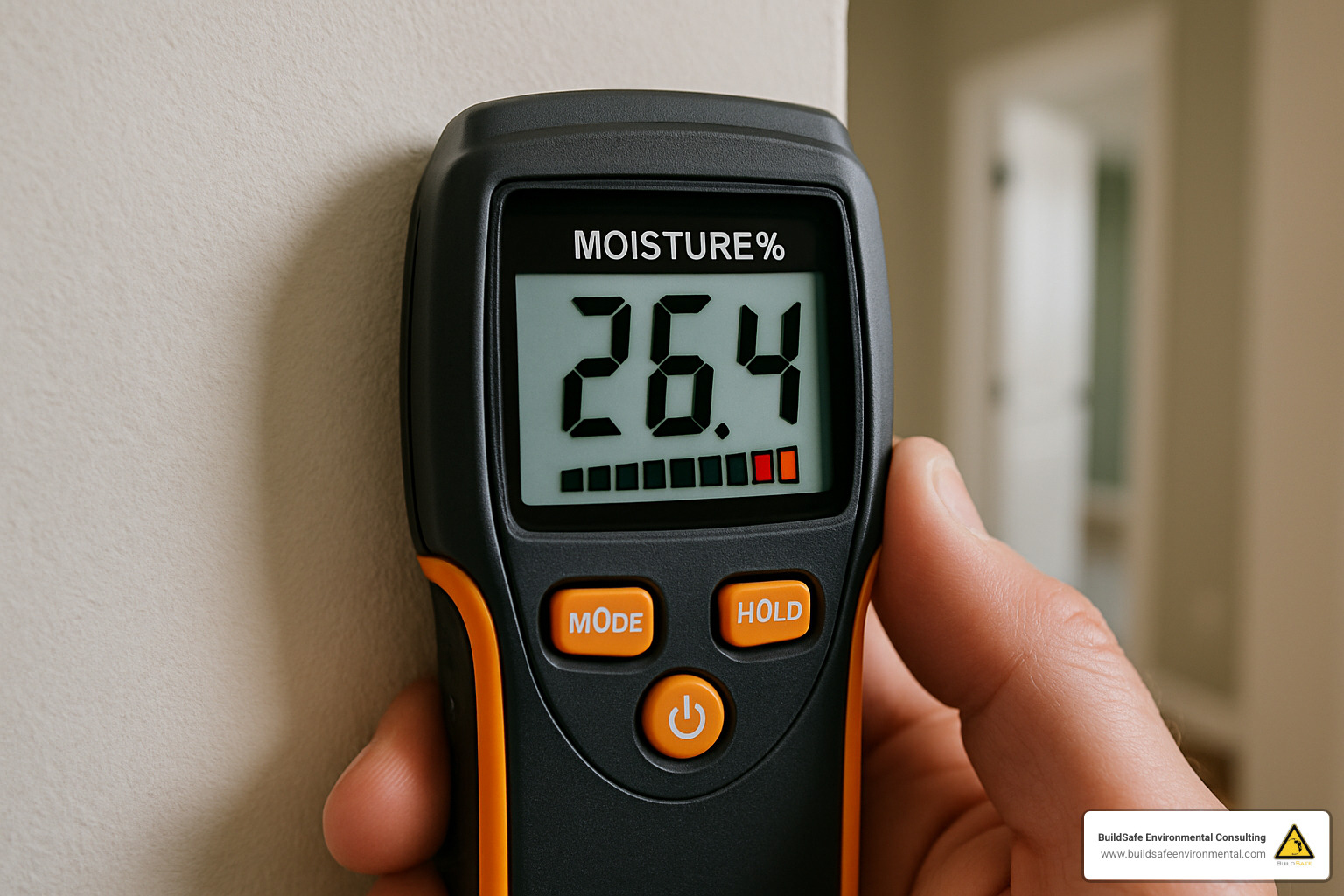
Water is mold’s best friend, so any signs of recent leaks or water damage deserve attention. I recently visited a Denver home where the family had fixed a pipe leak but didn’t realize mold was already growing behind their newly repaired drywall. The moisture meter readings were off the charts despite the surface looking perfectly dry.
Pay attention to your body too. Those unexplained allergies that mysteriously improve when you’re at work? They might be your body’s way of telling you something’s not right at home. One Denver client told me, “I kept getting headaches in my home office but felt fine everywhere else. After testing, we found liftd Aspergillus levels from a slow leak in the bathroom above. Without testing, I might have continued suffering without understanding why.”
Condensation on windows or pipes is another red flag, especially during Denver’s cold winters when the temperature difference between indoors and outdoors is extreme. And if you notice patterns of occupant illness – perhaps your kids seem to get more respiratory infections than their friends – it might be time to investigate the air quality in your home.
DIY Red Flags vs. Professional Triggers
Sometimes it’s hard to know whether to handle a situation yourself or call in the professionals. While that small patch of bathroom mold might be manageable with some bleach and elbow grease, other scenarios definitely warrant expert mold testing Denver County services.
Limited visibility is a major trigger for professional testing. As one of our certified inspectors often says, “What you can see is usually just a fraction of what’s actually there.” Mold loves dark, hidden spaces – inside wall cavities, beneath floorboards, and in crawlspaces where you rarely venture.
Recently completed a renovation or remediation project? A post-remediation check provides peace of mind that the problem was truly solved. One Denver contractor we work with always recommends this to his clients: “It’s the only way to be certain the job was done right.”
Professional testing is also valuable for what I call “peace-of-mind testing” – especially if you have vulnerable family members like infants, elderly relatives, or someone with asthma or immune system challenges. As a father myself, I understand wanting absolute certainty that your home is safe for your loved ones.
“Many clients call us after attempting DIY testing with store-bought kits,” explains our senior inspector. “These kits often provide misleading results because they don’t include professional sampling techniques, outdoor baseline comparisons, or proper lab analysis. When health and property value are at stake, professional testing provides the accuracy and documentation you need.”
The bottom line? If you can see mold covering less than 10 square feet, understand its moisture source, and nobody’s experiencing symptoms, you might be in DIY territory. But for everything else – especially when mold is suspected but not visible, water damage wasn’t immediately addressed, or people are experiencing symptoms – it’s time to bring in the experts. Your health and home deserve nothing less.
Denver Climate, Mold Types & Health Risks
Denver’s unique climate creates a fascinating paradox when it comes to mold growth. While Colorado is known for its semi-arid conditions with relatively low humidity, don’t let that fool you – several factors create surprisingly ideal conditions for mold in Denver County properties.
Denver homes face moisture challenges from rapid snowmelt events that can seep into foundations, dramatic temperature swings causing unexpected condensation, and even irrigation systems that quietly leak against your home’s structure. Many Denver properties feature basement construction, creating below-grade spaces where moisture can become trapped. Even our mountain drainage patterns affect groundwater levels in ways unique to our region.
“What makes Denver so tricky is that homeowners often don’t expect mold because of our ‘dry’ reputation,” explains our senior inspector. “But our freeze-thaw cycle is particularly problematic. Water expands when it freezes, creating tiny cracks in foundations and building materials. When temperatures rise, that moisture can penetrate deeper, creating ideal conditions for mold growth in hidden areas.”
When mold testing Denver County homes, we regularly find several common culprits:
Stachybotrys chartarum – often dramatically called “black mold” – requires constant moisture and loves cellulose-rich materials like drywall and wood. It produces mycotoxins that can cause serious health concerns.
Aspergillus is incredibly adaptable, with various species growing at different humidity levels. Some produce aflatoxins, which are known carcinogens and particularly concerning in indoor environments.
Cladosporium might be the most versatile mold we encounter, thriving in both warm and cool locations. It commonly appears on fabrics, wood surfaces, and even inside HVAC systems where moisture accumulates.
Penicillium – yes, related to the antibiotic – is frequently found in water-damaged buildings, particularly in carpets, wallpaper, and insulation. Some species produce mycotoxins that can cause health problems.
For more detailed information about molds commonly found in Colorado homes, visit our blog post on common types of mold found in Colorado homes.
The EPA provides extensive research on indoor mold and health impacts, confirming that exposure can cause allergic reactions, asthma attacks, and other respiratory issues.
Seasonal Moisture Patterns Unique to Denver
Living in Denver means experiencing four distinct seasons, each bringing its own moisture challenges that affect mold growth patterns.
Spring brings a double-whammy of heavy rains combined with snowmelt that can oversaturate soil around foundations. Those beautiful warm days following cold nights create perfect conditions for condensation on cold surfaces. The increased humidity during wet periods provides temporary ideal conditions for mold growth, even in our normally dry climate.
Summer in Denver means those famous afternoon thunderstorms – brief but intense precipitation that can find its way into homes. Irrigation systems run frequently during our hot, dry summers, potentially causing water intrusion where sprinklers spray against foundations. And those wonderful air conditioners create temperature differentials that can lead to unexpected condensation in attics and wall cavities.
Fall brings falling leaves that clog gutters, often leading to water intrusion around rooflines. The reduced sun exposure slows evaporation after rainfall, and as we prepare our homes for winter by sealing them tighter, we inadvertently reduce ventilation – trapping moisture inside.
Winter creates some of our biggest mold challenges as snow accumulation against foundations can lead to water intrusion during thaws. Ice dams on roofs force water under shingles and into attics, and the contrast between heated indoor air and cold surfaces creates condensation throughout homes.
Health Symptoms Linked to Local Mold Species
Different mold species common in Denver County can cause varying health effects, and understanding these connections helps us better serve our mold testing Denver County clients.
Stachybotrys exposure often correlates with chronic fatigue, persistent headaches, memory issues, and respiratory problems including coughing and shortness of breath. One Denver resident with Chronic Inflammatory Response Syndrome (CIRS) shared: “I couldn’t understand why I was constantly sick until professional mold testing revealed liftd levels of several toxic mold species in my home. The proper testing was the first step in my recovery journey.”
Aspergillus typically triggers sinus infections, respiratory inflammation, and in severe cases, lung infections. Some people develop allergic bronchopulmonary aspergillosis – a condition where the immune system overreacts to the mold.
Cladosporium often manifests as skin rashes, eye irritation, sinus inflammation, and worsening of asthma symptoms. Many clients call us after noticing these symptoms improve when they’re away from home.
Penicillium exposure frequently leads to chronic sinusitis, lung inflammation, allergic reactions, and sometimes neurological symptoms in sensitive individuals.
Certain people face higher risks from these molds – children and infants whose bodies are still developing, elderly individuals with weakened immune responses, people with existing respiratory conditions, those with compromised immune systems, and individuals with genetic susceptibility to biotoxin illness (specifically those with the HLA-DR gene variant).
The health impacts of mold are why proper mold testing Denver County services are so crucial – identifying the specific molds present helps healthcare providers make connections between symptoms and exposure, leading to more effective treatment approaches and ultimately, healthier homes and families throughout Denver County.
Professional Mold Inspection & Testing Process
When you invite a professional into your home for mold testing Denver County services, you’re taking an important step toward protecting both your property and your family’s health. At BuildSafe Environmental Consulting, we approach each inspection with meticulous care and attention to detail.
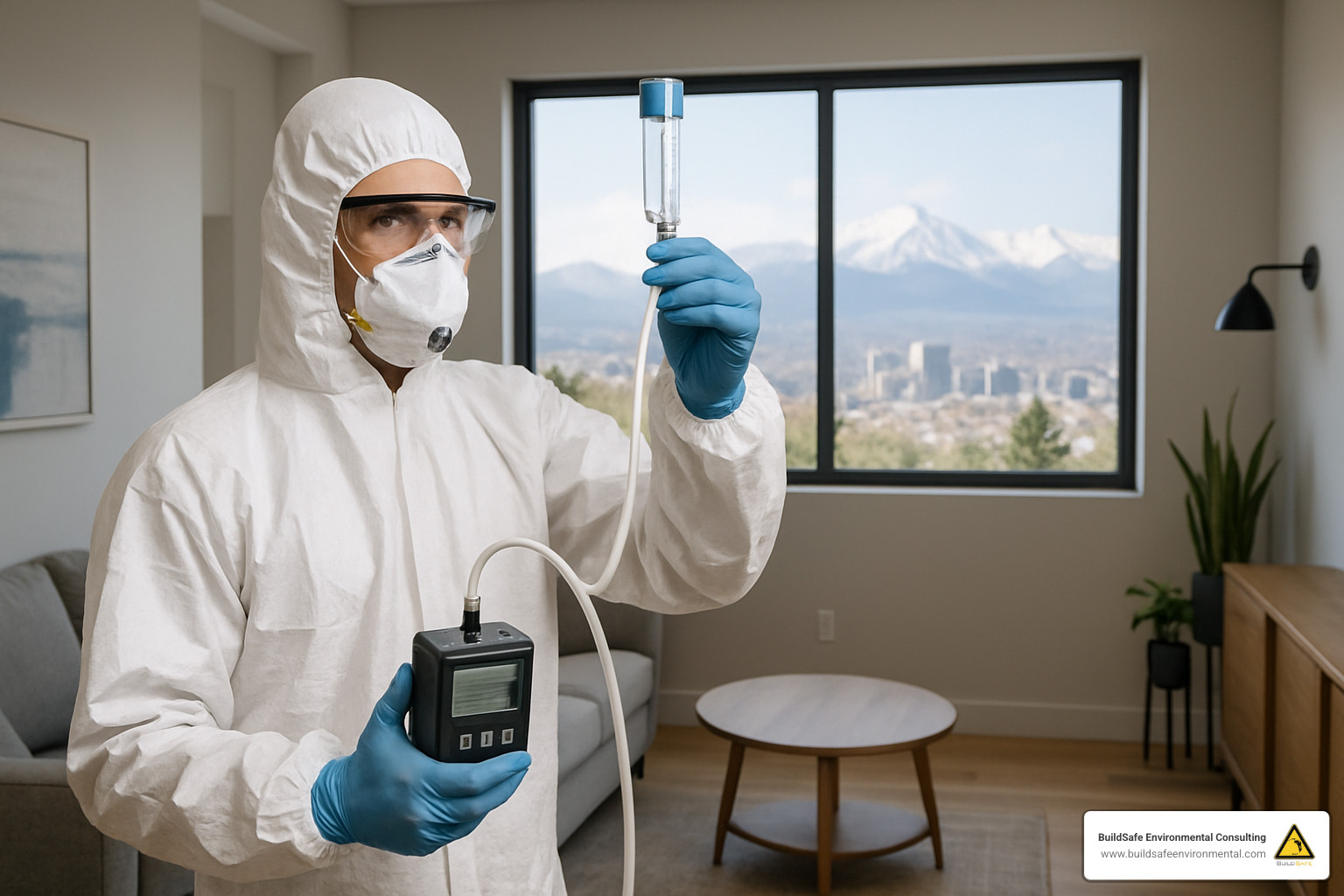
Our inspectors don’t just walk in and start taking samples. They bring years of experience and proper certification from the American Council for Accredited Certification (ACAC), following the rigorous IAC2 standards that ensure reliable, accurate results. We use only properly calibrated equipment and standardized methods that give you confidence in the findings.
Most Denver homeowners are pleased to learn that lab results typically arrive within 24-48 hours. And when situations are urgent, we offer rush options that can deliver results in as little as 3 hours. You can learn more about our comprehensive approach on our mold testing service page.
Step-by-Step Mold Inspection Flow
Your mold testing Denver County process begins even before we arrive. When you call us, we’ll have an initial conversation about your concerns, which helps us prepare for the inspection. Once we’re on-site, here’s what happens:
First, we’ll sit down for a proper intake interview to discuss any symptoms you’ve noticed, review your property’s history with water issues, and identify areas that might be high-risk for mold growth. This conversation is invaluable—you know your home better than anyone.
Next comes the visual inspection. Our inspectors examine every accessible area, documenting any visible mold, water damage, or moisture issues they find. As one Denver homeowner told us, “I was impressed by how thorough they were, checking places I wouldn’t have thought to look.”
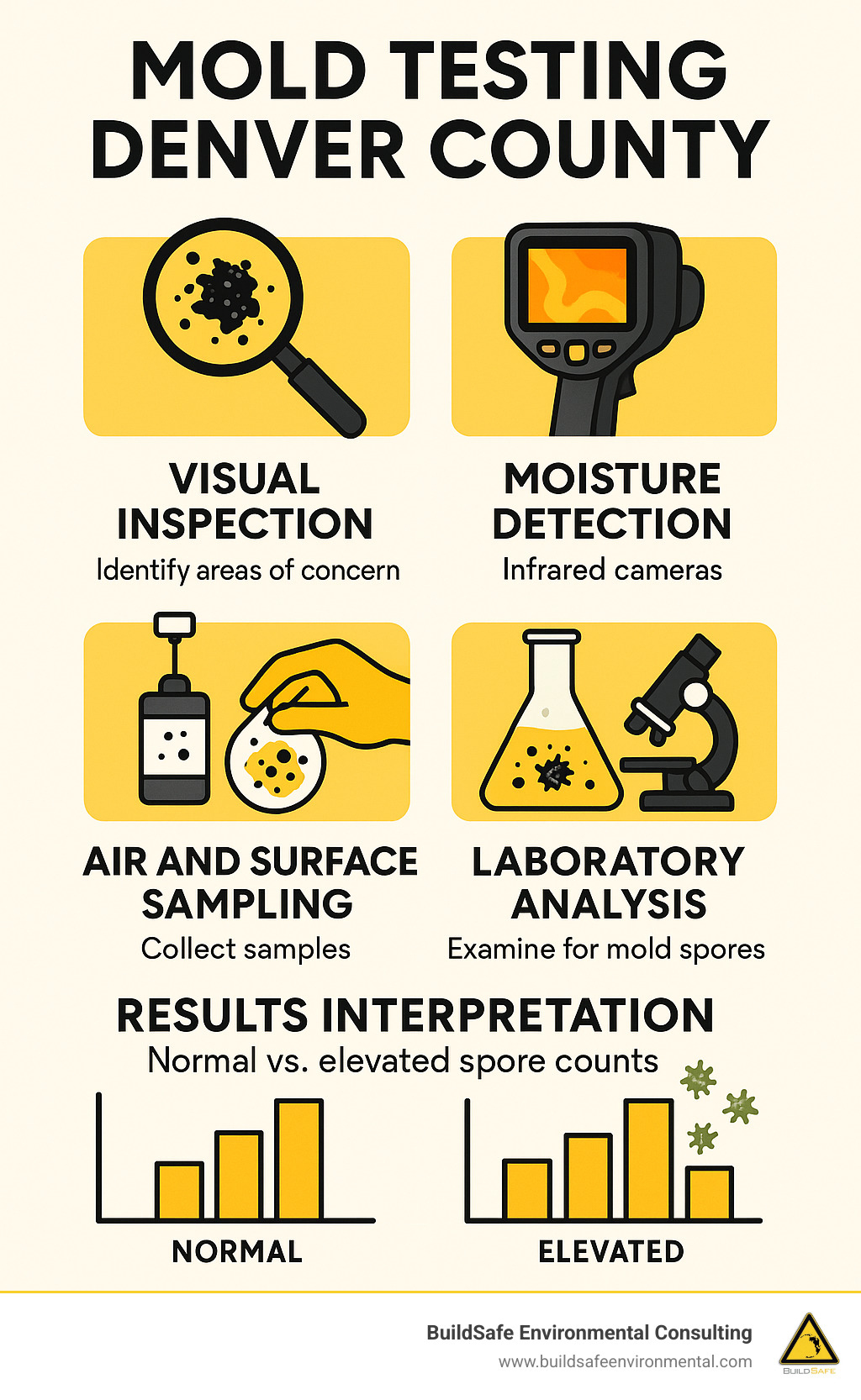
The moisture detection phase is where high-tech tools come into play. We use calibrated moisture meters to identify damp building materials that might not feel wet to the touch. Our infrared thermal imaging cameras can detect hidden moisture lurking behind walls and ceilings—moisture that could be feeding mold colonies you can’t see. We’ll also measure humidity levels throughout your property.
Based on everything we’ve found, we’ll develop a strategic sampling plan, determining the most appropriate sample types and locations to give a complete picture of your home’s condition. This always includes outdoor control samples to establish what’s normal in your environment.
The actual sample collection might include air sampling using calibrated spore trap cassettes, surface sampling via swabs or tape lifts, and sometimes bulk sampling of building materials when necessary to understand the full extent of the problem.
After collection, samples are sent to an accredited, independent laboratory where trained mycologists analyze them, identifying and quantifying the mold species present. This objective, third-party verification is crucial for accurate results.
Finally, we prepare a detailed written report with clear findings and photos, along with specific recommendations for next steps. But we don’t just email it and disappear—we schedule a personal consultation to explain what it all means for you and your home.
For those who’ve already completed mold remediation, we offer verification testing to ensure the job was done right. Learn why this step is so important in our blog about post-remediation verification.
Types of Mold Tests: Air vs. Surface vs. Bulk
Not all mold tests are created equal, and different situations call for different approaches. Here’s how the main testing methods compare:
| Test Type | Primary Purpose | When to Use | Typical Cost | Turnaround | Pros | Cons |
|---|---|---|---|---|---|---|
| Air Sampling | Detect airborne spores | General assessment; hidden mold; post-remediation | $75-140 per sample | 24-48 hrs | Detects invisible airborne spores; quantifies concentration | May miss dormant mold; requires comparison to outdoor sample |
| Surface Sampling (Swab/Tape) | Identify visible mold | Confirm visible growth; surface contamination | $65-75 per sample | 24-48 hrs | Identifies specific species; confirms visible mold | Limited to accessible surfaces; doesn’t measure airborne exposure |
| Bulk Sampling | Analyze material contamination | Determine penetration depth; material replacement decisions | $75-100 per sample | 24-72 hrs | Determines mold penetration; helps with remediation planning | Destructive sampling; limited sampling area |
“I like to explain it this way,” shares our senior inspector with a smile. “Air samples tell us what you’re breathing, surface samples identify exactly what’s growing where we can see it, and bulk samples show us how deeply the mold has invaded your materials. Together, they give us the complete story of what’s happening in your home.”
Most comprehensive inspections include multiple types of testing to provide the clearest picture possible. The combination helps us make the most informed recommendations for your specific situation.
Interpreting Your Mold Inspection Report
When your report arrives, it contains valuable information that guides your next steps. Understanding what it all means is essential.
The heart of most reports is the comparison between indoor and outdoor spore counts. In a healthy home, indoor counts should generally be lower than outdoor counts—nature has plenty of mold spores floating around, but your home should have fewer. When indoor levels significantly exceed outdoor levels, that’s a red flag indicating a potential indoor mold source.
Many reports include a numerical “mold score” ranging from 0-300, with higher numbers indicating greater concern. Generally speaking, scores above 150 warrant further investigation or remediation. This scoring system helps you understand the severity of your situation at a glance.
Species identification is another crucial element. Different types of mold pose different risks—some, like certain Stachybotrys strains (often called “black mold”), shouldn’t be present indoors at all. Your report will identify which mold genera and sometimes specific species are present, helping you understand potential health implications.
A proper report doesn’t just tell you what’s wrong—it helps identify why. The moisture source identification section points to likely causes of your mold problem, whether it’s a leaky pipe, poor ventilation, or foundation seepage. Addressing these underlying causes is essential for successful long-term remediation.
Finally, your report should include clear recommendations and next steps. This guidance helps you determine whether remediation is necessary, whether it’s something you can handle yourself or requires professional intervention, and what preventative measures will address the root causes.
“The report was worth every penny,” one Denver client told us. “It didn’t just confirm we had a problem—it showed exactly what kind of problem, how serious it was, and gave us a clear roadmap for fixing it. That peace of mind is priceless.”
Costs, Timing & Choosing a Certified Inspector
When it comes to mold testing Denver County services, understanding the costs and timeframes helps you plan accordingly. Most homeowners are surprised to learn that professional testing is quite affordable considering the peace of mind it provides.
The typical investment ranges from $285 for a basic assessment to around $395 for standard testing in homes up to 3,000 square feet. This usually includes two to three samples, which is sufficient for many situations. If additional samples are needed—perhaps for a larger home or to investigate multiple areas of concern—expect to pay between $65-100 per extra sample.
“Many clients tell me they waited too long to test because they assumed it would cost thousands,” shares our lead inspector. “They’re often relieved to learn that comprehensive testing is actually quite reasonable, especially considering the potential cost of untreated mold damage.”
The timing of results matters too, particularly if you’re in the middle of a real estate transaction or concerned about health impacts. Standard laboratory analysis typically takes 24-48 hours, but we understand that sometimes you need answers faster. That’s why we offer rush options that can deliver results in as little as 3 hours for truly urgent situations.
When selecting someone to perform your mold testing Denver County service, credentials matter tremendously. Look for inspectors who maintain a conflict-free policy by offering testing-only services. Companies that both test and remediate often have a financial incentive to “find” problems, creating an obvious conflict of interest.
Proper certifications are non-negotiable. The most qualified inspectors hold credentials like ACAC (American Council for Accredited Certification), CMC (Council-certified Microbial Consultant), or MICRO certifications. These aren’t just fancy acronyms—they represent rigorous training and experience requirements that ensure your inspector knows exactly what they’re doing.
Don’t hesitate to ask for proof of liability insurance before allowing anyone to inspect your property. Reputable companies will gladly provide this documentation.
For a customized quote based on your specific property and concerns, contact BuildSafe Environmental Consulting.
Certifications & Qualifications That Matter
Not all mold inspectors bring the same level of expertise to your property. The difference between a thorough, accurate assessment and a superficial one often comes down to the inspector’s qualifications.
The gold standard in the industry is the CMC (Council-certified Microbial Consultant) certification, which requires at least 8 years of documented experience in the field. This extensive experience requirement ensures your inspector has encountered virtually every mold scenario imaginable.
Other respected credentials include CMI (Council-certified Microbial Inspector) and IAC2 Certified Mold Inspector designations. These certifications demonstrate that the inspector follows standardized, proven protocols rather than making up their own approach.
Beyond certifications, ask about their equipment. Professional inspectors use calibrated moisture meters (updated annually), infrared thermal imaging cameras, and professional-grade air sampling pumps. These tools allow them to detect moisture and mold that would be completely invisible to the naked eye.
Continuing education matters too. Mold science evolves, and the best inspectors stay current with industry developments through ongoing training. Don’t hesitate to ask when they last updated their credentials or attended professional development courses.
“When I first started in this industry,” recalls our senior inspector, “we didn’t have the advanced thermal imaging technology we use today. Now we can see moisture patterns inside walls without having to open them up. That’s why staying current with technology and techniques is so crucial in this field.”
Reading Online Reviews & Avoiding Conflicts of Interest
When researching mold testing Denver County providers, online reviews can offer valuable insights—if you know what to look for.
Pay special attention to reviews that mention thoroughness, clear explanations, and professionalism. These qualities indicate an inspector who takes their job seriously and treats clients with respect. Be wary of companies with suspiciously perfect ratings or those with no online presence at all.
The biggest red flag when selecting a mold inspector is a company that offers both testing and remediation services. This dual-service model creates an inherent conflict of interest—they have a financial incentive to find problems that require expensive remediation. It’s like having the same mechanic diagnose your car problems and then fix them; you might wonder if all those repairs were truly necessary.
Instead, choose a testing-only firm that provides unbiased assessments. At BuildSafe, we focus exclusively on testing and consulting, never remediation. This ensures our only goal is accuracy—not selling you additional services.
Be particularly cautious of “free testing” offers from remediation companies. As the saying goes, if you’re not paying for the product, you are the product. These free inspections often lead to unnecessary and expensive remediation work.
A Denver homeowner recently told us: “After getting a ‘free inspection’ that found $8,000 of necessary remediation work, I decided to get a second opinion from BuildSafe. Their independent testing showed normal mold levels except for one small area that needed attention. I saved thousands by getting unbiased testing.”
Look for transparent pricing with no hidden fees, and verify that the company uses independent laboratories for analysis rather than conducting tests in-house where results could be manipulated.
By choosing a certified, conflict-free inspector for your mold testing Denver County needs, you’ll get accurate information that helps you make sound decisions about your property and your health.
Preventing Mold Growth & Understanding Regulations
The best way to handle mold problems is to prevent them from occurring in the first place. In Denver’s unique climate, certain preventative measures are particularly effective:
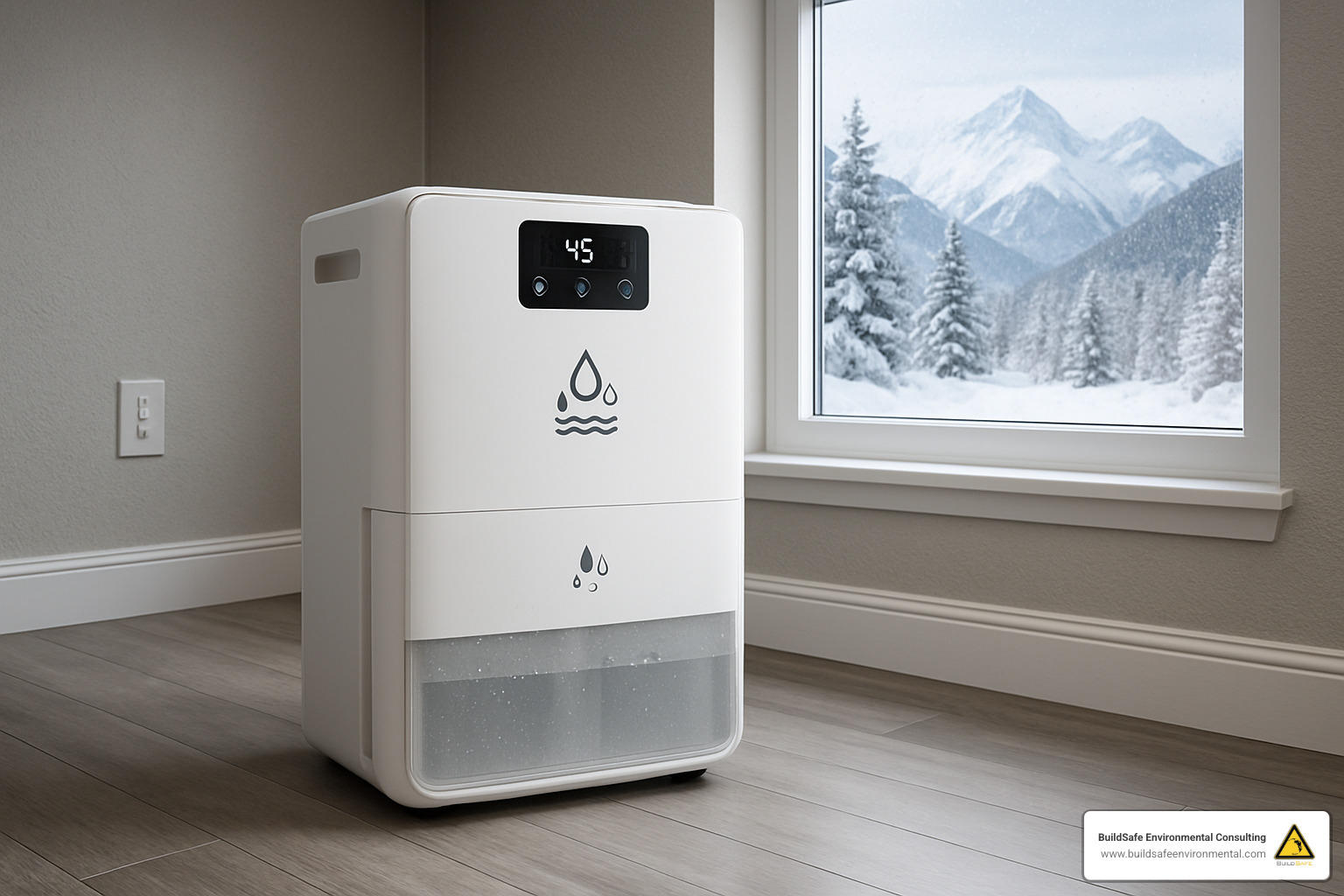
When it comes to preventing mold in Denver homes, moisture control is your first line of defense. I always tell my clients that maintaining indoor humidity between 30-50% is crucial, especially in basements where moisture tends to accumulate. A good dehumidifier, like the one pictured above, can make all the difference during our more humid months.
Proper ventilation is another key factor. Those bathroom fans aren’t just for eliminating odors—they’re essential for removing moisture-laden air after showers. The same goes for kitchen range hoods and laundry room vents. These simple systems, when used consistently, can prevent the conditions that mold needs to thrive.
Of course, addressing water issues promptly is non-negotiable. Even small plumbing leaks can create big mold problems if left unattended. And don’t forget about the outside of your home—proper grading around your foundation prevents water from seeping into your basement or crawl space.
When remediation becomes necessary, it should follow the ANSI/IICRC S520 Standard for Professional Mold Remediation. This industry standard outlines proper containment, removal, and cleaning procedures that protect both your property and its occupants.
For more specific tips on managing humidity in your home, check out our blog on keeping your home mold-free in humid weather.
Maintenance Checklist for Denver Homes & Businesses
Denver’s distinct seasons each bring unique challenges for mold prevention. I’ve developed this seasonal approach after years of helping local homeowners keep their properties dry and healthy.
Spring in Denver means melting snow and rain, making it the perfect time to inspect your roof for winter damage and clean those gutters after the cottonwoods and other trees finish blooming. Check your basement carefully for any signs of water intrusion from snowmelt, and make sure your sump pump is ready for spring rains. Those window and door seals that contracted during winter may need attention too.
When summer arrives, keep a close eye on your sprinkler system. I can’t tell you how many times I’ve seen irrigation systems creating the perfect conditions for foundation mold by soaking the soil right next to the house. It’s also time to ensure your AC’s condensate line is draining properly—these can become major sources of hidden moisture. During our monsoon season, indoor humidity monitoring becomes especially important.
As fall approaches, cleaning gutters becomes crucial again after leaves drop. This is also your last chance to check the roof before winter sets in. I always recommend inspecting weatherstripping around doors and windows, disconnecting outdoor hoses, and checking the grading around your foundation before the freeze-thaw cycles begin.
Winter in Denver brings its own challenges—ice dams on roofs can force water under shingles, and the stark temperature difference between indoors and outdoors creates condensation issues. Maintain consistent indoor temperatures to minimize condensation risk, and try to keep indoor humidity between 30-40%. Don’t forget to remove snow that piles up against your foundation, as it can melt and seep in during sunny winter days.
“In Denver’s climate, the key to preventing mold is staying ahead of seasonal moisture challenges,” I often tell clients. “Each season brings different risks, and addressing them proactively saves thousands in potential remediation costs.”
Regulatory Standards & When Testing Becomes Mandatory
While Colorado lacks specific mold regulations at the state level, several situations make mold testing Denver County services essentially mandatory.
For real estate transactions, sellers must disclose known mold issues, and many buyers now request professional mold inspections as part of their due diligence. I’ve worked with numerous real estate agents who tell me that mold testing has become standard practice, especially for properties with basements or those over 20 years old. If you’re using an FHA or VA loan, visible mold may require clearance testing before closing.
Landlord-tenant situations often trigger testing needs as well. Colorado’s Warranty of Habitability requires landlords to address mold issues, and tenants have the right to request testing if visible mold or water damage appears. Commercial leases typically include more specific indoor air quality standards than residential ones.
Insurance claims nearly always require professional documentation. I remember helping a family after a washing machine hose burst while they were on vacation. Their insurance company required both initial mold testing Denver County services and post-remediation verification before releasing the final portion of their claim. The detailed documentation we provided made the difference between partial and full coverage.
Construction and renovation projects often necessitate testing too, especially when building permits are pulled for water damage repair. Commercial properties typically have stricter requirements, and OSHA regulations may apply when workers could be exposed to mold during construction.
After disasters like flooding, testing becomes particularly important. FEMA guidance recommends professional assessment after any significant water event, and public buildings face stricter requirements before reoccupancy is allowed. Healthcare facilities, schools, and other sensitive environments have mandatory testing protocols after any water intrusion.
One Denver property manager told me: “After a major pipe burst in one of our commercial buildings, our insurance company required both initial mold testing and post-remediation verification before they would release the final portion of our claim. The professional documentation from BuildSafe made the process smooth and straightforward.”
By understanding these requirements and maintaining a proactive approach to moisture management, Denver County property owners can avoid many of the headaches and expenses associated with mold problems.
Frequently Asked Questions about mold testing denver county
How quickly can I get mold test results in Denver County?
When you’re dealing with a potential mold issue, waiting for answers can feel like an eternity. The good news is that standard mold testing Denver County results typically arrive within 24-48 hours after our team collects samples from your property.
For those urgent situations—like when you’ve finded mold in your child’s bedroom or need documentation for a fast-approaching closing date—we offer expedited options that can deliver preliminary results in as little as 3 hours. While this rush service does include an additional fee, many clients find the peace of mind well worth the investment.
Once the laboratory completes its analysis, our team promptly prepares your complete report with clear interpretation, typically delivering it within 24 hours of receiving the lab results. We understand that weekends and holidays can sometimes extend these timeframes, but we’ll always communicate clearly about when you can expect your results.
“I was absolutely panicked when I found what looked like black mold near my baby’s crib,” Sarah from Lakewood told us. “BuildSafe arranged for same-day rush processing, and having those preliminary results by evening helped me make immediate decisions about temporary housing while we addressed the issue. That kind of responsiveness is priceless when you’re worried about your family’s health.”
Do I need mold testing during a property sale in Denver?
While Colorado law doesn’t explicitly mandate mold testing during real estate transactions, there are compelling reasons to consider mold testing Denver County services when buying or selling property.
For sellers, proactive testing demonstrates transparency and good faith to potential buyers. By identifying and addressing any issues before listing, you can prevent deals from falling through at the last minute. Many of our seller clients have found that professional documentation of a “normal fungal ecology” (essentially a clean bill of health) increases buyer confidence and helps maintain asking price.
Buyers benefit from testing by gaining peace of mind about their investment. Denver’s housing market moves quickly, and having professional mold testing performed during your inspection period can identify potential issues before you’ve committed fully to the purchase. If problems are found, this documentation creates leverage for requesting repairs or price adjustments.
Testing becomes particularly valuable for properties with certain risk factors: visible water stains, homes with basements or crawl spaces, buildings with previous flooding issues, houses that have sat vacant, or properties with known ventilation problems.
As Maria, a Denver real estate agent who regularly refers clients to us, explains: “Today’s buyers are increasingly concerned about indoor air quality and health. I’ve seen properties with professional mold clearance documentation typically sell up to two weeks faster and much closer to asking price than comparable homes without this reassurance.”
When is mold testing unnecessary?
While we’re in the business of providing mold testing Denver County services, we believe in honest guidance about when testing might not be necessary—because your trust means more to us than any single service.
For small, visible mold growth with an obvious cause that’s already been fixed, testing might be overkill. If the affected area is less than 10 square feet (roughly the size of a standard shower curtain), the moisture source has been corrected, and no one is experiencing health symptoms, you might reasonably proceed directly to cleaning without formal testing.
Similarly, after small-scale DIY remediation in non-critical scenarios—particularly when you don’t need documentation for insurance or legal purposes and no vulnerable individuals occupy the space—post-remediation testing might not be essential.
Routine maintenance situations like regular cleaning of bathroom surfaces with minor mildew, seasonal condensation on windows without actual water intrusion, or normal cleaning of visible mildew on shower grout generally don’t warrant professional testing.
However, Jim, our lead inspector, often cautions clients: “What appears as a small spot of mold on your bathroom ceiling might actually indicate a larger problem hidden from view. When in doubt, at least consult with a professional who can help you determine whether testing would be valuable in your specific situation.”
Many homeowners appreciate a quick phone consultation where we can help you determine if testing makes sense for your specific circumstances—sometimes saving you money by recommending simpler solutions when appropriate.
Conclusion
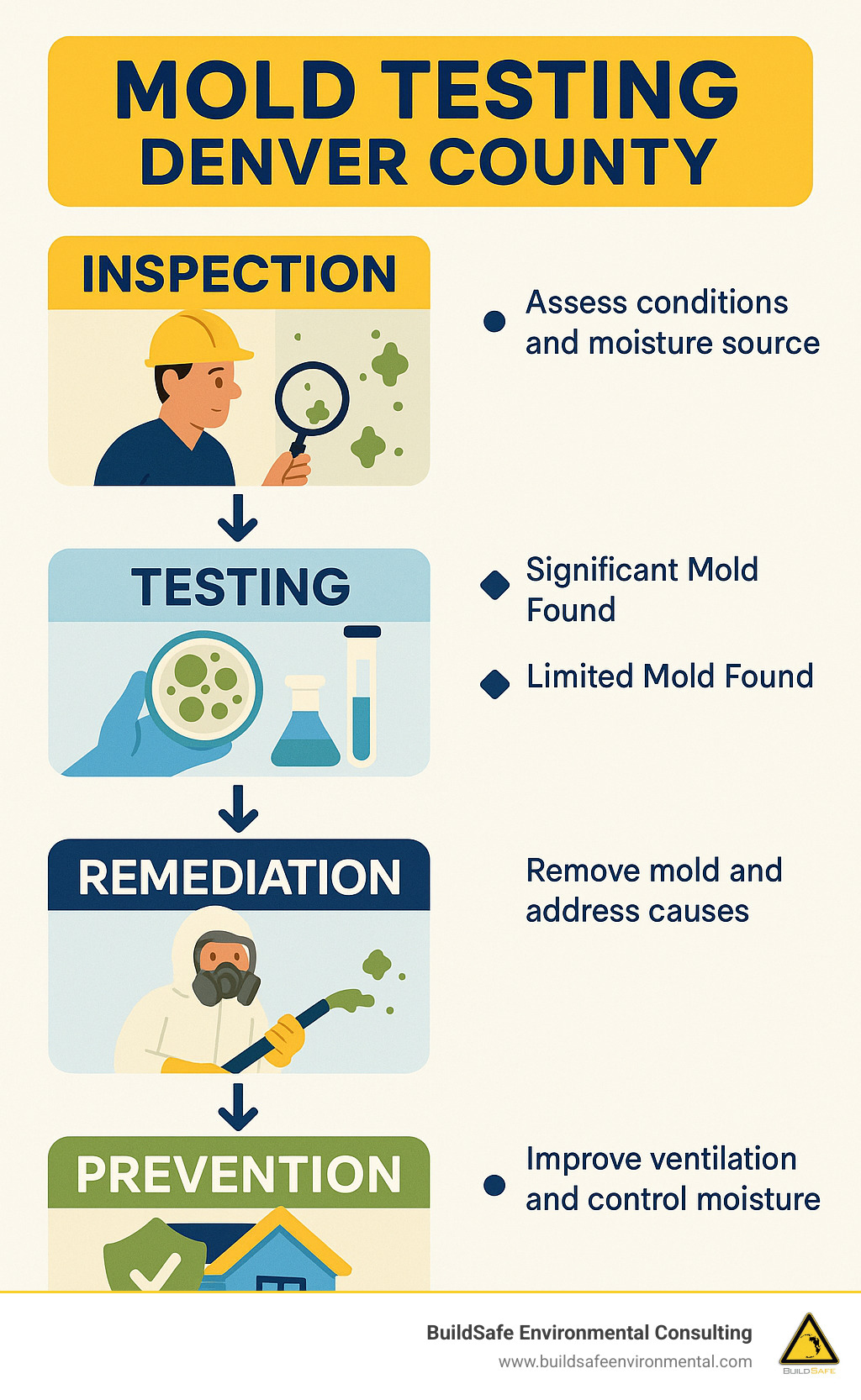
Throughout my years working with Denver homeowners, I’ve seen how proper mold testing Denver County services can make all the difference between a healthy home and ongoing problems. While our Rocky Mountain climate might seem too dry for mold concerns, the reality tells a different story – from seasonal snowmelt to summer thunderstorms, Denver properties face unique moisture challenges that create perfect conditions for mold growth.
What I hope you’ve taken away from this guide is that knowledge truly is your best defense. When a client called me last month after finding what looked like a small patch of mold in their basement, they were considering a simple DIY cleanup. After professional testing, we finded the visible portion was just the tip of the iceberg – with significant growth behind the walls that would have continued spreading undetected.
The value of professional testing comes down to five essential benefits:
First, timing matters tremendously. Since mold begins growing within just 24 hours of water exposure, quick testing after leaks or flooding can prevent a small issue from becoming a major remediation project. One Denver family I worked with saved thousands by catching a problem early after a dishwasher leak.
Second, accuracy is critical for effective solutions. I often meet homeowners who tried store-bought test kits only to receive confusing or misleading results. Professional testing provides the comparative analysis, proper sampling techniques, and expert interpretation needed to understand what you’re truly dealing with.
Third, protecting your family’s health requires identifying exactly what’s growing in your home. Different mold species create different health risks – from mild allergic reactions to serious respiratory conditions. Only laboratory analysis can identify specific types and concentrations.
Fourth, prevention is infinitely more affordable than remediation. The average mold remediation project in Denver County costs between $2,000-$6,000, while preventative measures and early testing typically cost a fraction of that amount.
Finally, unbiased assessment matters. At BuildSafe Environmental Consulting, we’re a testing-only firm with no financial interest in finding problems. This ensures you receive honest, objective results without the conflict of interest that comes when testing and remediation services are offered by the same company.
As one Denver homeowner told me after receiving our services: “The clarity we gained was worth every penny. Instead of wondering and worrying about what might be growing in our home, we now have definitive answers and a clear path forward.”
If you’re concerned about potential mold issues in your Denver County property, I encourage you to reach out to our team of certified inspectors. We use advanced technology and standardized methodologies to deliver reliable results with clear explanations and practical recommendations you can trust.
For more information about our professional mold testing Denver County services or to schedule an inspection, visit our mold testing services page. We proudly serve the entire Denver metro area including Denver, Longmont, Fort Collins, and surrounding communities throughout Colorado.
Remember – when it comes to mold, seeing clearly is the first step toward breathing easily.