Understanding Lead Paint Inspection Costs: The Basics
When homeowners ask me about lead based paint inspection cost, I often see the relief on their faces when I explain the actual numbers. While prices do vary, most Colorado homeowners can expect to pay between $300 and $700 for a comprehensive inspection. That’s actually quite reasonable when you consider what’s at stake—your family’s health and safety.
Let me break down what you can expect to pay based on the type of inspection you need:
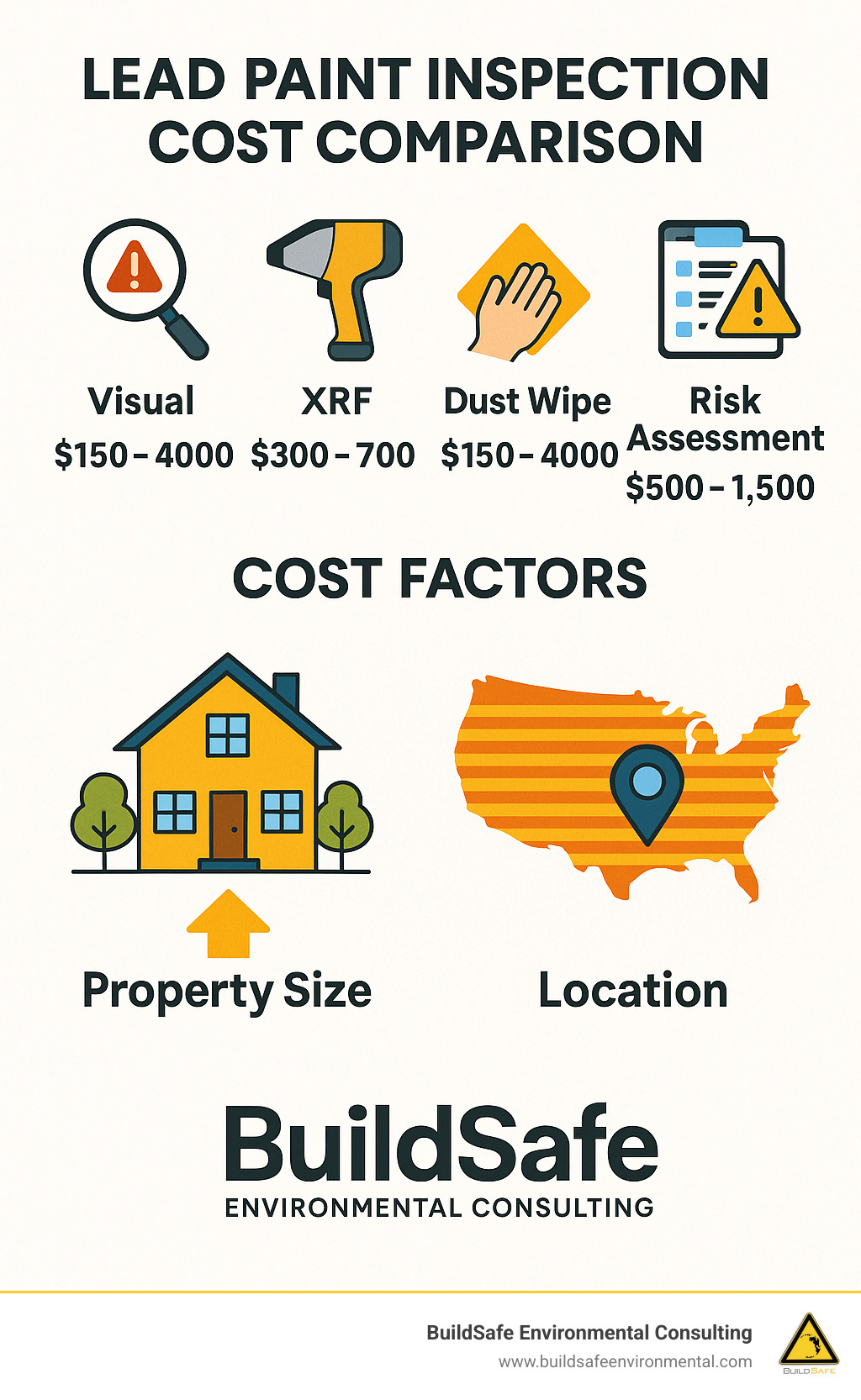
| Type of Inspection | National Average Cost | Typical Colorado Cost |
|---|---|---|
| Visual Inspection | $150-$400 | $200-$350 |
| XRF Testing | $300-$700 | $350-$600 |
| Dust Wipe Testing | $150-$400 | $200-$350 |
| Full Risk Assessment | $500-$1,500 | $600-$1,200 |
If you own a home built before 1978, these numbers should be on your radar. That’s when the federal government banned lead-based paint, but the reality is that it’s still lurking in millions of homes. About 87% of homes built before 1940 contain lead paint, with the percentage gradually decreasing in newer construction.
Your specific lead based paint inspection cost will depend on several factors that I see affect pricing every day in my work across Colorado. Property size makes a big difference—a 5,000 square foot home simply takes longer to inspect than a 1,200 square foot bungalow. The age of your property matters too, with pre-1940 homes often requiring more thorough testing due to multiple layers of paint and renovations over the decades.
The inspection method you choose also impacts your bottom line. XRF testing, which uses X-ray fluorescence technology to detect lead without damaging your walls, costs more than a basic visual inspection but provides much more reliable results. Your location affects pricing too—rural mountain properties in Colorado often include travel surcharges that urban Denver homes don’t face.
I’m Craig Luckey, and over the years at BuildSafe Environmental Consulting, I’ve helped hundreds of Colorado families steer the process of lead testing. What I’ve found is that most people are surprised by how straightforward and affordable the process can be when working with experienced professionals who know exactly what to look for.
Want to learn more about lead based paint inspection cost and related services? Check out these helpful resources:
– lead testing companies
– lead testing companies near me
When it comes to your family’s safety, understanding these costs upfront helps you make informed decisions without unwelcome surprises down the road. And remember—the cost of an inspection is always less than the potential health impacts of undetected lead exposure.
Why You Need a Lead Inspection
If you own a home built before 1978, lead paint isn’t just a minor concern—it’s a serious health threat hiding in plain sight. The dangers are especially real for children under six and pregnant women, whose developing bodies absorb lead more readily than adults.
When old paint chips, peels, or gets disturbed during that kitchen remodel you’ve been planning, it releases invisible toxic dust that family members can breathe in or accidentally ingest. The scary truth? According to the EPA Lead Research division, “No safe level of lead exposure has been identified for children, making them particularly vulnerable and underscoring that anything you can do to reduce exposures can improve life outcomes.”
I’ve seen how lead exposure can affect families. The health impacts aren’t just theoretical—they’re life-changing:
- Learning disabilities and decreased IQ that follow children through school
- Behavioral problems that parents struggle to address
- Stunted growth and developmental delays that can’t be reversed
- Hearing impairment that affects communication
- Kidney damage that may not show symptoms until significant harm occurs
- Reproductive issues that can affect future generations
Beyond protecting your family’s health, there are legal reasons why lead based paint inspection cost is an investment worth making. Federal disclosure laws require sellers and landlords to share any known lead hazards for pre-1978 properties. The Renovation, Repair, and Painting (RRP) Rule means contractors working on older homes must be certified and follow specific safety protocols. And if you’re a landlord, many Colorado municipalities have additional rental compliance requirements you can’t ignore.
Here in Colorado, I’ve noticed growing awareness about lead hazards, especially in charming older neighborhoods in Denver, Longmont, and Fort Collins. These historic homes often hide multiple layers of lead-based paint beneath newer coatings.
High-Risk Situations That Demand Testing
Not every home faces the same level of risk. Through years of inspections across Colorado, I’ve identified several situations where testing becomes particularly urgent:
Pre-1978 buildings carry the highest risk, with homes built before 1940 almost certainly containing lead paint. The older your property, the more important testing becomes.
Deteriorating paint is a red flag you shouldn’t ignore. When paint begins peeling, chipping, or chalking, it’s actively releasing lead dust into your living space.
Renovations in older homes can turn a manageable situation into a dangerous one overnight. Even small projects like sanding a doorframe can release significant amounts of lead dust.
Tenant turnover often triggers testing requirements, especially when children will be moving in. Many Colorado jurisdictions now require this as standard practice.
Liftd blood lead levels in family members should prompt immediate testing. I’ll never forget a family in Denver’s historic Baker neighborhood who called us after their 3-year-old showed concerning lead levels during a routine checkup. Our inspection identified lead in deteriorating window frames and baseboards. After proper remediation, their child’s lead levels decreased significantly over the following months—a success story that still warms my heart.
Lead-Safe vs Lead-Free: What’s the Difference?
When discussing lead inspections, many clients ask me about the difference between “lead-safe” and “lead-free” certifications. This distinction matters for both your safety and your wallet:
Lead-Safe Certification indicates that existing lead hazards have been controlled or contained—not eliminated. Your home may still contain lead paint, but it’s been properly encapsulated or remains intact and poses minimal risk. This certification typically costs $200-$250 for a studio or one-bedroom property but requires regular monitoring and maintenance. In many Colorado jurisdictions, you’ll need renewal at tenant turnover.
Lead-Free Certification verifies that no lead-based paint exists in the property at all. This usually requires complete removal or extensive testing throughout the home. While this permanent certification (costing approximately $450-$500 for properties up to 3 bedrooms) offers peace of mind, it’s rarely practical for pre-1978 homes without undertaking a full gut renovation.
As one industry expert I frequently collaborate with notes, “Lead‐free inspections are rarely practical in pre-1978 homes without full gut renovation.” That’s why in Colorado, I typically recommend lead-safe approaches for most older homes—complete removal often becomes prohibitively expensive compared to the lead based paint inspection cost.
For more detailed information about our environmental testing services, including comprehensive lead inspections that protect your family, visit our Environmental Testing Services page.
Want to learn more about lead exposure health effects from scientific research? The CDC offers excellent resources on lead exposure prevention that I recommend to all my clients.
Lead Based Paint Inspection Cost: National & Colorado Numbers
Understanding the costs associated with lead paint inspections helps homeowners and property managers budget appropriately for this essential service.
Nationwide, you can expect to pay between $300 and $700 for a lead-based paint inspection, with most homeowners landing around the $500 mark. But like most home services, what you’ll actually pay depends on where you live, how big your home is, and what type of inspection you need.
Here in Colorado, we see typical lead based paint inspection cost ranging from $350 to $600 for average-sized homes. This slight premium over the national average reflects our specialized training for Colorado’s unique housing situations. Those charming Victorian homes in Denver’s older neighborhoods and the historic mining-era cabins scattered throughout our mountain towns require special attention and expertise.
Average Lead Based Paint Inspection Cost
When budgeting for your lead based paint inspection cost, property size makes a big difference:
Studio apartments typically run $200-$300, while cozy 1-2 bedroom condos or townhomes usually cost $250-$450. For standard 3-4 bedroom single-family homes, expect to pay $400-$700. Larger homes over 4,000 square feet jump to $800-$1,500, and multi-family buildings start with a base price plus $100-$200 for each additional unit. Commercial properties begin around $500 but often exceed $1,500 depending on size and complexity.
These prices generally include a visual inspection, some sampling, and a detailed written report. If you need additional services like a full risk assessment or clearance testing after remediation work, your costs will increase accordingly.
I remember a client in Denver who told me, “I was pleasantly surprised that my 1920s bungalow inspection only cost $425, which included XRF testing of all painted surfaces. The peace of mind was well worth the investment, especially since we’re planning to renovate the kitchen.” Stories like this remind me why we do this work – peace of mind is priceless when it comes to your family’s health.
How Much Does a Lead Based Paint Inspection Cost in Colorado?
Colorado’s diverse geography and housing stock create some regional price variations in lead based paint inspection cost:
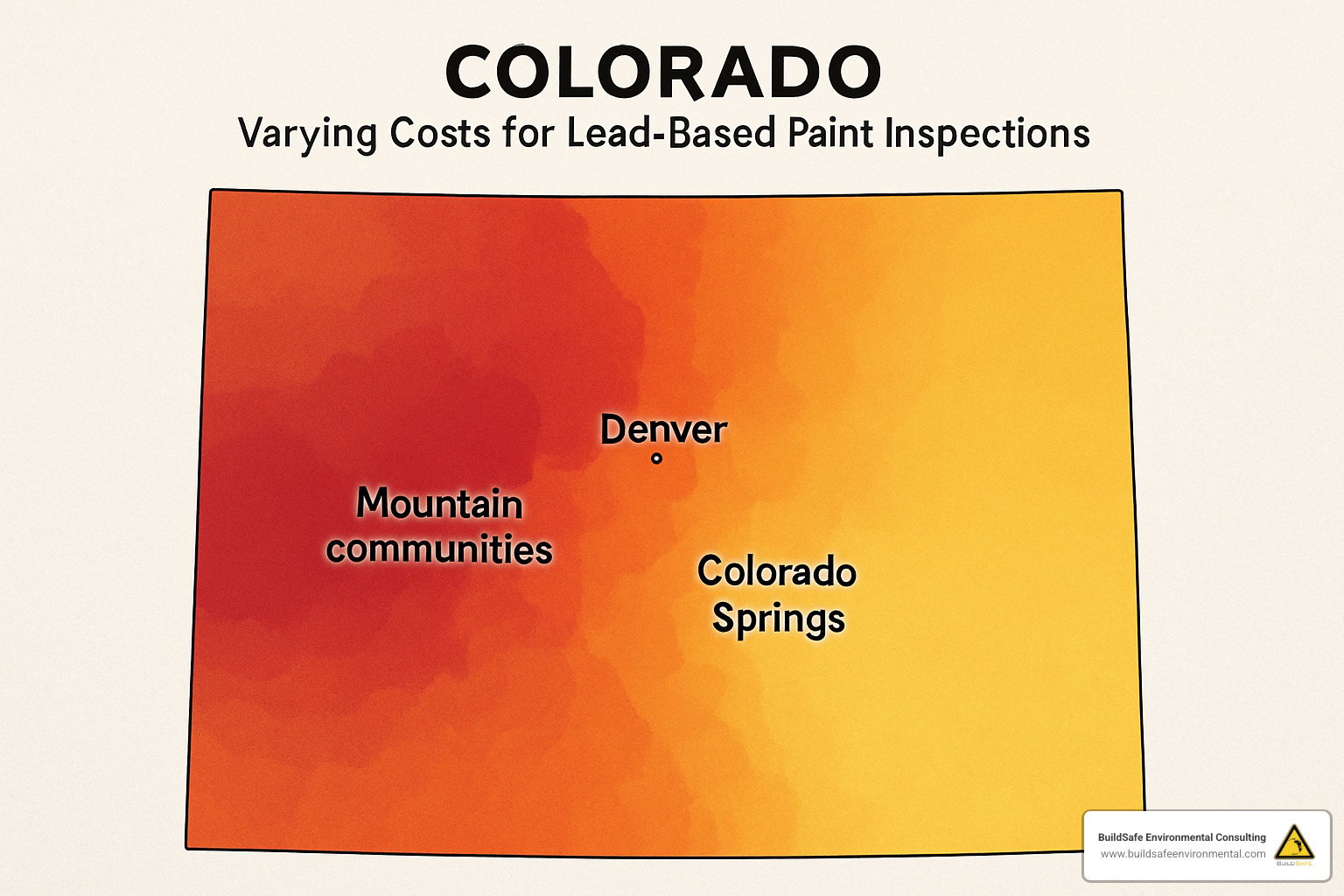
The Denver metro area typically runs $350-$550 for average homes, while Boulder and Fort Collins properties tend to cost $375-$600. Heading south to Colorado Springs or Pueblo, you might pay slightly less at $325-$525. But if you’ve got a mountain getaway in Aspen, Vail, or other high-altitude communities, prepare for $450-$750 plus travel fees.
Speaking of travel, we typically add fees for properties more than 30 miles from our service centers in Denver, Longmont, and Fort Collins. For those remote mountain cabins, travel fees might add $100-$200 to your total.
The style and age of your Colorado home also impacts pricing. Those beautiful Victorian-era homes with ornate trim and multiple paint layers often require more extensive testing. Mid-century ranches with fewer painted surfaces can reduce inspection time and cost. And those charming mining-era cabins and historic buildings may need specialized approaches.
A mountain homeowner in Breckenridge once shared with me, “The $650 I paid for lead inspection was higher than I expected, but given the 2-hour drive for the inspector and the complexity of my 1890s mining cabin with layers of paint, it seemed fair.” That’s exactly right – the complexity of your home and its location play big roles in determining your final cost.
While the price matters, the safety of your family matters more. A thorough inspection by qualified professionals gives you the information you need to protect your loved ones from lead hazards that might be hiding in plain sight.
Price Factors & Cost by Method
When budgeting for your lead inspection, several key factors will influence your final lead based paint inspection cost. I’ve found that home size is usually the biggest price driver – simply put, larger homes have more surfaces to test. The age of your property matters too, with pre-1940 homes typically requiring more extensive testing due to multiple paint layers and higher lead concentrations.
Other important cost factors include your paint’s condition (deteriorating paint often requires additional dust sampling), your chosen inspection method, your location (affecting travel time and regional labor rates), and any lab fees for sample analysis. Need results quickly? Emergency or rush inspections can add 25-50% to your total cost, though I often recommend bundling lead testing with asbestos or mold inspections when possible – this approach can actually reduce your overall environmental testing expense.
Inspection Method Costs Explained
The inspection method you choose significantly impacts both accuracy and price:
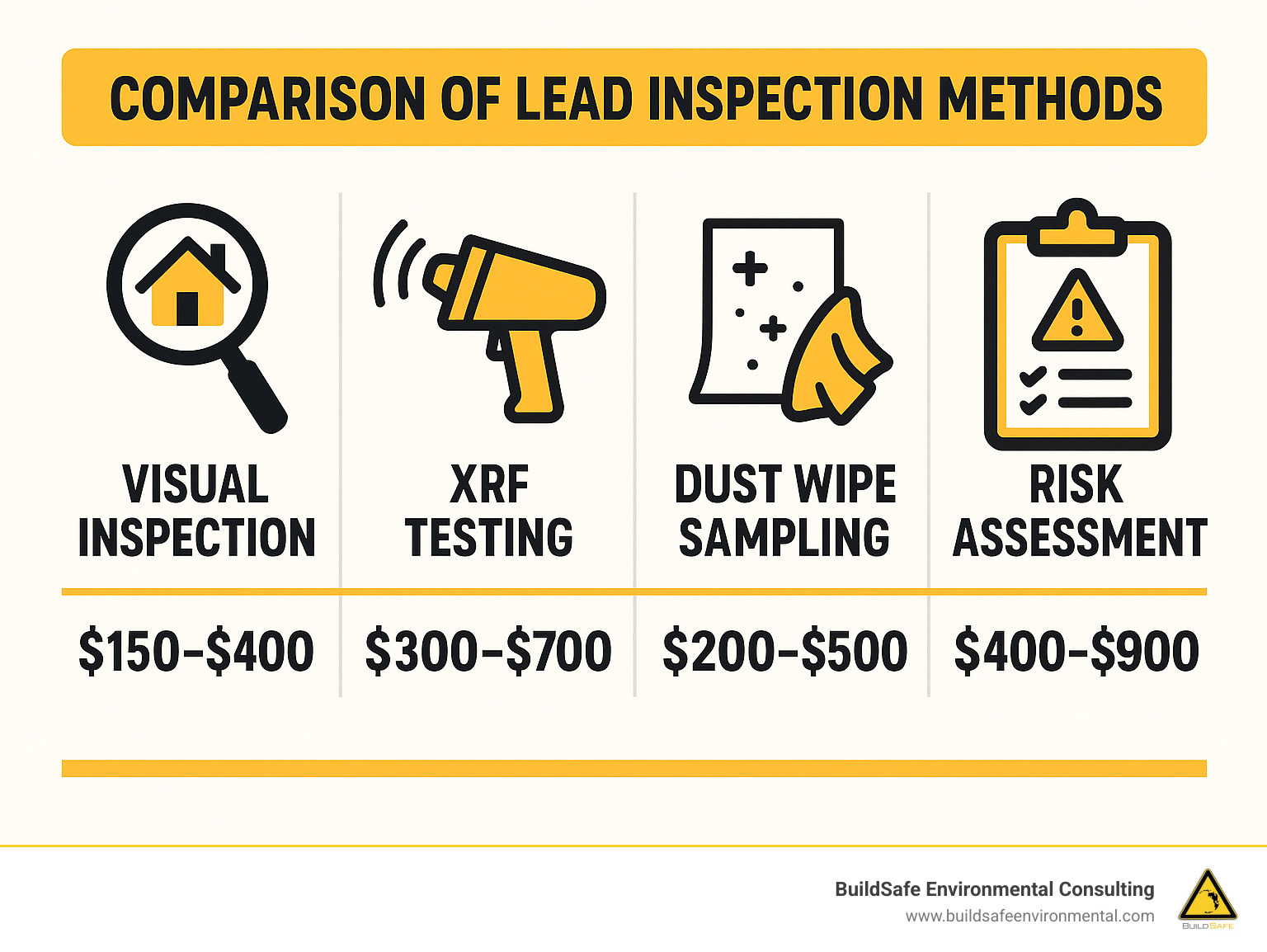
Visual Inspection ($150-$400):
A visual inspection is our most basic approach – I’ll carefully examine all painted surfaces for signs of deterioration without specialized equipment. While this is quick (usually 1-2 hours) and budget-friendly, it has limitations. I can’t detect lead underneath intact paint, making this method insufficient for many legal compliance situations. Think of it as a preliminary screening rather than a definitive answer.
XRF Testing ($300-$700):
This is my preferred method for comprehensive inspections. Using a specialized X-ray fluorescence device, I can instantly analyze paint without damaging your surfaces. The XRF gun provides immediate, highly accurate readings through multiple paint layers. As I tell my clients, “Using our proprietary XRF technology, we can test hundreds of surfaces in a single visit without putting a single hole in your wall.” This EPA-approved method typically takes 2-3 hours for an average home and meets most compliance requirements.
Dust Wipe Sampling ($150-$400):
Rather than testing the paint itself, dust wipe sampling measures what you’re actually exposed to daily. I’ll collect dust samples from floors, windowsills, and other surfaces for laboratory analysis (results usually come back in 3-5 days). This method is particularly valuable for measuring real exposure risk and is commonly used for clearance testing after remediation. In Michigan, these tests typically run $350-$400.
Risk Assessment ($500-$1,500):
Think of this as the comprehensive package. A risk assessment combines visual inspection, XRF or paint sampling, and dust wipes into one thorough evaluation of all potential lead hazards. I’ll provide detailed recommendations for hazard control custom to your specific situation. While this is our most expensive option, taking 3-4 hours plus lab time, it’s also the most thorough and is sometimes legally required.
Size, Age & Accessibility Surcharges
Your property’s specific characteristics directly impact how much time and equipment I’ll need:
The size tiers for pricing typically break down as: up to 1,000 sq ft ($200-$500), 1,000-2,000 sq ft ($400-$800), 2,000-3,000 sq ft ($600-$1,200), 3,000-4,000 sq ft ($800-$1,500), and 4,000+ sq ft ($1,000+).
For apartment buildings, I typically test a representative sample rather than every unit, charging a base price plus $100-$200 per additional unit tested. This statistical approach maintains accuracy while keeping costs reasonable.
Hard-to-reach areas often require additional time and equipment. High ceilings needing extension ladders might add $50-$100, detached garages or outbuildings typically cost an extra $75-$150 per structure, and extensive exterior testing on multi-story buildings can add $100-$200.
Historic homes present unique challenges. Those beautiful ornate trim pieces, multiple window types, and decorative elements that give your home character? They often require more sampling points, potentially increasing costs by 15-25%. I recently inspected a Victorian in Denver’s Capitol Hill neighborhood where the detailed woodwork required nearly twice the sampling points of a similar-sized modern home.
Colorado vs Other States
Colorado’s lead based paint inspection costs generally align with national averages, but our unique geography creates some regional variations.
State-to-state comparisons show interesting patterns: California tops the list at around $870 (driven by strict regulations and high labor costs), followed by New York at $740 (extensive testing requirements), while Colorado averages about $550, Texas comes in at $560 (large home sizes offset by lower labor rates), and Florida at $610 (where humidity concerns require additional testing).
What makes Colorado unique? For starters, our mountain communities involve higher travel costs – that’s why we’ve established multiple service hubs to minimize these expenses. Our inspectors also need specialized knowledge of mining-era construction techniques common in historic mountain towns. Colorado’s extreme temperature variations can accelerate paint deterioration, sometimes requiring more comprehensive testing.
One advantage we’ve developed is an efficient scheduling system that coordinates multiple inspections in the same area. When I visit Breckenridge, for example, I’ll often schedule 2-3 inspections in a single trip, allowing us to share travel expenses rather than passing them fully to a single client. This approach helps keep our Colorado prices reasonable despite the challenges of serving our diverse communities from urban Denver to remote mountain properties.
After the Report: Abatement, Clearance & Budget Tips
So your inspection revealed lead-based paint—what now? Don’t worry, you’ve got options that fit various budgets and situations.
When lead shows up in your report, remediation costs will vary based on the approach you choose:
Lead Paint Removal: $8-$17 per square foot
This is the “nuclear option”—complete removal is thorough but pricey. It requires certified contractors and includes those rebuild costs after the old paint is gone. One of our Denver clients spent about $12,000 removing lead paint from their kitchen and dining room, but they now have permanent peace of mind.
Encapsulation: Less than $0.50 per square foot
Think of this as “sealing in” the problem. We apply specialized coatings that lock the lead paint in place. It’s dramatically more affordable than removal and works wonderfully when the paint is still intact. Many of our Boulder customers choose this route for historic homes with beautiful original woodwork.
Interim Controls: Varies by method
This practical middle ground focuses on high-risk areas—fixing up deteriorated spots, addressing friction surfaces like windows and doors that create dust, and establishing cleaning routines. It’s especially popular with landlords managing rental properties.
Clearance Testing: $150-$500
This is your official “all clear” after remediation work. It involves dust wipe sampling analyzed by a laboratory and provides documentation that your space is safe again—crucial for legal compliance and your family’s well-being.
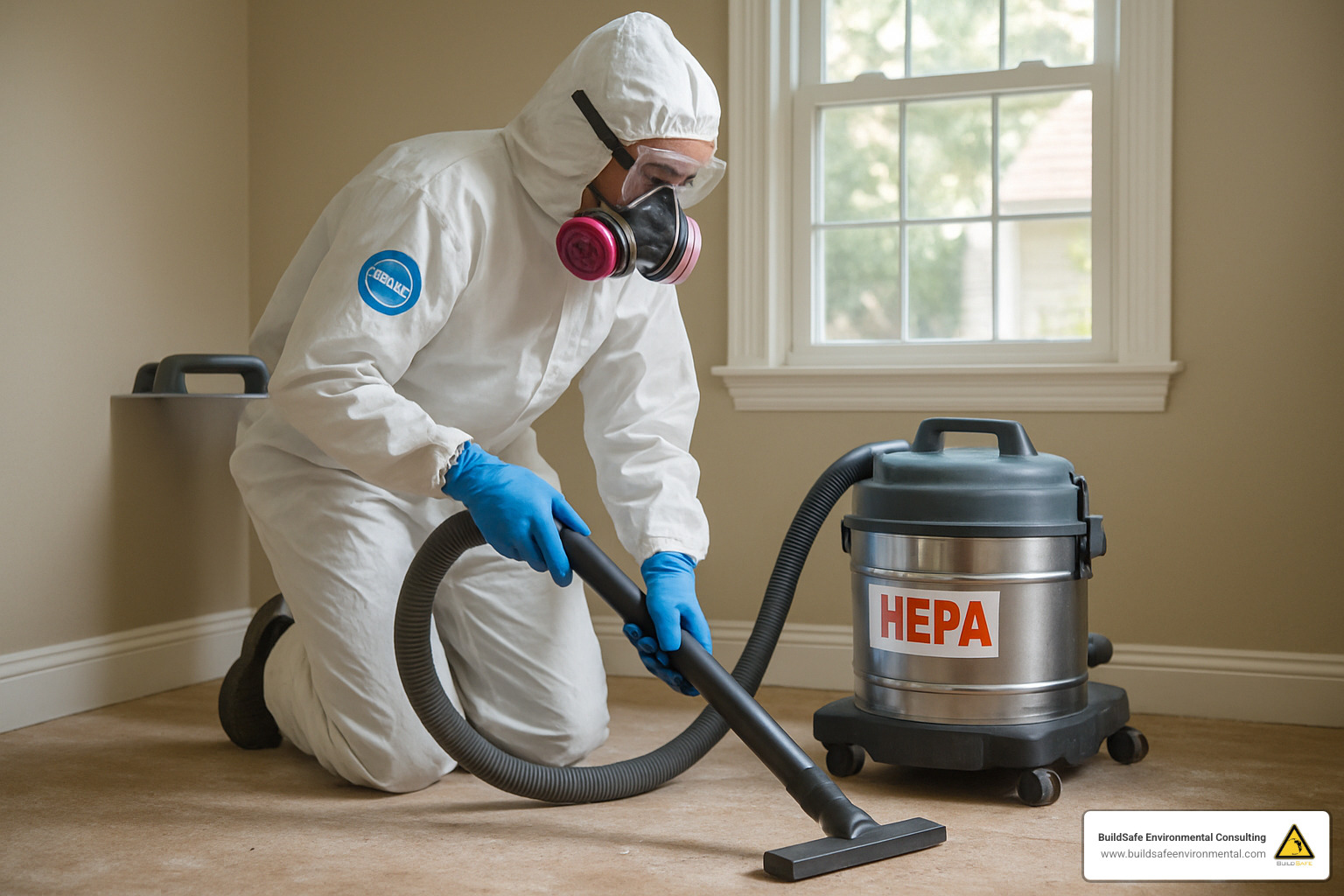
“Complete lead abatement can cost between $15,000-30,000 for an entire home,” explains our lead specialist Craig. “That’s why many Colorado families opt for interim controls or encapsulation—they reduce exposure risks significantly at a fraction of the cost.”
Money-Saving Moves That Don’t Cut Corners
There’s smart ways to reduce your lead based paint inspection cost without putting your family at risk:
Bundle your environmental testing and save 10-20% on the total bill. Just last month, a client in Longmont saved nearly $300 by combining lead and asbestos inspections before their renovation project.
Schedule during the winter months when demand typically drops in Colorado. January and February tend to be our quietest months, and we often have more flexible scheduling and sometimes even seasonal promotions.
Prep your home properly before we arrive. Clear access to walls, move furniture away from surfaces, and gather any building history information you have. One well-prepared client in Fort Collins cut their inspection time by almost an hour, reducing their labor costs significantly.
Focus your testing strategically if you’re doing dust wipe sampling. We can help you prioritize children’s rooms and common areas rather than testing every square inch of the house.
Check for assistance programs in your area. Some Colorado communities offer grants or low-interest loans for lead inspection and remediation, especially for families with young children or historic properties. The Denver Urban Renewal Authority occasionally runs programs that can help qualifying homeowners with these costs.
“We saved almost $200 by scheduling our lead inspection during February,” shared a homeowner in Colorado Springs. “Plus, we got an appointment within three days instead of waiting two weeks.”
What To Do If Lead Is Found
Finding lead doesn’t have to be scary. Here’s your roadmap for next steps:
First, take a deep breath. Lead paint that’s still intact generally poses minimal immediate risk. The danger comes when it deteriorates or gets disturbed during renovations.
Read your inspection report carefully to understand exactly where the lead is located and its condition. Is it on window frames? Baseboards? Exterior siding? The location matters for your response plan.
Talk with your inspector about appropriate next steps. At BuildSafe, we always take time to walk clients through their options based on their specific situation, budget constraints, and whether children live in the home.
For intact paint, encapsulation is often the most cost-effective solution. A Fort Collins family recently spent just $1,200 encapsulating lead paint throughout their 1940s bungalow—a fraction of what removal would have cost.
If you’re dealing with deteriorating surfaces, selective removal might be necessary. Focus on high-risk areas like window sills and door frames that create friction and dust.
Always hire certified professionals for remediation work. The EPA’s Renovation, Repair and Painting Rule requires contractors to be specially trained for lead work. We can recommend trusted partners in your area.
After remediation, schedule clearance testing to verify your home is safe again. This typically costs $150-$500 but provides crucial documentation and peace of mind.
“When we found lead in our 1950s ranch home, our BuildSafe inspector walked us through exactly which areas needed immediate attention and which could wait,” recalls a Lakewood homeowner. “That helped us create a manageable, staged approach that fit our budget.”
For more information on safe renovation practices when lead is present, check out the EPA’s guide on lead-safe renovations for DIYers.
The Inspection Journey & Key FAQs
When you book a lead inspection with us, you’re not just scheduling a service – you’re taking an important step to protect your family’s health. I’ve guided hundreds of Colorado homeowners through this process, and I’m happy to walk you through exactly what happens during a lead inspection.
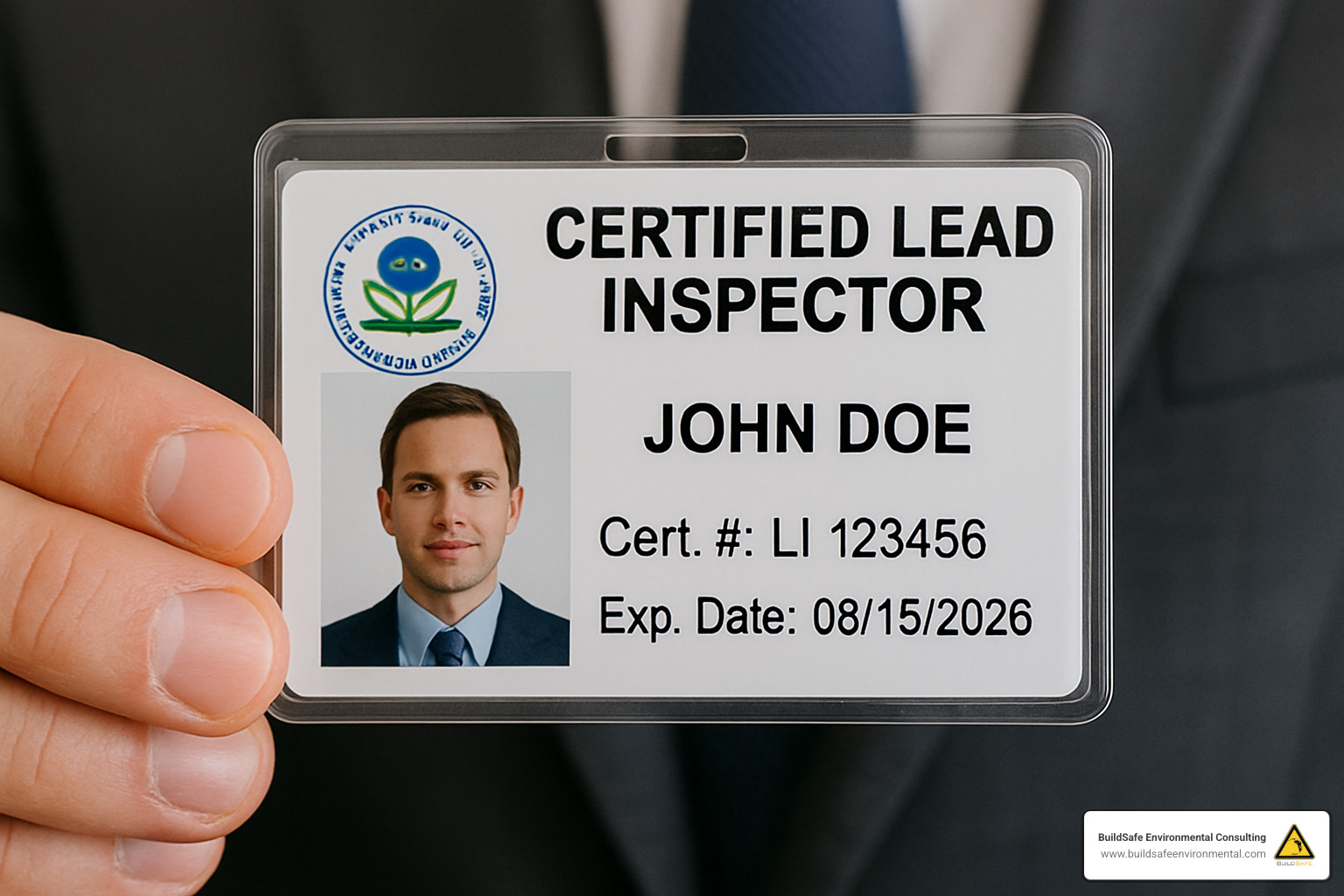
The typical journey looks something like this: We’ll start with a friendly phone call to schedule your inspection and discuss your property details. Before we arrive, we’ll ask you to clear access to painted surfaces (don’t worry, we’ll send prep instructions). On inspection day, our certified inspector arrives with specialized equipment, performs a thorough visual assessment of all painted surfaces, and conducts either XRF testing or sample collection. We document everything with photos and detailed notes, prepare a comprehensive report, and review the findings with you personally. If lead is found, we provide clear guidance on your next steps.
Most inspections take between 1-3 hours depending on your property size and complexity. If we’re doing dust wipe sampling, there’s additional time for laboratory analysis, but we’ll keep you informed every step of the way.
Step-by-Step Inspection Timeline
Let me break down exactly what happens during your lead based paint inspection:
Before we arrive:
In Colorado, we’ll handle any required tracking numbers or environmental agency notifications (some states require 24-hour notice). We’ll also send you simple preparation tips to make the inspection more efficient.
During your inspection:
We start with a visual sweep that typically takes 30-60 minutes. Our inspector examines all exterior painted surfaces, then moves room-by-room through your interior, documenting any areas of deteriorated paint.
Next comes the testing phase (1-2 hours). If we’re using our XRF analyzer (which most clients prefer), we’ll conduct non-destructive scanning of painted surfaces throughout your home. For dust wipe testing, we’ll collect samples from floors, windowsills, and other surfaces where dust tends to accumulate. In some cases, we might need small paint chip samples.
One of our Denver clients recently told me, “I appreciated how your inspector explained each step as he went through our 1940s home. He even showed me how the XRF device works – it was fascinating to see the results appear instantly!”
After your inspection:
XRF results are available immediately, while laboratory analysis for dust or paint samples takes 3-5 business days. We’ll provide a comprehensive, easy-to-understand report and schedule a follow-up call to review the findings. If remediation is needed, we’ll discuss clearance testing to verify your home is safe afterward.
Frequently Asked Questions
How often should I schedule a lead inspection?
The timing really depends on your specific situation. For homeowners, you’ll typically need a one-time inspection when purchasing a pre-1978 home, before and after renovation projects, if paint begins deteriorating, or every 2-3 years if you’ve used encapsulation methods.
Landlords have more frequent requirements – often at tenant turnover (which is mandatory in many Colorado jurisdictions), annually for properties with young children, and every two years for exterior visual renewal of limited lead-free certificates.
Childcare facilities typically need initial testing before licensing and follow-up inspections every 1-2 years as required by state regulations.
As I often tell my clients, “Think of lead inspections like dental check-ups – regular monitoring ensures small issues don’t become big problems.”
Can I rely on a DIY kit instead of hiring a pro?
Those $10-$50 DIY test kits at the hardware store seem tempting when professional testing costs around $550. But there’s a reason professionals use sophisticated equipment like XRF analyzers.
DIY kits only detect surface lead, not lead hiding under newer paint layers. They can’t quantify lead levels or assess actual exposure risk, and unfortunately, they frequently produce false results in both directions. Most critically, they’re not accepted for legal compliance purposes in real estate transactions or renovation projects.
The Consumer Product Safety Commission puts it bluntly: “None of the kits consistently detected lead in products if the lead was covered with a non-leaded coating.”
That said, DIY kits can be useful for preliminary screening before deciding on professional testing, checking specific items like vintage toys or dishware, or satisfying your personal curiosity when legal documentation isn’t required.
I had a client in Longmont who used three different DIY kits on the same windowsill and got three different results – that’s when they called us for definitive answers.
Is painting over lead-based paint a safe option?
Encapsulation – using specialized products to seal in lead paint – can be a safe and budget-friendly solution in the right circumstances. It works best when the existing paint is intact and well-adhered, the surfaces don’t experience friction or impact, proper preparation and products are used, and you commit to ongoing monitoring.
Proper encapsulation isn’t just slapping on regular paint. It involves thoroughly cleaning the surface, repairing damaged areas, using EPA-approved encapsulant products, applying according to manufacturer specifications, and regularly inspecting for deterioration.
At around $6-$10 per square foot, encapsulation costs significantly less than full removal ($10-$17 per square foot). However, it’s not a permanent solution – it requires ongoing maintenance and monitoring. And it’s not suitable for high-friction surfaces like window tracks or areas subject to impact.
As I explained to a family in Fort Collins recently, “Encapsulation is like putting a heavy-duty raincoat over the lead paint. It works great as long as that raincoat stays intact, but you need to check periodically for tears or wear.”
At BuildSafe Environmental Consulting, we provide clear, honest guidance about which approach makes the most sense for your specific situation. Our goal is always to help you make the most informed decision to protect your family’s health and your property investment.
Conclusion & Next Steps
Understanding the lead based paint inspection cost is crucial for making informed decisions about your property’s safety. While prices typically range from $300-$700 nationwide, Colorado residents can expect to pay between $350-$600 for standard inspections, with variations based on property size, age, and inspection method.
At BuildSafe Environmental Consulting, we’re committed to providing transparent pricing, thorough inspections, and practical guidance for addressing lead hazards. Our team doesn’t just hand you a report and disappear – we walk you through the results, explain what they mean for your family, and outline clear next steps.
I’ve seen how our third-party verification approach gives homeowners peace of mind. When a young couple in Boulder finded lead paint during their home renovation, they were initially panicked. We helped them understand exactly where the hazards were, prioritize remediation efforts, and stay within their budget while keeping their toddler safe.
Key takeaways to remember about lead based paint inspection cost and testing:
Lead inspections are essential for pre-1978 homes, especially before renovations or with young children present. The investment in testing is minimal compared to the potential health costs of lead exposure or the legal implications of non-disclosure during property transactions.
XRF testing provides the most comprehensive results without damaging surfaces, giving you immediate answers during a single visit. While slightly more expensive upfront, this technology often saves money by eliminating the need for multiple follow-up visits.
Remediation options range from affordable encapsulation to complete removal, with several middle-ground approaches that balance safety and budget concerns. Many of our clients are surprised to learn that safe remediation can often be accomplished for less than they expected.
Don’t wait until you see peeling paint or experience health issues—proactive testing is the most effective way to prevent lead exposure. Whether you’re buying, renovating, or simply ensuring your home is safe, a professional lead inspection provides invaluable peace of mind.
Ready to schedule your lead inspection? Contact BuildSafe Environmental Consulting today for a consultation and quote custom to your specific property needs. Our certified inspectors serve the entire Colorado Front Range, including Denver, Longmont, Fort Collins, and surrounding areas.
For more information about our comprehensive environmental testing services, visit our Environmental Testing Services page.
Act before you renovate or rent—protect what matters most with professional lead testing from BuildSafe Environmental Consulting. Your family’s health is too important to leave to chance, and with our help, you can make informed decisions that keep everyone safe for years to come.