Understanding Asbestos Inspection in Denver: What You Need to Know
Thinking about renovating your Denver home or office space? Before you start tearing down walls or replacing that old flooring, there’s something important you need to consider: asbestos testing. As a Denver resident, understanding what an asbestos inspection involves could save you from serious health risks and legal headaches down the road.
Here’s a quick snapshot of what you should know about asbestos inspection Denver services:
| Asbestos Inspection Denver: Quick Facts |
|---|
| Average Cost: $250-$750 depending on property size |
| Turnaround Time: Same-day results available from several providers |
| When Required: Before renovation/demolition of any structure regardless of age |
| Who to Hire: State-certified and licensed inspectors only |
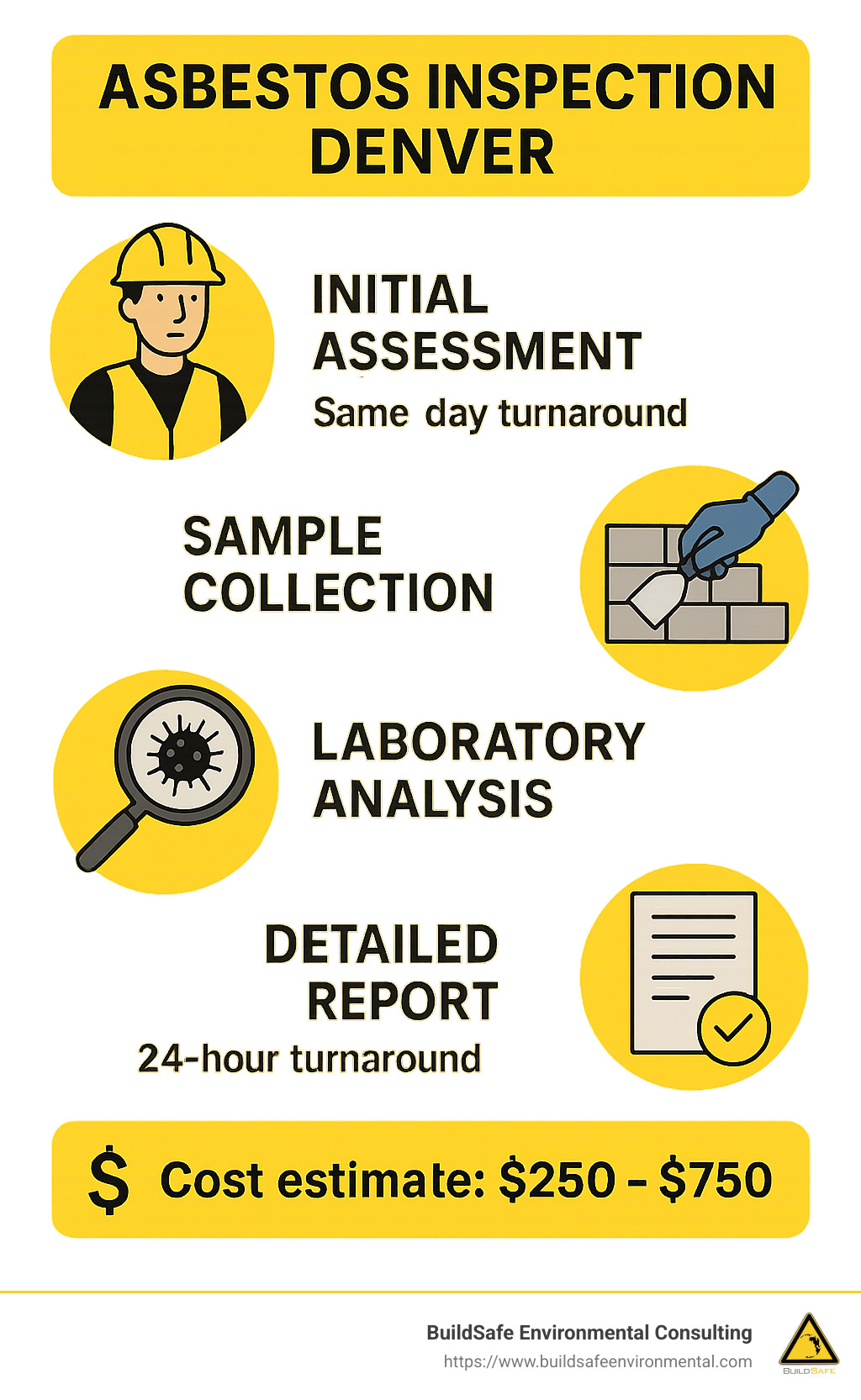
| What’s Included: Visual inspection, sample collection, lab analysis, detailed report |
Many homeowners don’t realize that Colorado law requires professional inspection of all structures—regardless of when they were built—before any renovation or demolition work begins. This might seem like an extra step, but it’s designed to protect you and your family from the dangerous health effects of disturbed asbestos, which include lung cancer and mesothelioma.
The good news? Finding a reliable asbestos inspection Denver service doesn’t have to be complicated or break the bank. Most local companies charge between $20-$35 per sample, with comprehensive inspections typically ranging from $250-$750 depending on your property size. Many inspectors can provide same-day service with rapid results when you’re on a tight timeline.
One Denver homeowner, Jennell K., shared her experience: “We just needed a simple asbestos test for a flooring replacement. Elevation was reasonably priced and provided testing and results faster than expected. They were responsive to scheduling communications.”
While DIY testing kits might seem tempting, they often miss crucial areas where asbestos might be hiding. Professional inspectors are trained to identify potential asbestos-containing materials that untrained eyes might overlook—from popcorn ceilings and vinyl flooring to pipe insulation and textured walls.
I’m Craig Luckey, and having conducted thousands of asbestos inspection Denver services as the owner of BuildSafe Environmental Consulting, I’ve seen how proper testing brings peace of mind to homeowners. My team is committed to providing thorough, reliable inspections with clear explanations of your results, helping you steer the next steps safely and confidently.
Why Asbestos Is Dangerous & Where It Hides
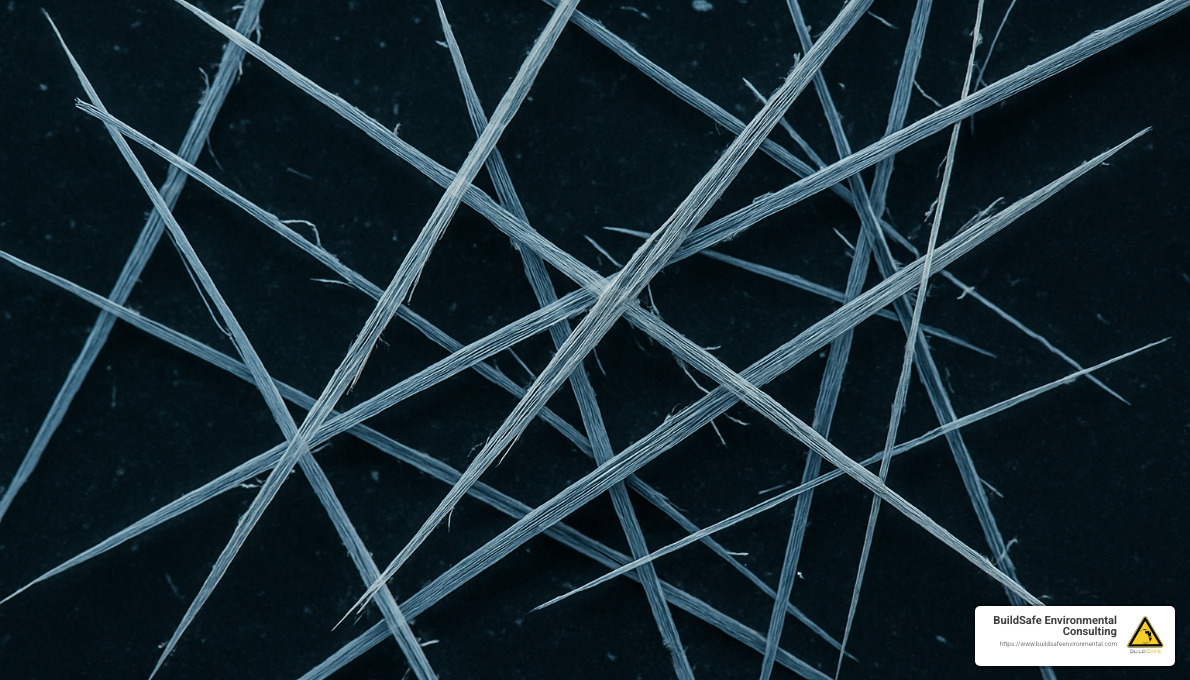
Asbestos isn’t just another building material—it’s a silent health threat lurking in many Denver properties. This naturally occurring mineral forms long, thin fibers that, when disturbed, become airborne and easily inhaled. What makes asbestos particularly dangerous is its microscopic size; these invisible fibers can float in the air for days, waiting to be breathed in by unsuspecting occupants.
If you live in Denver’s older neighborhoods like Capitol Hill, Baker, or Park Hill, your home might be harboring this hidden danger. Chrysotile, the most common type found in U.S. buildings, accounts for about 95% of all asbestos used in construction. While its use declined after the EPA’s 1978 ban attempt (which was largely overturned in 1991), asbestos-containing materials continued to be installed until 1989, especially in items like sheet vinyl flooring.
But here’s what many Denver homeowners don’t realize: even newer properties aren’t automatically safe. That’s precisely why Colorado requires asbestos inspection Denver services for all structures regardless of when they were built.
Key Health Risks You Should Know
The health effects of asbestos exposure aren’t immediately apparent, which makes them even more insidious. According to scientific research on asbestos health risks, breathing in these fibers can lead to three primary diseases:
Asbestosis develops when inhaled fibers cause scarring in your lung tissue, leading to progressive breathing difficulty. It’s a serious, irreversible condition that can severely impact quality of life.
Lung cancer risk significantly increases with asbestos exposure, especially if you’re also a smoker—the two factors together create a dangerous multiplier effect.
Mesothelioma, perhaps the most feared asbestos-related disease, is an aggressive cancer affecting the lining of the lungs, heart, or abdominal organs. It’s almost exclusively caused by asbestos exposure and often fatal.
What makes these conditions particularly troubling is their long latency period—symptoms might not appear until 20-50 years after exposure. By then, the damage is often irreversible.
“I was referred by my real estate agent to get some tile testing and possible remediation. From start to finish I felt like we had great communication of the method, cost and execution of environmental tests. It was a great experience and would use them again.” – Denver homeowner
The sobering reality? There is no safe level of asbestos exposure. Even brief contact with high concentrations can potentially lead to disease decades later.
Most Common ACMs in Colorado Buildings
In our years conducting asbestos inspection Denver services, we’ve found these dangerous fibers hiding in plain sight throughout Colorado homes and buildings. The EPA categorizes asbestos-containing materials into three groups:
Surfacing Materials are everywhere in Denver homes built between 1950-1980. That charming popcorn ceiling? Potentially dangerous. The textured walls that give your home character? They might contain asbestos. Even the joint compound used between drywall sheets and decorative plaster can harbor these harmful fibers.
Thermal System Insulation is another common culprit. Those wrapped pipes in your basement, the insulation around your boiler, and even the vermiculite attic fill that keeps your home warm in winter could all contain asbestos. In Colorado’s older homes, these materials were prized for their fire resistance and insulating properties—no one realized the health trade-off.
Miscellaneous Materials include items you might never suspect: vinyl floor tiles hiding beneath your carpet, the cement siding on your home’s exterior, roofing materials, and even the caulking around your windows. In our Denver inspections, we frequently find asbestos in seemingly harmless places—even the backing of sheet vinyl flooring can contain dangerous levels.
What surprises many of our clients is that asbestos isn’t always visible or obvious. That’s why professional asbestos inspection Denver services are crucial before any renovation project. At BuildSafe Environmental Consulting, we’ve seen too many DIY renovators unknowingly release these dangerous fibers while trying to update their homes.
Disturbing these materials without proper testing and precautions isn’t just a health risk—it’s also against Colorado law. When it comes to asbestos, what you can’t see absolutely can hurt you.
Asbestos Inspection Denver: Laws, Timing & Property Types
Colorado’s asbestos regulations aren’t just strict—they’re some of the toughest in the nation. And there’s good reason for this. With our state’s rich mining history and abundance of older buildings, being vigilant about asbestos is particularly important here in the Mile High City.
Under Colorado Regulation 8, managed by the Colorado Department of Public Health and Environment (CDPHE), the rules about asbestos inspection Denver services are crystal clear:
“All structures in Colorado, regardless of construction date, must be inspected for asbestos prior to renovation or demolition activities.”
This is actually much stricter than federal standards, which typically only worry about commercial buildings or multi-unit residential properties. Here in Colorado, even your single-family home needs proper inspection before you knock down that wall or rip out that old bathroom.
When Is an “asbestos inspection Denver” Legally Required?
You’ll need to book an asbestos inspection Denver service in several common situations:
Before pulling renovation permits, most Denver building departments won’t even issue your permits without documentation showing you’ve had an asbestos inspection. If you’re planning a demolition project—whether it’s a garden shed or an entire building—you’ll need a thorough inspection and proper removal of any asbestos found.
While not technically required by law, many home buyers request asbestos inspections during real estate transactions, especially for older Denver properties. It’s simply good due diligence.
After disasters like floods or fires that may have damaged materials containing asbestos, an inspection becomes essential. And anytime you’re planning to disturb potentially suspicious materials—like scraping that popcorn ceiling or pulling up old vinyl flooring—you should get an inspection first.
The consequences of skipping this step are serious. The EPA can hit you with fines up to $37,500 per day, and the CDPHE might pile on additional penalties. But even worse than the financial hit is the health risk you’d be imposing on your family, neighbors, and workers.
Which Properties Need an “asbestos inspection Denver”?
In short: pretty much all of them. But what the inspection looks like will vary depending on what kind of property you have.
For single-family homes, inspections typically focus on the usual suspects: popcorn ceilings, vinyl flooring, pipe insulation, and exterior materials. These tend to be the most straightforward inspections we do.
Multi-family buildings like apartments, condos, and townhomes require more extensive inspections covering common areas, mechanical rooms, and individual units. You might need to get HOA approval first, so plan ahead.
Commercial properties such as offices, retail spaces, and warehouses often have complex HVAC systems, fireproofing, and specialized materials that require more samples and a more detailed inspection process.
Schools and healthcare facilities face additional regulatory requirements due to the vulnerable populations they serve. These inspections are particularly thorough and must follow strict protocols.
Industrial buildings like manufacturing facilities and power plants typically contain high-temperature insulation and specialized materials that often have higher asbestos content, requiring specialized inspection approaches.
Even government buildings follow the same regulations, though they may have additional documentation requirements to satisfy public oversight rules.
Credentials Your Inspector Must Hold
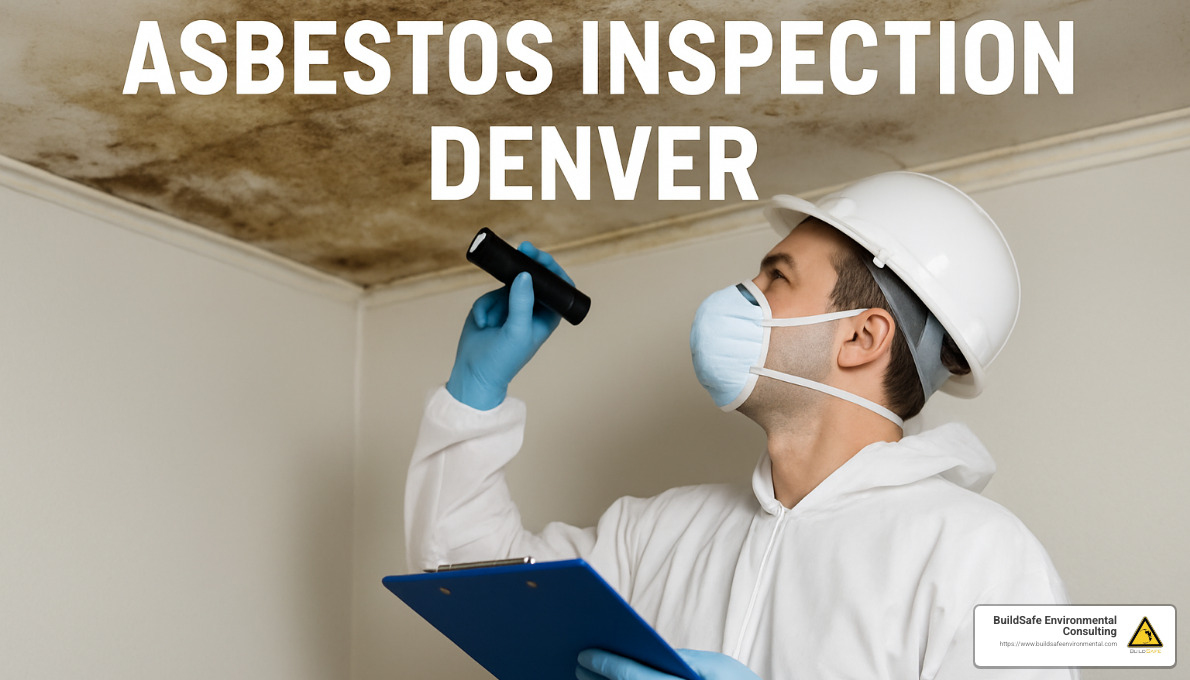
Not just anyone with a flashlight and clipboard can perform a legally valid asbestos inspection Denver service. Your inspector needs specific qualifications:
First, they must be a Colorado Certified Building Inspector, licensed through the CDPHE Air Pollution Control Division. They should have completed AHERA Training (that’s the Asbestos Hazard Emergency Response Act program). And they need to partner with an NVLAP-Accredited Laboratory for analyzing samples—that’s a lab accredited by the National Voluntary Laboratory Accreditation Program.
At BuildSafe Environmental Consulting, all our inspectors hold these certifications plus additional qualifications in environmental assessment. We’ve built relationships with multiple NVLAP-accredited laboratories so we can ensure your samples are analyzed quickly and accurately.
When it comes to asbestos, cutting corners isn’t just against the law—it could put your health at risk. Taking the time to find a properly certified inspector is one of the most important steps in your renovation or real estate journey.
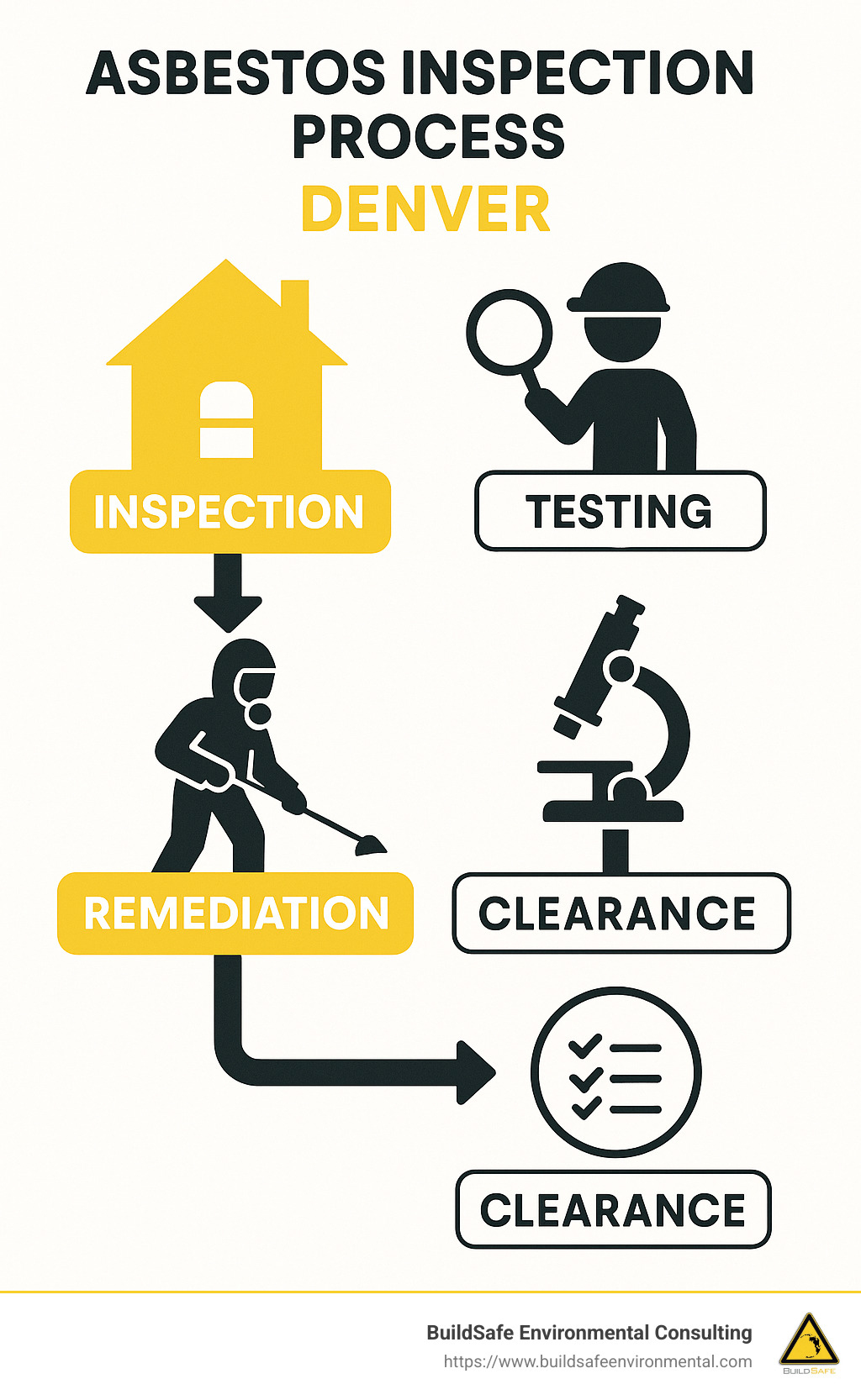
Professional Inspection Process Explained Step-by-Step
When you schedule an asbestos inspection Denver service with us, you’re not just getting a quick check-box assessment. You’re getting a methodical, thorough evaluation designed to keep you and your family safe. Let me walk you through exactly what happens when our inspectors arrive at your property.
Step 1: Pre-Inspection Prep
Before we even step foot on your property, we’ll have a friendly conversation to understand your specific situation. We’ll ask about your home’s age, any renovation plans you have, and whether you’ve noticed any concerning materials. This helps us tailor our inspection to your exact needs.
On inspection day, a few simple preparations make everything go smoothly. If possible, ensure all areas of your home are accessible (yes, even that cluttered storage closet!), temporarily turn off your HVAC system to prevent air disturbance, and keep any pets in a secure area. Don’t worry about deep cleaning – we’re looking for building materials, not dust bunnies!
“Got the best response from both Jonathon and Christina. They made sure to come our same day and was extremely courteous and gave great customer service. Christina worked very quickly, thoroughly took samples, and was able to give my reports back faster than I imagined.” – Chris H., Denver
Our inspector will arrive in appropriate protective gear – not because your home is dangerous, but because it’s our standard safety protocol for every inspection.
Step 2: Targeted Sampling & Air Quality Tests
This is where our expertise really shines. We’ll carefully examine your entire property, looking for materials that commonly contain asbestos. Think of us as detectives, searching for clues in your popcorn ceilings, vinyl flooring, pipe insulation, and other suspect areas.
When we identify potential asbestos-containing materials, we document everything with photos and precise location notes. Then comes the sampling process. Following EPA guidelines, we’ll collect multiple samples of each material type:
For surfacing materials like textured ceilings, we take at least three samples per 1,000 square feet.
For pipe insulation and other thermal materials, we collect at least three samples.
For miscellaneous materials like floor tiles, we take at least two samples.
Don’t worry – our sampling technique is minimally invasive. We typically need just a small amount (about the size of a postage stamp) from each material. We use specialized tools to collect these samples safely, immediately sealing them in labeled containers to prevent any fiber release.
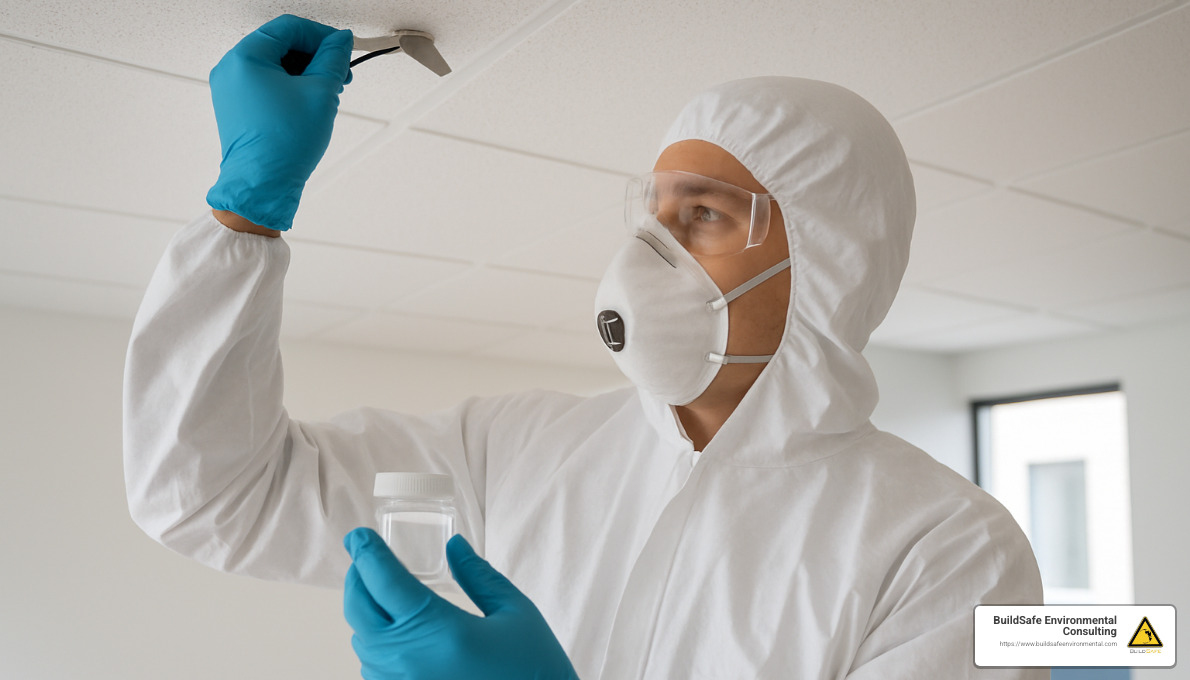
If we notice damaged materials or you’re in the middle of renovation, we might recommend air quality testing as an extra precaution. This helps detect any fibers that might already be airborne in your home.
Step 3: Lab Analysis & Reporting
Once we’ve collected all necessary samples, we maintain a strict chain of custody as they head to an NVLAP-accredited laboratory. There, skilled technicians use polarized light microscopy (PLM) to identify any asbestos fibers present. For very fine materials, they may use transmission electron microscopy (TEM) for even more detailed analysis.
The lab determines whether each sample contains asbestos and at what percentage. In Colorado, materials with more than 1% asbestos are classified as ACMs and require professional handling.
We understand that waiting for results can be stressful, especially when renovation plans are on hold. That’s why we offer flexible turnaround options:
– Same-day verbal results (for an additional fee)
– 24-hour written reports
– Standard 2-3 day turnaround
“We had the asbestos results back within 24 hours and we had a full written (and very detailed) report in 48 hours.” – Laura M., Denver homeowner
Step 4: Understanding Your Report
Your report isn’t just a technical document – it’s a roadmap for keeping your home safe. When we deliver it, we take time to walk you through everything in plain English. We’ll explain:
Which materials contain asbestos (if any) and their exact locations
How much asbestos is present in each positive sample
How “friable” each material is – meaning how easily it might release dangerous fibers
The risk level associated with each material
Recommended next steps for safe management or removal
Your comprehensive report includes a material inventory list, laboratory results, inspector certifications, and detailed recommendations. It’s everything you need for permit applications or contractor bids if remediation is required.
At BuildSafe, we believe information is power. We don’t just identify problems – we help you understand them and find solutions. That’s why Denver homeowners trust our asbestos inspection Denver services for peace of mind and practical guidance.
Cost, Timing, and Hiring a Certified Inspector
Planning for an asbestos inspection Denver service means understanding what goes into the price tag. Like most things in life, you get what you pay for – but that doesn’t mean you can’t find excellent service at a fair price.
Typical Price Range for an “asbestos inspection denver”
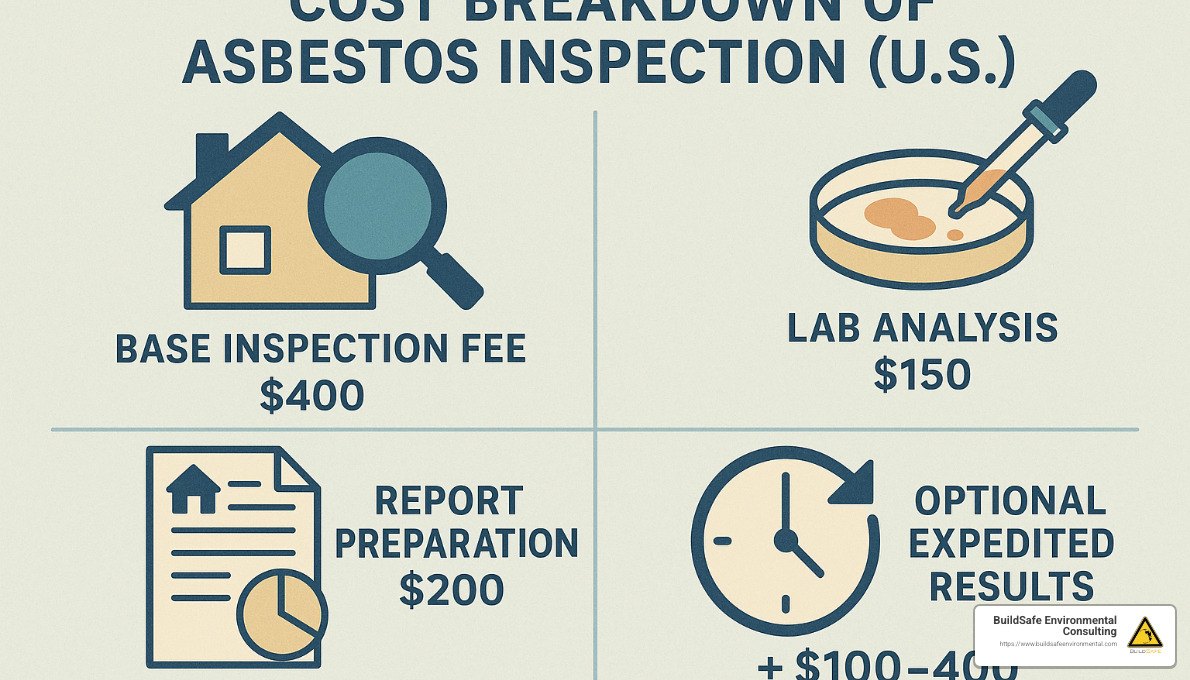
Let’s talk dollars and cents. For a typical Denver home, you’re looking at a base inspection fee between $250-$350. This covers the inspector’s time, expertise, and basic documentation. If you’ve got a multi-family property or small commercial building, that base fee jumps to around $350-$550. Larger commercial properties or industrial sites start at $500 and can exceed $1,500 depending on complexity.
But the base fee is just the beginning. Each sample collected needs laboratory analysis, which adds to your total. Standard analysis runs about $20-$25 per sample with a 7-10 day wait. Need results faster? Next-day analysis costs $25-$30 per sample, while same-day results (for those truly urgent situations) will set you back $30-$35 per sample.
Don’t forget about potential trip charges ($145-$175, though we often waive these for Denver metro clients), demolition permit documentation ($115-$150), or emergency/after-hours services ($100-$250 extra).
Most homeowners end up spending between $350-$600 for a complete inspection with 5-10 samples. Commercial projects typically range from $750-$2,000 depending on size and complexity.
While I know it’s tempting to shop solely on price, thorough inspection by qualified professionals protects both your legal standing and your family’s health. The cheapest option rarely provides the most comprehensive assessment.
How Fast Can You Get Results?
In Denver’s hot real estate market and construction industry, waiting weeks for results just isn’t practical. That’s why we offer flexible turnaround options:
Our standard service provides results in 7-10 business days at the lowest price point – perfect if you’re planning ahead and working within a budget.
Need it quicker? Our next-day service delivers results by the end of the following business day for just $5-10 more per sample. This is our most popular option for renovation projects and real estate transactions.
For true emergencies, our same-day service provides verbal results before you go to bed, with a written report following within 24 hours. Yes, it costs a premium ($10-15 extra per sample), but when you’re facing construction delays or closing deadlines, the speed is worth every penny.
As one of our contractor clients, John F., recently shared: “They typically have results within less than 24 hrs. so you can keep the project moving forward.”
Choosing the Right Professional
Finding a qualified asbestos inspection Denver provider means looking beyond flashy websites and low prices. Here’s what truly matters:
State certification is non-negotiable – always ask for their Colorado Certified Building Inspector license number and verify it with CDPHE. This ensures they’ve completed the required training and understand state regulations.
Proper insurance coverage protects both you and them. Any reputable inspector carries professional liability insurance and workers’ compensation.
Laboratory partnerships determine the accuracy of your results. Your inspector should work exclusively with NVLAP-accredited laboratories for sample analysis.
Independence matters tremendously. At BuildSafe, we believe strongly in third-party verification – we don’t perform remediation work, which means we have zero financial incentive to “find” problems that don’t exist. Our only goal is accurate assessment.
Experience speaks volumes. Don’t hesitate to ask how many inspections they’ve conducted in properties similar to yours. An inspector who primarily works with commercial buildings might miss residential-specific concerns.
Clear reporting makes all the difference when you’re trying to understand results and make decisions. Ask to see a sample report to verify their thoroughness and clarity before hiring.
At BuildSafe Environmental Consulting, we’ve built our reputation on being thorough, honest, and responsive. We understand that behind every inspection is a family concerned about their health, a contractor with deadlines to meet, or a business owner worried about compliance. That’s why we approach each project with the care and attention it deserves – not just as inspectors, but as neighbors helping neighbors steer a complex but crucial process.
From Results to Removal: Next Steps & Conclusion
So you’ve completed your asbestos inspection Denver service and now have results in hand. What happens next? This is where many homeowners feel uncertain, but don’t worry—I’ll walk you through exactly what to do based on what your report reveals.
If Your Report Is Positive—What Now?
First things first: if asbestos is found in your home, take a deep breath. This doesn’t automatically mean you’re facing a health crisis or a massive bill.
Most people immediately think they need to tear everything out immediately, but that’s not always the case. Your inspector should have provided a risk assessment that categorizes materials based on their condition and potential for fiber release. Some well-maintained ACMs can safely remain in place with regular monitoring, especially if they’re in good condition and won’t be disturbed.
For materials that do require removal, you’ll need to develop an abatement plan. This isn’t something you’ll do alone—your inspector can help guide this process based on the specific types of ACMs found, where they’re located, and your renovation plans.
“Once we got the results, they called and walked us through what it meant and options we had.” – Megan C., Denver homeowner
The next crucial step is hiring a licensed asbestos abatement contractor. In Colorado, this isn’t optional—it’s the law. Only state-certified professionals can legally remove asbestos-containing materials. These specialists have the training, equipment, and containment protocols to remove ACMs without creating a dangerous situation. At BuildSafe, we can recommend reputable contractors, but as a third-party inspector, we maintain our independence to avoid conflicts of interest.
Your contractor will help secure the necessary permits from CDPHE before any work begins. After abatement is complete, don’t skip the final step: clearance testing. This third-party verification confirms that all asbestos has been properly removed and your space is safe for reoccupancy.
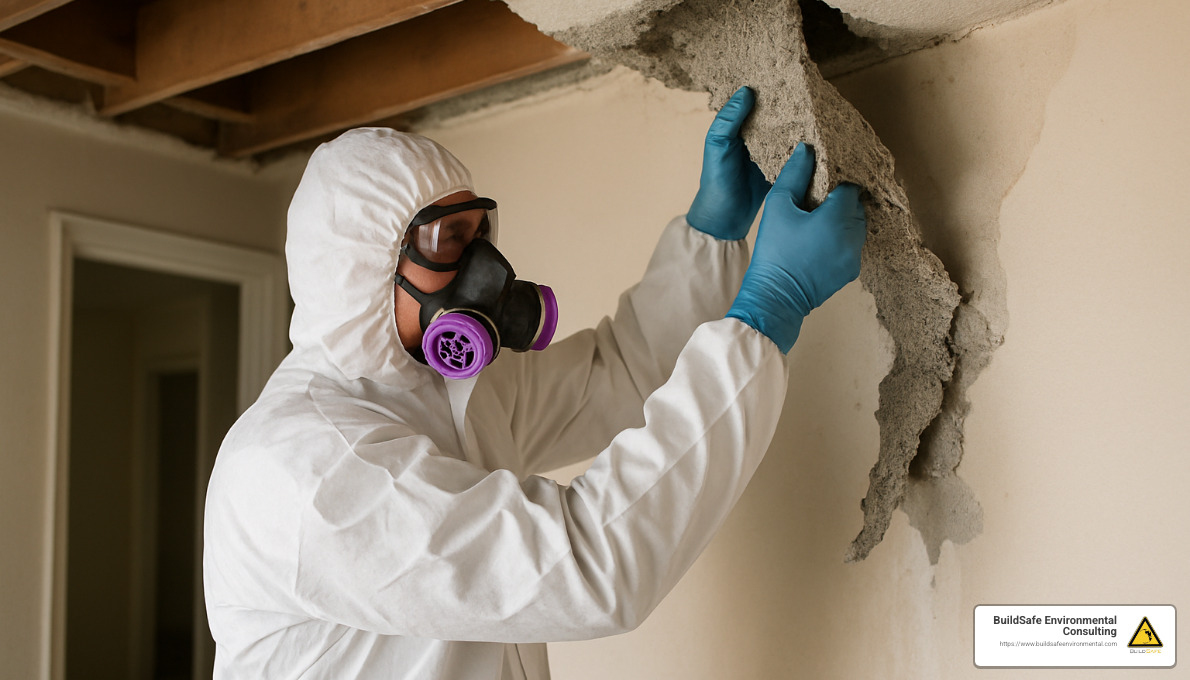
I can’t stress this enough: please don’t attempt DIY removal. I’ve seen the aftermath of DIY asbestos projects, and they often create more hazardous conditions than existed before. Not only is it illegal in Colorado, but it also puts you, your family, and your neighbors at serious risk.
Busting Myths About Asbestos Inspection
Over my years conducting asbestos inspection Denver services, I’ve heard plenty of misconceptions that just won’t die. Let me clear up the most common ones:
“Only older homes need inspection.” This simply isn’t true. Colorado requires inspection of all structures regardless of age before renovation or demolition. Even buildings constructed after the 1989 regulations may contain perfectly legal ACMs. Asbestos wasn’t completely banned—its use was just restricted.
“Painting over asbestos materials makes them safe.” While specialized encapsulation products exist, ordinary paint doesn’t prevent fiber release if the material becomes damaged. Professional assessment is needed before attempting any encapsulation strategy.
“DIY test kits are adequate for permit applications.” I wish this were true—it would make everyone’s life easier! Unfortunately, Denver building departments and CDPHE specifically require testing by certified inspectors. Those home testing kits simply don’t meet legal requirements.
“Asbestos is easy to identify visually.” Even after thousands of inspections, I still can’t identify asbestos by sight alone. Materials that look identical can have vastly different compositions. Laboratory analysis is the only reliable identification method.
“All asbestos must be removed immediately.” This is perhaps the most costly misconception. Well-maintained, non-friable ACMs often pose minimal risk and can be managed in place with regular monitoring. Unnecessary removal can create exposure risks and expenses that weren’t present before.
Ready to Protect Your Property?
At BuildSafe Environmental Consulting, we’ve guided thousands of Denver property owners through the asbestos inspection process with confidence. Whether you’re planning a renovation, purchasing a property, or simply concerned about potential health risks, we provide thorough, accurate assessments with clear communication every step of the way.
We understand that asbestos inspections often come with tight deadlines and budget concerns. That’s why we offer flexible scheduling (including same-day appointments for urgent situations), competitive pricing with transparent cost breakdowns, and multiple result turnaround options to fit your timeline.
Our commitment to third-party verification ensures you receive unbiased assessments—we don’t perform remediation work ourselves, so we have no incentive to “find” problems that don’t exist. And when we deliver your report, we take time to explain what it means in plain English, not technical jargon.
Don’t leave your health and legal compliance to chance. Contact BuildSafe Environmental Consulting today to schedule your asbestos inspection Denver service and take the first step toward a safer property.
Remember: When it comes to asbestos, knowledge isn’t just power—it’s protection.