Is Your Indoor Air Safe? Understanding Asbestos Risks
Asbestos air quality testing is a specialized procedure that measures airborne asbestos fibers in your environment. If you’re concerned about possible asbestos exposure, here’s what you need to know:
Quick Answer: When to Consider Asbestos Air Testing
* Before/after renovation of older homes (pre-1980s)
* Following asbestos removal projects
* If you suspect damaged asbestos-containing materials
* When buying an older property with known asbestos materials
* If occupants experience unexplained respiratory symptoms
Asbestos, once widely used in building materials, becomes dangerous when its microscopic fibers are released into the air. These invisible threats can linger for days, making proper asbestos air quality testing essential for protecting your family’s health.
Unlike surface testing which only identifies materials containing asbestos, air testing specifically measures what you’re actually breathing. This crucial difference can mean everything when it comes to understanding your real exposure risk.
I’m Craig Luckey from BuildSafe Environmental Consulting, where I’ve spent years conducting asbestos air quality testing for Colorado homeowners worried about potential exposure during renovations and remodeling projects. My experience in the field has shown that proactive testing provides both peace of mind and crucial health protection for families.
Understanding Asbestos Air Quality Testing
The Science Behind the Test
When it comes to protecting your family from invisible threats, asbestos air quality testing is truly a marvel of modern science. At BuildSafe Environmental, we don’t just look for problems – we use sophisticated methods to detect microscopic fibers that your eyes simply can’t see.
Most of our testing relies on the NIOSH 7400 method, commonly called the membrane filter method. Think of it as setting a very fine net to catch very tiny fish. We use a carefully calibrated pump to draw a specific amount of air through a special filter, which captures any floating asbestos fibers that might be present in your home’s air.
Once we’ve collected these samples, the real detective work begins in our laboratory. The filters are prepared using special techniques and then examined under powerful microscopes. We typically use two different approaches to analyze what we’ve found:
Phase Contrast Microscopy (PCM) is our standard method for routine monitoring. It’s like having a skilled observer count all the fibers caught in our filter. While PCM can’t specifically identify which fibers are asbestos (as opposed to other types of fibers), it provides a reliable count that’s perfect for clearance testing after removal work.
For more definitive answers, we turn to Transmission Electron Microscopy (TEM). This advanced method is like having a forensic scientist examine each fiber individually. TEM can positively identify asbestos fibers and distinguish them from other types. While it costs more and takes longer, the results are much more detailed and conclusive.
Interpreting the Results
Making sense of your asbestos air quality testing results shouldn’t require a science degree. We report findings in fibers per cubic centimeter of air (f/cc), which is the standard measurement in our industry.
For context, the Occupational Safety and Health Administration (OSHA) sets the permissible exposure limit for workers at 0.1 f/cc averaged over an 8-hour workday. After professional asbestos removal in schools and public buildings, the clearance threshold is typically stricter – around 0.01 f/cc using PCM analysis.
Here’s where it gets interesting for homeowners: there’s actually no official federal standard for residential settings. At BuildSafe, we generally consider levels below 0.01 f/cc acceptable for your family’s home. However, I always make a point of telling my clients that health experts widely agree there’s simply no “safe” level of asbestos exposure.
That’s why we’re so thorough with our testing – your family’s health isn’t something we take lightly. The goal isn’t just to meet a minimum standard; it’s to give you clear information about what’s in the air you breathe every day.
Types of Asbestos Air Tests
When it comes to keeping your family safe from invisible threats, not all asbestos air quality testing is created equal. At BuildSafe Environmental Consulting, we tailor our testing approach to your specific situation, offering several specialized tests that serve different purposes.
Background Air Test
Think of a background air test as taking a “before” snapshot of your environment. Before any renovation or asbestos removal begins, we’ll measure the existing fiber levels in your air. This establishes an important baseline that helps us understand what’s normal for your space.
“Many homeowners are surprised to learn their homes already have some level of airborne fibers,” I often tell clients. “That’s why establishing this baseline is so crucial—it gives us something to compare against after work is completed.”
Reassurance Air Test
Worried about potential asbestos in your home but not planning any removal work? A reassurance test might be just what you need for peace of mind. We’ll measure current airborne fiber levels while you go about your normal activities.
This test is particularly popular among new homeowners of older properties or parents concerned about their children’s exposure. The results often provide welcome relief, confirming that even though asbestos-containing materials might be present, they aren’t releasing harmful fibers into your air.
Four-Stage Clearance Testing
After asbestos removal, this comprehensive approach is our gold standard for ensuring your space is safe to reoccupy. The four-stage process leaves nothing to chance:
First, we conduct a thorough visual inspection to verify all asbestos materials have been properly removed. Next comes a detailed examination for any remaining dust or debris. The third stage involves air monitoring to measure any airborne fibers. Finally, we complete a comprehensive assessment evaluating the entire process.
Only when all four stages meet our strict standards do we give the all-clear. This methodical approach has protected countless Colorado families from lingering asbestos dangers after removal projects.
Total Fiber Count Test
Sometimes, you just need a quick assessment of your overall air quality. The total fiber count test measures all airborne fibers—not just asbestos—giving you a fast snapshot of potential risks.
While less specific than other tests, it serves as an excellent screening tool. If we detect liftd fiber levels, we’ll recommend more targeted testing to identify exactly what you’re dealing with.
“I like to think of this test as casting a wide net,” I explain to clients. “If something concerning is in your air, we’ll catch it—then we can determine exactly what it is and how to address it.”
By matching the right asbestos air quality testing method to your specific concerns, we help Colorado families breathe easier—both literally and figuratively.
The Importance of Professional Asbestos Testing
Why DIY Won’t Cut It
When it comes to asbestos air quality testing, cutting corners simply isn’t worth the risk. I’ve seen too many homeowners attempt to save money with improper sampling, only to end up with false negatives or inconclusive results that left their families vulnerable.
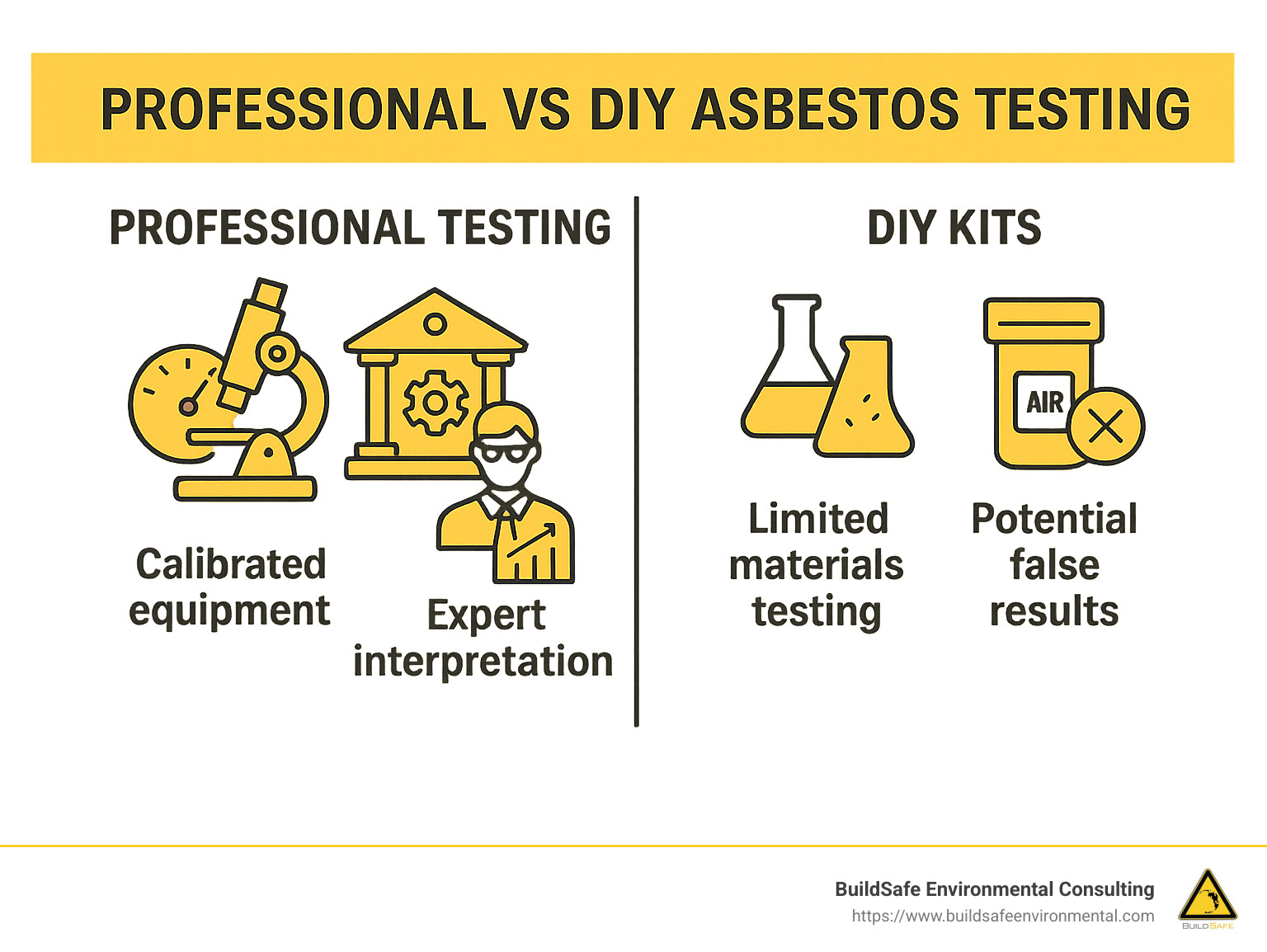
Think about it this way: you wouldn’t perform your own surgery, would you? Professional testing isn’t just about having fancy equipment—it’s about knowing exactly how to use it. At BuildSafe, our technicians understand the nuances of proper air sampling, from calibrating equipment correctly to maintaining the right air flow for the appropriate duration.
What truly makes professional testing essential is the expertise in handling samples. Even the slightest contamination can skew results. We follow strict chain-of-custody protocols to ensure your samples remain untainted from collection through laboratory analysis, giving you results you can actually trust.
The Role of Accreditation and Licensing
Colorado doesn’t mess around with asbestos regulations—and neither do we. The state requires proper licensing for good reason: asbestos testing demands specialized knowledge and training that can’t be picked up overnight.
Every BuildSafe technician holds current certifications and regularly undergoes continuing education to stay on top of evolving testing methodologies. This isn’t just about checking a regulatory box; it’s about ensuring we deliver the most accurate assessment possible of your home’s air quality.
Laboratory selection matters tremendously too. We exclusively partner with NVLAP-accredited laboratories that maintain rigorous quality control standards. These facilities undergo regular proficiency testing and audits to maintain their accreditation. When your family’s health is on the line, this level of scrutiny provides crucial peace of mind that your asbestos air quality testing results are both accurate and legally defensible.
The Third-Party Advantage
Have you ever wondered if the company testing for asbestos might have an incentive to “find” more of it if they also handle removal? This conflict of interest is precisely why our third-party independence is so valuable.
As an independent consultant, BuildSafe has exactly one priority: giving you accurate information. We don’t profit from removal work, so we have no reason to exaggerate findings. This independence becomes particularly important when you’re verifying that removal work was properly completed or when you need documentation for real estate transactions.
I’ve worked with many anxious homeowners who finally felt relief after getting our unbiased assessment. There’s something powerfully reassuring about having someone in your corner whose only interest is telling you the truth about your air quality situation. When tenants raise concerns or you’re trying to ensure your family’s safety after a renovation, this kind of trusted verification is invaluable.
Professional asbestos air quality testing isn’t just a service—it’s an investment in certainty during what can be a stressful time for any property owner.
DIY Asbestos Testing Kits
Understanding the Limitations
Let’s talk about DIY asbestos testing kits – they’re tempting, I know. As a homeowner concerned about asbestos, grabbing a kit from the hardware store might seem like a quick solution. But I need to be straight with you about what these kits can and can’t do.
Most DIY kits you’ll find are designed for material testing – think of that suspicious popcorn ceiling or old floor tile. They typically include collection tools, instructions, and a mailer to send your sample to a lab. Simple enough, right?
But when it comes to asbestos air quality testing, the story changes dramatically. Proper air testing requires calibrated pumps that draw in specific volumes of air through specialized filters. This isn’t equipment you typically find in a DIY kit, and without it, your air sampling results won’t be reliable.
Even if you find a kit marketed for air testing, there’s the matter of expertise. At BuildSafe, we’ve seen many cases where improper sampling led to misleading results. Air currents, sampling duration, pump placement – these factors matter tremendously and require professional knowledge.
Perhaps most concerning is that many labs analyzing DIY samples lack proper accreditation. Without NVLAP certification, can you really trust the results that come back?
When DIY Might Be Appropriate
I don’t want to completely discourage DIY approaches – they can have their place as a preliminary step. If you’re simply trying to determine whether a material contains asbestos before deciding on professional testing, a DIY material kit might be helpful.
However, for asbestos air quality testing, DIY methods rarely provide the accuracy or reliability needed to make health-critical decisions. If you do proceed with a DIY kit, please:
Follow the sampling instructions to the letter, wear appropriate protective gear (N95 mask at minimum), and disturb potential asbestos materials as little as possible during sampling. Most importantly, understand that negative results don’t guarantee safety – false negatives are common with improper sampling.
At BuildSafe Environmental Consulting, we often work with homeowners who started with DIY testing and then realized they needed professional guidance. We’re happy to help interpret those initial results and recommend appropriate next steps – sometimes confirming your DIY findings, other times identifying issues that were missed.
When it comes to your family’s health, peace of mind comes from knowing the testing was done right. While DIY kits might save money upfront, the potential cost of missed asbestos exposure is simply too high.
Frequently Asked Questions about Asbestos Air Quality Testing
What is the cost of asbestos air testing?
Let’s talk dollars and cents – I know this is often the first question on people’s minds when considering asbestos air quality testing.
The truth is, costs can vary quite a bit depending on your specific situation. At BuildSafe Environmental Consulting, our testing services typically range from $300 to $1,200. Why such a range? Well, several factors come into play:
Basic air monitoring with PCM analysis usually starts around $300-$500. This is your standard testing that many homeowners need for peace of mind or basic verification. More comprehensive testing, like TEM analysis or complete clearance testing for larger projects, will run higher – typically between $800-$1,200.
The final price tag depends on how many samples we need to take, which analysis method is most appropriate for your situation, how quickly you need results, and the complexity of your property. Even your location in Colorado can affect pricing (though we serve Denver, Longmont, Fort Collins, and surrounding areas with consistent, competitive rates).
One thing I can promise: we don’t do surprise fees. We’ll always provide a clear, detailed quote before starting any work, so you’ll know exactly what to expect.
How is asbestos air sampling conducted?
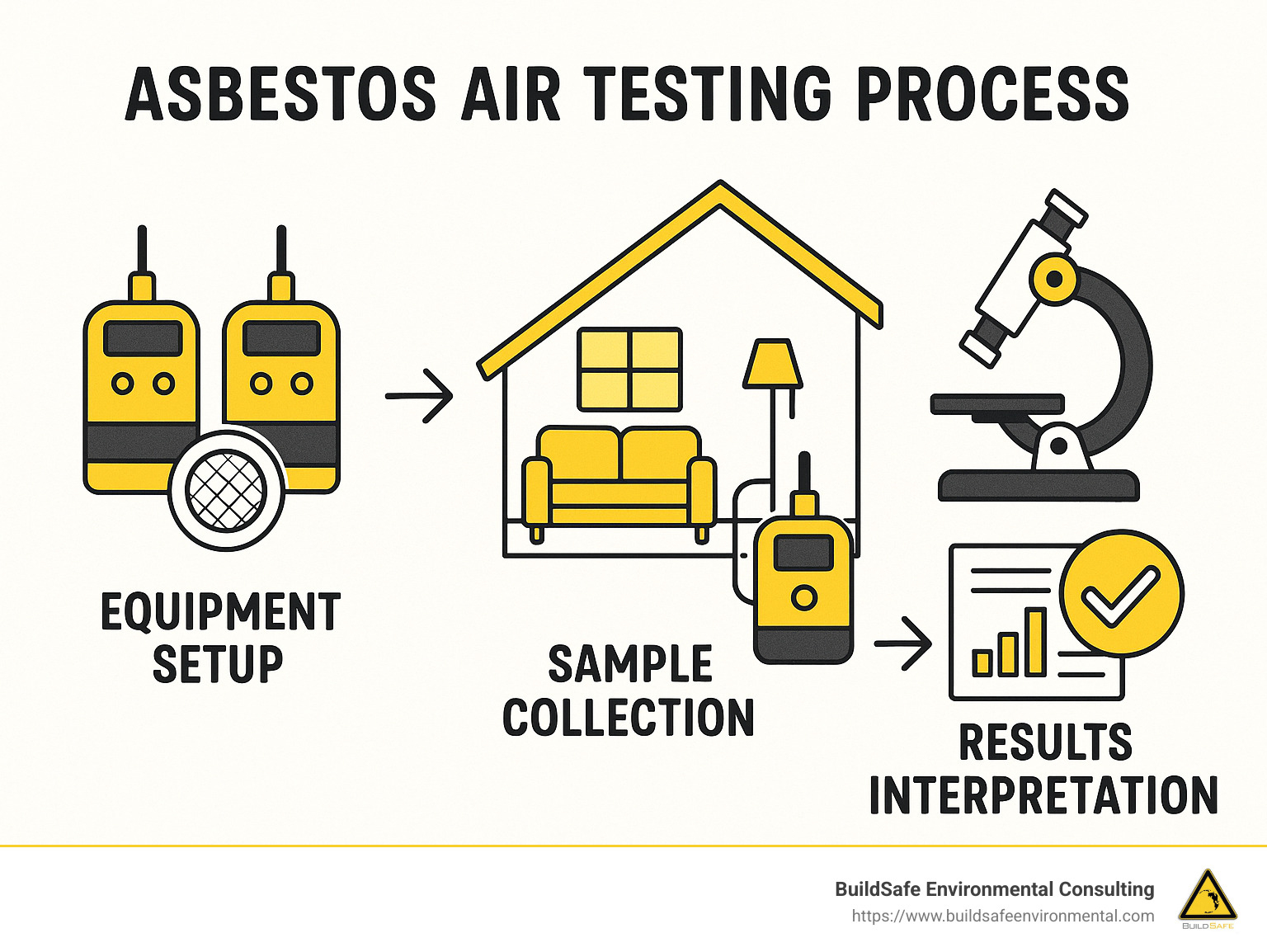
When we conduct asbestos air quality testing at your property, we follow a careful, systematic approach – not just because regulations demand it, but because your health depends on it.
The process starts with strategic placement of our air sampling pumps. These aren’t your average hardware store pumps – they’re precisely calibrated instruments designed specifically for detecting microscopic fibers. We position them in locations that will give us the most accurate picture of what you’re actually breathing.
Next comes the collection phase. We draw air through specialized filters at a carefully controlled rate – typically for 4-8 hours for regular occupational sampling, or 2-4 hours if we’re doing clearance testing after removal work. This isn’t a quick in-and-out job; proper sampling takes time.
Once sampling is complete, we maintain what’s called a “chain of custody” – basically a paper trail that documents exactly where your samples have been. This might sound like unnecessary bureaucracy, but it’s essential for ensuring your results are legally defensible if needed.
The samples then head to an accredited laboratory for analysis under either PCM or TEM microscopy (depending on your specific needs). When the results come back, our certified professionals don’t just hand you a confusing lab report – we interpret what those numbers actually mean for your health and provide clear recommendations.
For schools and public buildings, we follow even more rigorous AHERA clearance protocols, including what’s called “aggressive air sampling.” This involves using fans and air disturbance techniques to simulate future activity in the space – making sure no hidden fibers are lurking in settled dust.
What are the health risks of asbestos exposure?
Understanding the real health risks of asbestos exposure explains why proper asbestos air quality testing is so important – we’re not just checking a regulatory box, we’re potentially saving lives.
The troubling reality about asbestos-related diseases is their long latency period. Most conditions don’t show up until 20-50 years after exposure, which means today’s exposure might not cause symptoms until decades later. By then, it’s often too late for effective treatment.
Asbestosis is perhaps the most well-known risk – a progressive scarring of lung tissue that makes breathing increasingly difficult over time. Imagine trying to breathe through a straw that gets narrower each year. In severe cases, it can be fatal.
Mesothelioma is even more concerning – an aggressive cancer affecting the lining of the lungs or abdomen that’s almost exclusively caused by asbestos exposure. It’s particularly tragic because even relatively brief exposures can sometimes trigger this disease decades later.
Lung cancer risk also increases significantly with asbestos exposure, especially for smokers – the combination creates a risk much greater than either factor alone. And pleural thickening, while less immediately life-threatening, can permanently restrict breathing and reduce quality of life.
Some lesser-known risks include talcosis from asbestos-contaminated talc products (which has been in the news with various baby powder lawsuits), and the formation of asbestos bodies in lung tissue – protein and iron-coated fibers that indicate past exposure and potential ongoing damage.
I share these details not to frighten you, but because understanding these risks helps explain why professional testing matters. With proper asbestos air quality testing and appropriate follow-up actions, these health risks can be significantly reduced or eliminated entirely.
For more detailed information about asbestos-related health risks, the CDC’s Agency for Toxic Substances and Disease Registry provides comprehensive resources backed by scientific research.
Conclusion
When it comes to protecting your family’s health, asbestos air quality testing isn’t just another box to check—it’s your first line of defense against invisible dangers that could affect your loved ones for decades to come.
Throughout my years at BuildSafe Environmental Consulting, I’ve walked countless Colorado families through the testing process, watching the relief wash over their faces when they learn their home is safe, or guiding them through next steps when we find concerning results. That moment of clarity—of knowing exactly what you’re dealing with—is invaluable.
Think about it: the homes in Denver’s historic neighborhoods, the older commercial buildings in Fort Collins undergoing renovation, or that fixer-upper in Longmont you’ve been pouring your heart into—they all deserve proper assessment by someone who genuinely cares about getting it right.
What sets our approach apart is our commitment to third-party verification. We don’t remove asbestos, which means we have no incentive to “find” problems that aren’t there. Our only goal is accuracy—giving you the unbiased facts you need to make informed decisions about your property and your health.
Asbestos air quality testing is a specialized field where experience matters. Our team brings years of certified expertise to every project, whether it’s a small residential test or a comprehensive clearance assessment for a major commercial renovation. We understand the Colorado-specific regulations and challenges that many national companies might miss.
When it comes to asbestos, what you can’t see absolutely can hurt you—but not if you take the right precautions. The peace of mind that comes from professional testing isn’t just about having a report in hand; it’s about knowing that report was created by people who understand what’s at stake for your family.
Don’t leave your family’s health to chance or cut corners with inadequate testing. Reach out to our team at BuildSafe Environmental Consulting today, and let’s make sure the air your family breathes is as safe as it should be.