Key Takeaways
Indoor air quality testing Denver helps identify hidden pollutants like mold, VOCs, and allergens that can impact your health and home environment.
Professional air quality testing provides accurate sampling and lab analysis to detect contaminants and improve indoor air safety.
Indoor air pollution testing ensures compliance during renovations and helps prevent long-term respiratory issues and costly health risks.
Looking for Indoor Air Quality Testing in Denver? Here’s What You Need to Know
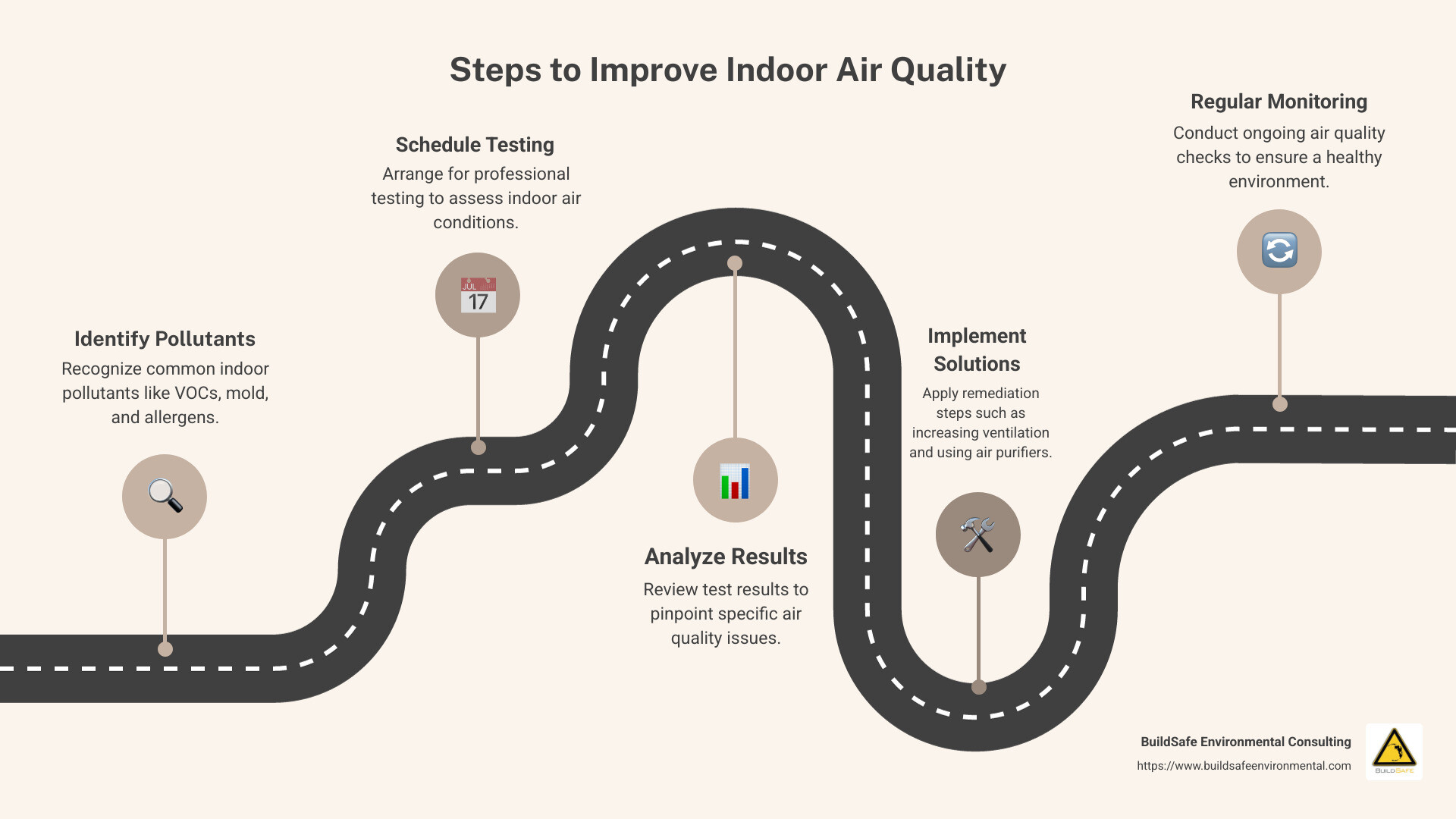
Indoor air quality testing Denver is critical for maintaining a safe and healthy home environment. Here are the essentials:
- Common indoor air threats: Mold, asbestos, lead, and volatile organic compounds (VOCs)
- Health risks: Breathing issues, allergies, fatigue, and long-term respiratory conditions
- Why test?: Ensure safety during renovations, comply with environmental regulations, and prevent costly health problems
Indoor air isn’t as clean as it might seem. In fact, studies show that it can be two to five times more polluted than outdoors. This makes testing crucial, especially in areas like Denver, where homes and businesses may face unique air quality challenges.
As Craig Luckey, I bring years of inspecting and advising homeowners on indoor air quality testing Denver. My background equips me to ensure you have the insights needed to keep your indoor environment healthy.
Importance of Indoor Air Quality Testing
Indoor air quality testing is more than just a good idea—it’s essential for your health. Let’s break it down.
Health Issues
Poor indoor air can lead to a range of health problems. The air inside your home or office might contain pollutants like mold spores, dust mites, and volatile organic compounds (VOCs). These can cause symptoms such as headaches, fatigue, and even more serious conditions over time.
According to studies, indoor air can be two to five times more polluted than outdoor air. This is especially concerning for people with pre-existing health conditions.
Respiratory Problems
Breathing in polluted air isn’t just uncomfortable; it can be dangerous. Pollutants can aggravate asthma and other respiratory issues. This is particularly true for children, seniors, and those with weakened immune systems.
In Denver, where environmental factors can compound these issues, regular testing can help identify and mitigate these risks before they turn into serious health problems.
Allergens
Allergens like pollen, pet dander, and dust mites often hide in plain sight. They can trigger allergic reactions, leading to sneezing, itchy eyes, and more. Testing helps identify these allergens so you can take steps to remove them.
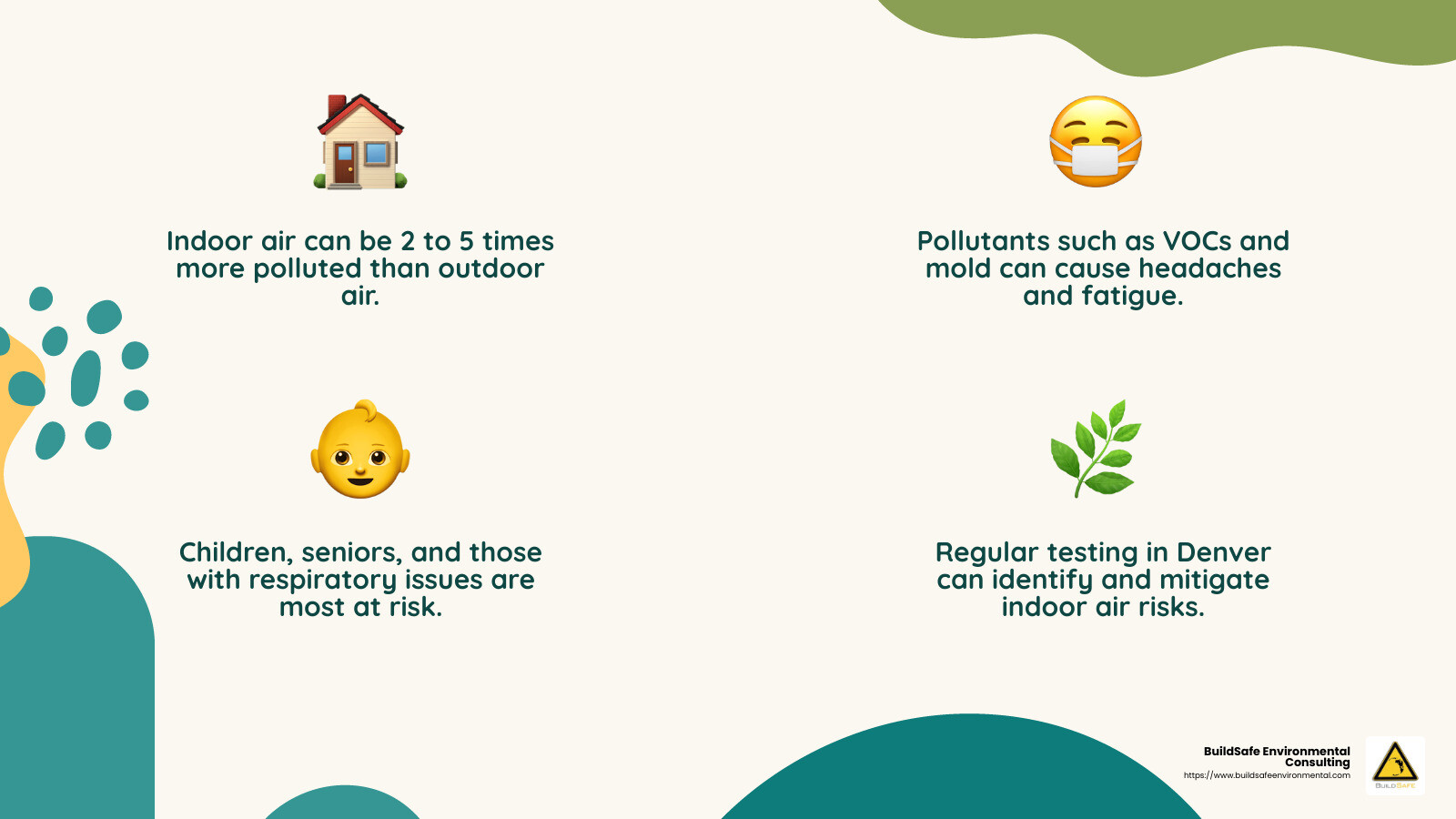
It’s clear that indoor air quality testing Denver is not just a service—it’s a necessity. By understanding the pollutants present in your environment, you can take proactive steps to improve the air you breathe. This not only helps in preventing health issues but also improves overall well-being.
Let’s now explore the top services available for indoor air quality testing in Denver.
Indoor Air Quality Testing Denver: Top Services
When it comes to ensuring clean air in your home or business, indoor air quality testing is crucial. In Denver, several top-notch services can help you breathe easier by identifying and addressing air quality issues.
VOC Testing
Volatile Organic Compounds (VOCs) are a common concern in indoor air quality. These harmful chemicals can come from everyday items like paint, varnishes, and even some cleaning products. Breathing in VOCs can cause symptoms like irritation of the eyes, nose, and throat, and in some cases, more severe health issues.
BuildSafe Environmental Consulting offers VOC testing to measure these compounds in your environment. Their tests can help identify the sources of VOCs, ensuring your home is free from these hidden dangers. Learn more about VOC testing here.
Mold Inspections
Mold is not just unsightly; it’s a health hazard. Mold spores can trigger allergies, asthma, and other respiratory problems. In Denver, mold inspections are essential due to the area’s unique climate, which can promote mold growth.
BuildSafe Environmental Consulting is nationally certified for mold inspections. They provide thorough visual inspections and send samples to a nationally accredited lab for analysis. This ensures fast and reliable results, usually within 48 hours. Their comprehensive approach helps you understand the mold situation in your property and what steps are needed for remediation. Find more about mold inspections here.
Certified Experts
Having certified experts conduct your indoor air quality tests ensures accuracy and reliability. In Denver, BuildSafe Environmental Consulting employs certified professionals who use state-of-the-art equipment and techniques. This includes advanced technologies like InstaScope, which allows for same-day results on mold and air quality.
Certified experts bring both knowledge and experience, ensuring that your air quality issues are correctly identified and effectively addressed. They can offer custom solutions specific to your environment, providing peace of mind and a healthier living space. Explore more about certified experts here.
By choosing top services for indoor air quality testing Denver, you ensure a healthier environment for you and your loved ones. Whether it’s VOC testing, mold inspections, or expert consultations, these services help you take control of your indoor air quality.
Advanced Testing Technologies
Ensuring that your indoor air is safe and healthy is more important than ever. With advanced testing technologies, we can detect and address air quality issues more efficiently. Here’s a look at some of the cutting-edge tools used in indoor air quality testing Denver.
InstaScope
InstaScope is a game-changer in air quality testing. This advanced device provides real-time results, allowing experts to detect mold and other air quality issues on the spot. Unlike traditional methods, which might take days to deliver results, InstaScope offers immediate insights. This means quicker diagnosis and faster solutions, helping you ensure your indoor environment is safe without delay.
Air Monitoring
Air monitoring is essential for understanding the ongoing quality of the air you breathe. By using state-of-the-art equipment, air quality experts can continuously track pollutants such as VOCs, allergens, and other harmful particles. This ongoing monitoring helps in maintaining a healthy indoor environment and can alert you to any sudden changes or spikes in pollutant levels.
- Real-time data: Get immediate feedback on air quality.
- Continuous tracking: Stay informed about the air quality trends in your space.
- Proactive alerts: Receive notifications if air quality deteriorates, allowing for quick action.
Sampling
Sampling is a critical component of air quality testing. By taking air samples, experts can analyze the specific pollutants present in your indoor environment. This process involves collecting air or surface samples and sending them to a certified lab for detailed analysis. Sampling helps in identifying the exact types and concentrations of pollutants, such as mold spores or VOCs, that may be affecting your air quality.
- Detailed analysis: Understand the specific pollutants present.
- Lab-certified results: Ensure accuracy and reliability.
- Targeted solutions: Develop specific strategies to tackle identified issues.
Advanced technologies like InstaScope, air monitoring, and sampling are key to effective indoor air quality testing. They provide accurate, real-time data that helps experts address air quality issues promptly and efficiently. With these tools, you can ensure a healthier indoor environment for your home or business.
Next, we’ll explore the best methods for indoor air quality testing to help you choose the right approach for your needs.
5 Best Indoor Air Quality Testing Methods
When it comes to keeping your indoor air safe and healthy, using the right testing methods is crucial. Here’s a breakdown of the top five methods used in indoor air quality testing Denver.
1. VOC/Formaldehyde Testing
Volatile Organic Compounds (VOCs) and formaldehyde are common indoor pollutants. They can be released from everyday items like paints, varnishes, and even furniture. Testing for these chemicals is important because they can cause irritation to the eyes, nose, and throat, and may lead to more serious health issues.
- Common sources: Paints, furniture, adhesives.
- Health impacts: Eye irritation, respiratory problems.
- Testing benefit: Identifies harmful chemicals to mitigate health risks.
2. Mold Testing
Mold can grow in damp areas and is a major concern for indoor air quality. It can cause allergic reactions and respiratory issues, especially in sensitive individuals. Mold testing involves inspecting areas where mold might grow, such as behind walls or under carpets, and taking samples for lab analysis.
- Inspection areas: Walls, carpets, HVAC systems.
- Health impacts: Allergies, asthma.
- Testing benefit: Detects hidden mold growth to prevent health issues.
3. Air Sampling
Air sampling is a versatile method that helps identify a wide range of pollutants, including mold spores, VOCs, and allergens. By collecting air samples and analyzing them in a certified lab, experts can pinpoint specific contaminants affecting your indoor environment.
- Pollutants detected: Mold spores, VOCs, allergens.
- Process: Collect samples, analyze in lab.
- Testing benefit: Detailed pollutant profile for targeted action.
4. HVAC Assessment
Your HVAC system plays a significant role in air quality. An assessment checks for issues like poor filtration or inadequate ventilation, which can circulate pollutants throughout your home. Ensuring your HVAC system is functioning properly can significantly improve air quality.
- Assessment focus: Filtration, ventilation.
- Impact on air quality: Circulates clean air, reduces pollutants.
- Testing benefit: Improves system efficiency and air quality.
5. Building Diagnostics
Building diagnostics involve a thorough inspection of your home’s structure to identify issues that may affect air quality, such as leaks or poor ventilation. This method helps in finding structural problems that allow pollutants to enter and accumulate indoors.
- Inspection areas: Walls, ceilings, foundations.
- Common issues: Leaks, poor ventilation.
- Testing benefit: Identifies structural fixes to improve air quality.
Using these methods, you can ensure a comprehensive approach to improving your indoor air quality. Each method targets different aspects of air quality, providing a complete picture of the pollutants present and how to address them effectively.
Next, we’ll answer some frequently asked questions about indoor air quality testing to help you better understand this important process.
Frequently Asked Questions about Indoor Air Quality Testing
What are common indoor air pollutants?
Indoor air can harbor a variety of pollutants that are not always visible but can significantly impact health. The most common pollutants include:
Volatile Organic Compounds (VOCs): These are chemicals released from products like paints, varnishes, and cleaning supplies. VOCs can cause eye, nose, and throat irritation, and in some cases, more severe health issues.
Mold: Mold thrives in damp environments and can trigger allergies and respiratory problems. It often hides in places like walls, carpets, and HVAC systems.
Allergens: Dust mites, pet dander, and pollen are common indoor allergens. They can cause sneezing, coughing, and other allergic reactions.
How often should indoor air quality be tested?
The frequency of testing depends on several factors, including the age of your home, recent renovations, and any health issues among occupants. However, as a general guideline:
Annually: Regular testing helps catch problems early, especially if you live in an older home or have a history of air quality issues.
After renovations: Construction can introduce new pollutants like VOCs and dust, so it’s wise to test after major work.
When symptoms appear: If you notice unexplained health symptoms such as allergies or respiratory issues, testing can identify potential causes.
Before moving in: Testing a new home ensures a safe environment from the start.
What are the signs of poor indoor air quality?
Poor indoor air quality can manifest in various ways, often affecting health and comfort. Look out for these indicators:
Musty odors: Persistent musty smells can signal mold growth.
Visible mold or water stains: These are clear signs of moisture issues, which can lead to mold.
Condensation on windows: This may indicate high humidity levels, which can contribute to mold and mildew.
Health symptoms: Frequent headaches, dizziness, or respiratory issues among occupants can be linked to poor air quality.
Dust buildup: Excessive dust around vents or on surfaces may indicate poor filtration or ventilation.
Understanding these pollutants, testing frequencies, and signs can help you maintain a healthy indoor environment. Regular testing ensures that you can address any issues promptly, protecting both your health and your home.
Next, we’ll discuss the importance of third-party verification and compliance with health and safety standards.
Conclusion
When it comes to maintaining a healthy indoor environment, BuildSafe Environmental Consulting stands out as a leader in the field. We specialize in providing comprehensive indoor air quality testing services in Denver and beyond, ensuring that your home or business is safe from harmful pollutants like VOCs, mold, and allergens.
Why Choose BuildSafe Environmental Consulting?
Third-Party Verification: One of our key strengths is third-party verification. This means we offer unbiased assessments of your indoor air quality. Our team is committed to transparency and integrity, ensuring that you receive accurate information about any potential issues in your environment.
Health and Safety Compliance: At BuildSafe, we prioritize health and safety compliance. Our experts are trained to adhere to the highest standards, ensuring that our testing and remediation services meet all regulatory requirements. This focus on compliance not only protects your health but also safeguards your property value.
Fast and Reliable Service: We understand that time is of the essence when it comes to addressing indoor air quality issues. That’s why we offer prompt and dependable services, so you can breathe easy knowing that your environment is in good hands.
For those concerned about mold, our specialized mold testing services provide thorough inspections and solutions custom to your needs.
In conclusion, maintaining good indoor air quality is crucial for health and well-being. With BuildSafe Environmental Consulting, you can trust that you’re getting expert advice and effective solutions. Don’t wait—ensure your indoor environment is safe and healthy today!